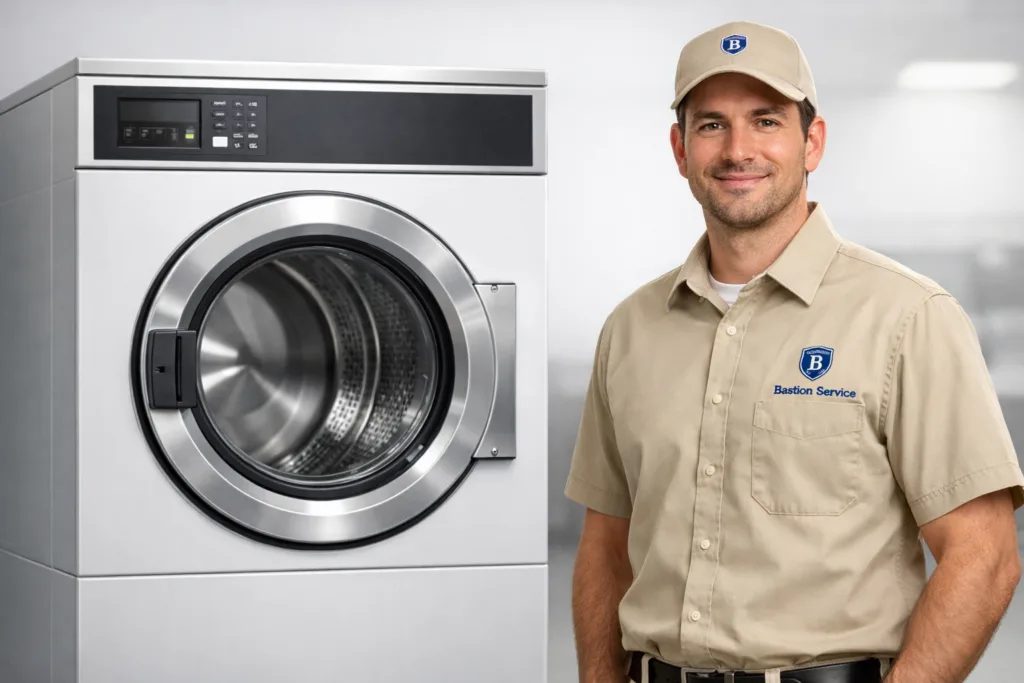




When a Wascomat dryer starts disrupting laundry output in Rancho Park, the repair decision should focus on more than whether the machine still powers on. Drying problems often affect turnaround time, staffing flow, customer service, and the performance of the rest of the laundry line. Bastion Service helps businesses in Rancho Park troubleshoot Wascomat dryer issues by identifying the fault behind the symptom, explaining what is causing the interruption, and scheduling repair based on urgency, safety, and likely downtime impact.
Related commercial service paths in Rancho Park include Wascomat Commercial Repair in Rancho Park, Commercial Dryer Repair in Rancho Park, and Wascomat Washer Repair in Rancho Park.
Common Wascomat Dryer Problems That Need Service
Dryer runs but does not heat
If the drum turns but the load stays damp, the problem may involve the heating circuit, temperature controls, safety devices, wiring, airflow, or a control failure that prevents normal heat operation. In day-to-day use, this often shows up as loads that need extra cycles, inconsistent dryness, or staff changing settings repeatedly to compensate. A no-heat condition should be checked promptly because the visible symptom does not always point to a single failed part.
Long dry times or incomplete cycles
When drying times start stretching well beyond normal, the cause may be reduced airflow, lint accumulation in key passages, weak heat output, sensor problems, or cycling issues that prevent the dryer from maintaining proper temperature. Businesses usually notice this first as slower turnover and more re-drying rather than a total breakdown. Even if the dryer still appears usable, the added time per load can quietly reduce capacity across the day.
Dryer starts and then shuts down
A Wascomat dryer that stops mid-cycle or drops out unexpectedly can point to overheating, airflow restriction, faulty switches, sensor faults, control board problems, or intermittent electrical issues. Shutdowns are especially disruptive because they create uncertainty in scheduling and can leave partially processed loads tied up in the machine. If the unit is stopping irregularly, service is usually better scheduled before the symptom becomes a complete no-start condition.
Drum does not turn or struggles under load
If the dryer powers on but the drum does not rotate correctly, possible causes include belt failure, motor trouble, idler wear, seized support components, or a control problem affecting drive operation. Sometimes the drum may turn when empty but stall with a normal load, which can indicate mechanical resistance or a weak drive system. Repeated attempts to force operation can increase wear and may turn a contained repair into a broader one.
Noise, vibration, or scraping during operation
Squealing, thumping, grinding, rattling, and scraping usually point to wear in moving components. Rollers, bearings, supports, belts, blower assemblies, and drum contact points can all create noise as parts wear down or shift out of alignment. A loud dryer should not be treated as only a comfort issue. In many cases, unusual sound is an early warning that a mechanical part is deteriorating and may fail during active use.
Burning smell or overheating signs
Heat that feels excessive, a burning odor, repeated high-limit trips, or visible signs that the dryer is running hotter than normal should be treated as priority service issues. Restricted airflow, lint buildup, component failure, and temperature regulation faults can all contribute to unsafe operating conditions. If those symptoms appear, taking the machine out of rotation until it is inspected is often the best step to limit added damage.
Why Is My Wascomat Dryer Not Heating or Finishing the Cycle?
This symptom can come from several different fault paths, which is why part-swapping based on guesswork often leads to repeat downtime. A dryer that is not heating or not completing the cycle may be dealing with:
- Failure in the heating circuit or related safety components
- Restricted airflow that causes poor drying or overheating shutdowns
- Moisture-sensing or temperature-sensing problems
- Door switch or latch issues interrupting cycle operation
- Control or timer faults that prevent normal cycle progression
- Electrical supply issues affecting heat, motor operation, or both
Two machines can show the same symptom while needing very different repairs. One dryer may need a straightforward part replacement, while another may have a broader airflow or control problem that has to be corrected for the repair to hold.
How Symptom Patterns Help Narrow the Fault
The most useful service information often comes from what the dryer is doing consistently. For example, a machine that never heats points to a different starting path than one that heats briefly and then shuts down. A dryer that dries small loads but struggles with larger ones may suggest airflow or drive-related strain. A unit that finishes the timer but leaves damp items behind raises different concerns than one that stops before the cycle ends.
Before repair is scheduled, it helps to note whether the problem is constant or intermittent, whether it affects every cycle, whether unusual sounds started before the performance drop, and whether staff has noticed odors, resets, or changing cycle behavior. Those details can help shorten diagnosis time and improve repair planning.
Problems Often Misread as “Just Slow Drying”
Slow drying is one of the easiest symptoms to normalize because the dryer still appears to be working. In practice, this condition often signals a service need that is already affecting operations. What looks like a minor efficiency loss may actually involve:
- Airflow restrictions reducing heat transfer through the load
- Heating components producing weak or unstable output
- Sensors reading moisture or temperature inaccurately
- Controls ending cycles too early or cycling heat incorrectly
- Mechanical drag in the drum or blower system
Over time, these issues can raise utility costs, increase load congestion, and create avoidable wear on parts that are still trying to keep the machine running.
When a Wascomat Dryer Should Be Taken Out of Rotation
Some dryer issues allow for scheduled repair at the next reasonable opening, while others should be addressed immediately. It is usually smart to stop using the machine if it is overheating, producing a burning smell, making severe scraping or grinding noise, shutting down unpredictably, or failing to turn the drum properly. Continuing to run the unit in these conditions can create secondary damage and make the final repair more expensive.
For businesses in Rancho Park, the decision often comes down to whether continued use is merely inconvenient or likely to worsen the fault. If the symptom suggests heat control problems, restricted airflow, or mechanical failure in progress, service should move higher on the priority list.
Repair or Replacement: What Usually Matters Most
Many Wascomat dryer problems are repairable when the machine has a defined failure and the rest of the unit remains in solid working condition. Repair is often the better choice when the issue is isolated, the machine has been otherwise stable, and the expected return to service supports day-to-day production needs.
Replacement becomes more likely when there are multiple major wear points, repeated shutdown history, unreliable controls, or stacked repair needs that keep interrupting operations. The most useful evaluation is not just the cost of the next repair, but whether the dryer can return to predictable daily performance after service is completed.
What to Prepare Before Scheduling Service
A little symptom history can make the service visit more efficient. Helpful details include:
- Whether the dryer is not heating, overheating, or heating inconsistently
- How long the problem has been happening
- Whether the cycle stops early, runs long, or never starts
- Any sounds such as squealing, scraping, thumping, or rattling
- Whether the issue appears with every load or only under heavier use
- Any burning smell, tripped protections, or recent operating changes
That information helps move from symptom description to repair planning faster, especially when the machine is affecting multiple loads or daily scheduling.
Service Planning for Rancho Park Businesses
Wascomat dryer repair is most useful when it supports the real operating needs of the business, not just the immediate restart of one machine. For businesses in Rancho Park, that means identifying whether the problem is isolated or likely to cause repeat interruptions, deciding how urgent the repair is based on safety and workflow, and setting the next step around restoring reliable drying performance. If your dryer is showing no heat, long dry times, shutdowns, drum problems, or unusual noise, scheduling service early is usually the best way to reduce downtime and prevent a smaller fault from becoming a larger interruption.