
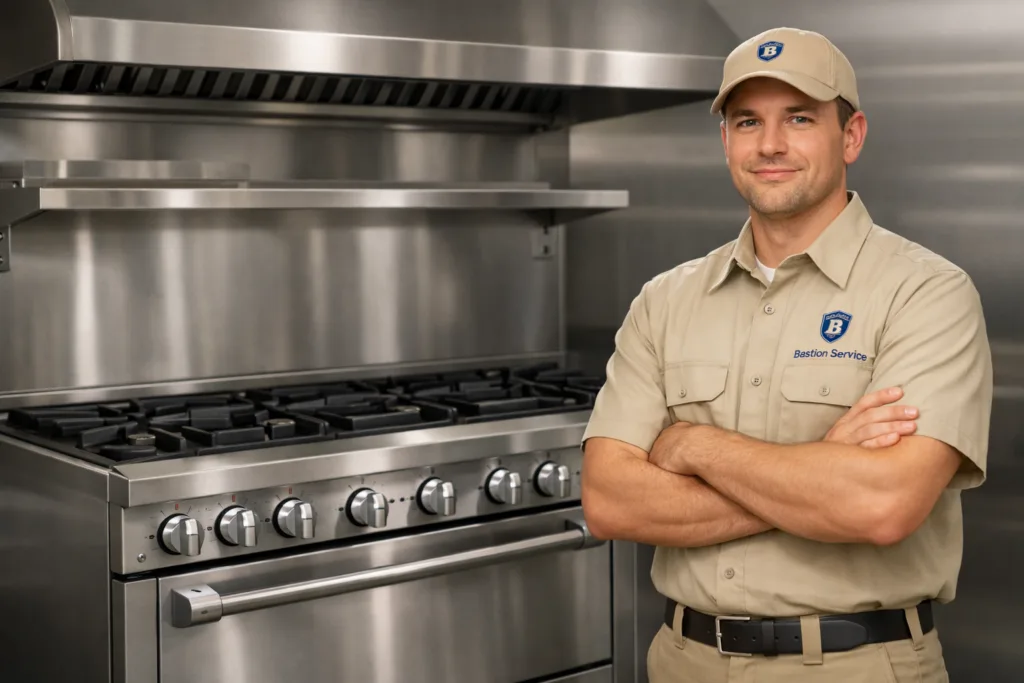




When a Southbend range starts missing ignition, losing heat, or drifting off temperature, the effect is immediate: slower output, inconsistent cooking results, and more pressure on staff to work around equipment that should be dependable. For businesses in Mar Vista, service is most useful when the symptoms are matched to the actual failure, the urgency is assessed realistically, and repair scheduling supports the kitchen’s day-to-day operation. Bastion Service handles Southbend range issues with a symptom-based approach that helps determine whether the problem is isolated, recurring, or likely to worsen under continued use.
Related commercial service paths in Mar Vista include Southbend Commercial Repair in Mar Vista, Southbend Oven Repair in Mar Vista, and Vulcan Range Repair in Mar Vista.
What Southbend range problems usually look like in daily operation
Range problems are not always obvious at first. In many kitchens, the earliest warning signs are small but disruptive: a burner that takes longer to light, an oven that needs constant adjustment, a hot top that no longer heats evenly, or controls that feel inconsistent from one shift to the next. Over time, these symptoms can affect ticket timing, product consistency, and the ability to use the full cooking line as intended.
On Southbend equipment, the underlying cause may involve burner components, ignition parts, valves, thermostatic controls, sensors, switches, or wear related to repeated high-heat use. Because several different faults can produce similar symptoms, a repair decision usually makes the most sense after the problem is confirmed rather than assumed.
Why a Southbend range may stop lighting, heating, or holding temperature
Burners that click, light slowly, or do not light at all
If a burner clicks repeatedly, lights only after several attempts, or fails to ignite, the issue may be tied to the ignition system, gas flow, blocked burner passages, contaminated components, or a related control fault. In a busy kitchen, this often leads staff to relight manually, shift cooking to another section, or avoid the problem burner entirely. Those workarounds may keep production moving temporarily, but they do not address the cause of the failure.
Weak flame or uneven heat across the cooking surface
When flame output looks low or inconsistent, the range may struggle to maintain expected cooking speed. This can show up as pans heating unevenly, delayed recovery between orders, or one side of the cooking surface performing differently from another. Possible causes include burner blockage, valve problems, gas delivery issues, or worn parts that affect how fuel and ignition are working together.
Oven temperature that runs hot, cool, or unstable
Southbend range ovens that overshoot, undershoot, or swing during operation can create immediate consistency problems. If staff are rotating product more often, extending bake times, or adjusting settings repeatedly without reliable results, the fault may involve the thermostat, sensor, igniter, control components, or another heating-related part. Temperature complaints are especially important to diagnose correctly because the visible symptom does not always point to the failed component.
Intermittent shutdowns during use
A range that works for part of the shift and then loses function may have a component that fails as heat builds, a control issue that appears only under load, or a fuel-related problem that shows up during longer operating periods. Intermittent issues are often the most disruptive because they create uncertainty. The unit may appear normal during startup but become unreliable when the kitchen actually needs it.
Why diagnosis matters before parts are ordered
A burner that will not stay lit is not always a burner problem. An oven that will not hold temperature is not always a thermostat problem. With Southbend range repair in Mar Vista, the main reason diagnosis comes first is simple: replacing the wrong part wastes time, delays the real fix, and can extend downtime during already busy periods.
Good diagnostic work helps answer questions that matter to a business:
- Is the problem limited to one burner, one oven section, or multiple functions?
- Is the failure consistent, or does it appear only after the range has been operating for a while?
- Has continued use started to affect nearby components?
- Does the equipment appear repairable in a way that supports regular production?
Those answers make it easier to choose the right next step instead of guessing based only on the symptom staff notice first.
Symptoms that usually mean service should be scheduled soon
Some issues are easy to postpone until they are not. If the range is still running but staff have changed how they use it, that often means service should be arranged before the fault becomes a full outage.
- Burners need repeated attempts to ignite
- Clicking continues longer than normal before lighting
- Flame looks unstable, low, or uneven
- One section of the range is avoided because results are unreliable
- Cook times are increasing without another clear cause
- Oven settings no longer match actual cooking results
- The unit shuts down unpredictably during heavier use
- Controls respond inconsistently or feel abnormal in operation
When staff are compensating for the equipment rather than using it normally, the problem has already moved beyond minor inconvenience.
When continued use can lead to a larger repair
Running a Southbend range with unreliable ignition, unstable heat, or repeated cycling problems can put additional stress on connected parts. What begins as a single performance issue may expand into a broader repair if the unit is forced through daily production without correction. In practical terms, that can mean more downtime later, more affected components, and less flexibility in scheduling service.
If there is a strong or persistent gas odor, stop using the range. That situation should not be treated as routine equipment troubleshooting. Leave the area if necessary and contact the gas utility or emergency service first.
Repair or replacement: how businesses usually evaluate the decision
Many Southbend range problems can be addressed through targeted repair when the main structure of the equipment remains sound and the failure is confined to serviceable parts. That is often the better path when diagnosis points to a specific fault and the unit is otherwise capable of returning to stable performance.
Replacement becomes a more serious consideration when the range has multiple major issues, repeated breakdown history, heavy overall wear, or a repair path that no longer supports reliable use. The best decision usually depends on the condition of the unit, how often it has been failing, whether the current issue is isolated or part of a larger pattern, and how much downtime the business can absorb.
How to prepare for a Southbend range service visit
A few details from staff can make diagnosis faster and more accurate. Before service is scheduled, it helps to note:
- Which burner, oven section, or function is affected
- Whether the problem is constant or intermittent
- What happens first: clicking, delayed ignition, flame loss, temperature drift, shutdown, or control failure
- Whether the issue appears more often during longer cooking periods
- Any recent changes in performance, noise, smell, or responsiveness
That information can help narrow the fault pattern and support a more efficient repair process once the unit is inspected.
Service-focused Southbend range repair for businesses in Mar Vista
For businesses in Mar Vista, the goal is not just to get a range to turn on again. The real objective is to restore stable operation in a way that makes sense for the kitchen, the workload, and the condition of the equipment. When a Southbend range starts showing ignition trouble, heating inconsistency, temperature swings, or control-related problems, timely diagnosis helps reduce disruption and gives operators a clearer basis for repair planning. If the range is affecting output, workflow, or safe operation, scheduling service promptly is the most practical next step.


