
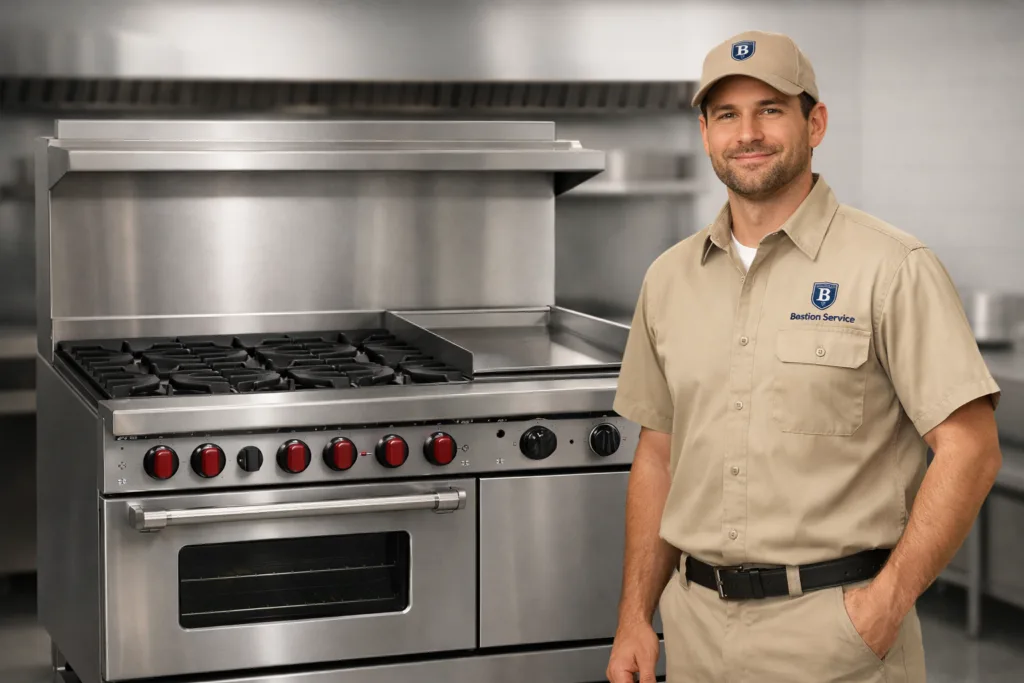




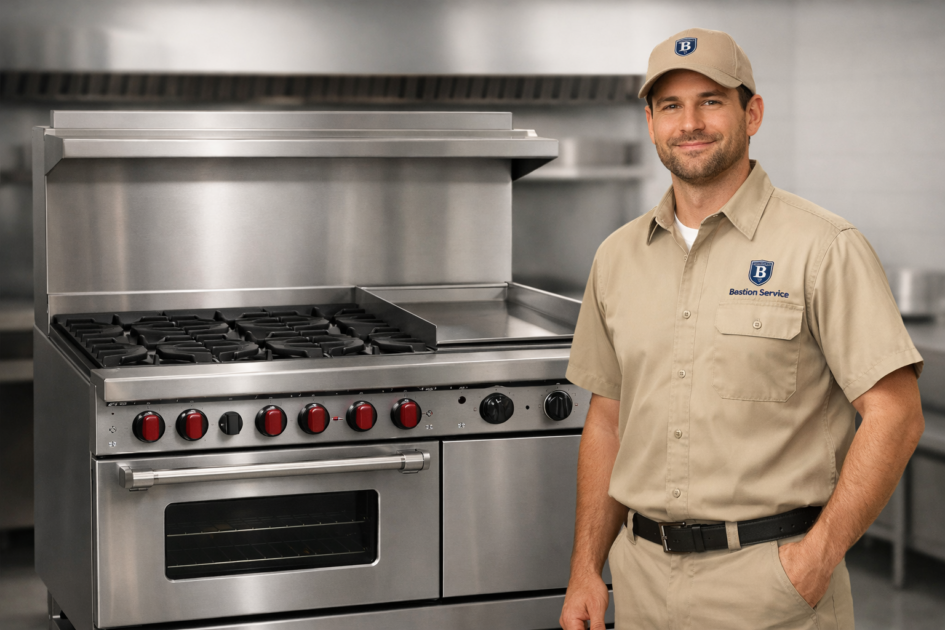
Unreliable cooking equipment can slow service long before it fails completely. When a Southbend oven or range starts missing temperature, hesitating at ignition, or dropping output during busy periods, the priority is to identify the cause quickly and decide whether the unit can stay in use, needs restricted use, or should be scheduled for repair right away. Bastion Service works with businesses in Mar Vista that need symptom-based troubleshooting, repair scheduling, and a service plan that reflects real kitchen demands.
For specific equipment paths in Mar Vista, review Southbend Oven Repair in Mar Vista, Southbend Range Repair in Mar Vista, and Commercial Appliance Repair in Mar Vista.
Southbend cooking equipment problems that commonly interrupt kitchen flow
Southbend equipment is built for steady daily use, but ovens and ranges still develop wear that shows up first as performance inconsistency. What looks like a minor issue to staff can translate into longer ticket times, uneven product, repeated resets, or a sudden shutdown in the middle of production. Repair decisions are usually easiest when the symptom pattern is clear.
Temperature problems in ovens
If an oven takes too long to preheat, overshoots the set point, runs cooler than expected, or cooks unevenly from one rack area to another, the problem may involve the thermostat, sensor, burner performance, control components, or heat circulation within the cavity. Temperature drift often starts as a quality issue and then becomes an operations issue when staff begin extending cook times or rotating product to compensate.
Signs that temperature performance needs service include:
- Longer preheat times than normal
- Frequent temperature adjustments during the shift
- Food finishing too early in one batch and too late in another
- Visible hot spots or cool spots
- Repeated cycling that does not match the set temperature
Ignition and burner trouble on ranges and ovens
Ignition faults can appear as delayed lighting, intermittent burner operation, clicking without ignition, weak flame, or burners that light but do not stay stable. On ranges, that affects prep timing and line readiness. In ovens, it can create uneven heating, slow recovery, or complete loss of usable cooking capacity.
These symptoms may point to issues with ignition parts, burner assemblies, controls, or fuel delivery. Because ignition-related problems can change from shift to shift, a service visit helps determine whether the issue is isolated to one burner or tied to a broader system fault.
Slow recovery under load
Some equipment appears to heat normally when empty but falls behind once production starts. A Southbend unit with weak recovery may struggle to return to cooking temperature between batches, causing longer wait times and inconsistent results during peak demand. This is especially disruptive when menus rely on steady oven performance or range burners that need to hold output continuously.
Slow recovery often shows up as:
- Long gaps between usable batches
- Reduced browning or slower finishing times
- Burners that seem weaker after extended use
- Equipment that performs differently at opening than it does later in the day
Unexpected shutdowns and intermittent operation
One of the hardest problems for kitchen teams is equipment that works inconsistently. If a Southbend oven or range shuts down during use, restarts unpredictably, or loses heat without warning, that creates immediate planning problems for the shift. Intermittent faults are not just frustrating; they can increase downtime because staff lose confidence in whether the unit will hold through service.
What a repair visit is meant to answer
For businesses in Mar Vista, the goal of service is not just to confirm that something is wrong. The useful part of the visit is understanding how the fault affects operation and what action makes the most sense next. In many cases, managers need to know:
- Whether the problem is limited to one burner, one oven cavity, or several connected functions
- Whether the equipment can be used in a limited way until repair is completed
- Whether inconsistent performance has already caused added strain on related parts
- Whether the issue is likely to worsen quickly under normal kitchen demand
- Whether repair is the practical next step or replacement should be considered
That information helps with staffing, menu adjustments, production timing, and maintenance planning instead of leaving the decision to guesswork.
Symptoms that usually mean service should be scheduled soon
Some kitchen equipment problems are gradual enough that teams try to work around them. The risk is that repeated workarounds often hide a growing fault until the unit fails during a busy period. Scheduling service is usually the better move when you notice patterns such as:
- Repeated ignition failures or delayed lighting
- Temperature inconsistency from batch to batch
- Weak or unstable burner flame
- Long recovery time after normal use
- Controls that do not respond normally
- Units that need frequent restarting
- Unexpected shutdowns during active cooking
Even when the equipment is still technically operating, declining reliability can already be affecting output, food consistency, and staff workflow.
When continued use can create bigger downtime
There is a difference between equipment that is imperfect and equipment that is becoming risky to rely on. If staff are constantly compensating for low heat, extending cook times, re-lighting burners, or shifting production to other stations, the unit is no longer performing as intended. Continued use under those conditions can turn a repairable issue into a larger interruption.
Examples include ovens running off-temperature for long periods, ranges with unstable burner behavior, or equipment that cycles irregularly and then shuts down. In those situations, the better operational decision is often to schedule repair before the problem affects more than one shift.
Repair considerations for Southbend ovens and ranges
Not every service call leads to the same recommendation. Some Southbend units need a focused repair to restore burner function, ignition reliability, or temperature control. Others may show a broader pattern of wear that affects performance across multiple functions. The right decision depends on the age of the equipment, the frequency of recent issues, parts condition, and how important that unit is to daily production.
For many businesses in Mar Vista, the repair question comes down to operational value: will the repair return the equipment to steady use, or will the kitchen continue dealing with repeat downtime and inconsistent output? A proper evaluation helps answer that before more time is lost to temporary fixes.
How these problems affect day-to-day operations
Cooking equipment issues do more than slow one appliance. They often create ripple effects across prep, line timing, and service expectations. When an oven cannot hold temperature, staff may have to re-sequence production. When a range burner is unreliable, stations compete for limited cooking space. When recovery slows, orders stack up and quality becomes harder to control.
That is why symptom-based repair is important. The decision is not only about replacing a failed part. It is about restoring predictable performance so the kitchen can maintain output without constant adjustment.
Service planning for businesses in Mar Vista
Businesses in Mar Vista usually need repair timing that fits around active operations, not generic troubleshooting advice. Service planning is most useful when it helps determine urgency, identify whether temporary limited use is realistic, and set expectations for follow-up if additional work is needed. This approach supports better scheduling and reduces the chance of a larger outage during a critical production window.
If your Southbend oven or range is causing temperature problems, ignition issues, weak burner performance, shutdowns, or slower throughput, the next practical step is to schedule service, review the findings, and decide quickly whether repair, restricted use, or taking the unit offline is the best way to protect kitchen uptime in Mar Vista.


