
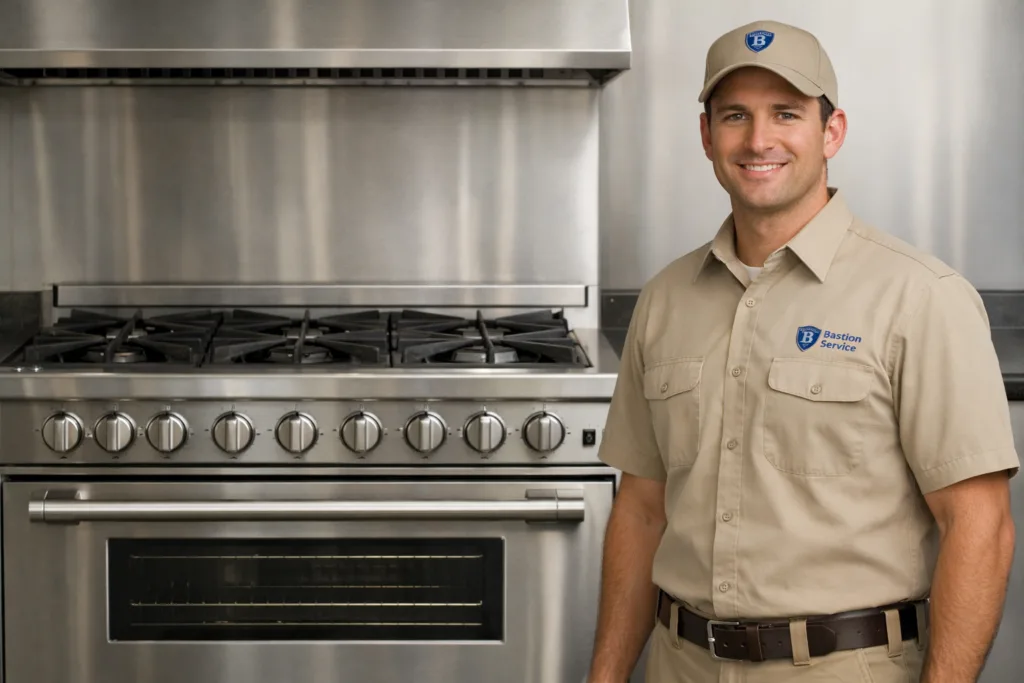




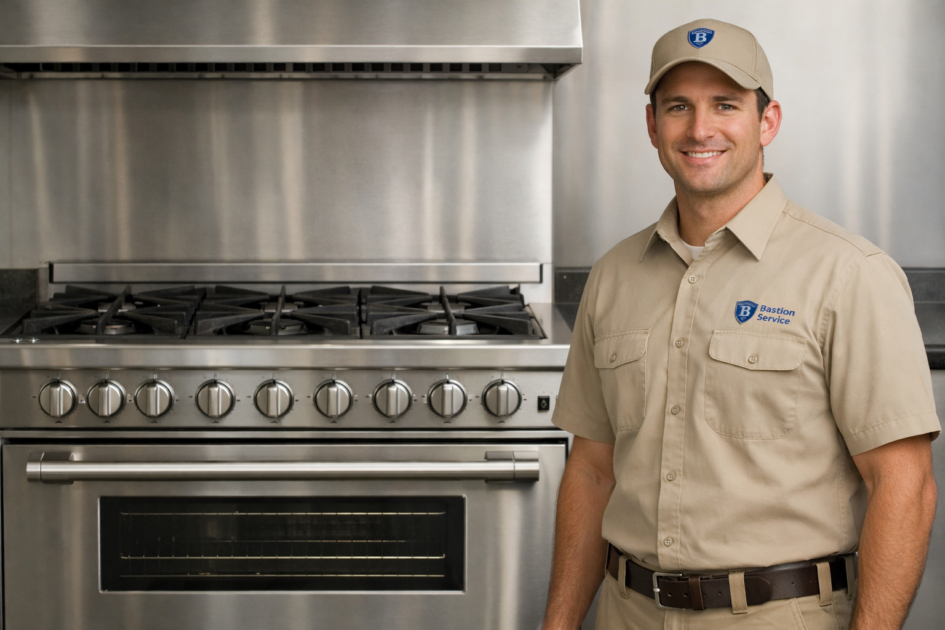
Range problems can disrupt prep, slow ticket times, and force staff to work around equipment that no longer performs the way it should. When a Wolf range begins showing ignition trouble, uneven heat, temperature swings, or control issues, the best next step is service that focuses on the actual failure pattern rather than guessing at parts. Bastion Service works with businesses in Mar Vista to diagnose Wolf range issues, explain what is affecting performance, and schedule repair based on urgency, safety, and expected reliability after the work is completed.
Related commercial service paths in Mar Vista include Wolf Commercial Repair in Mar Vista, Wolf Oven Repair in Mar Vista, and Wolf Fryer Repair in Mar Vista.
Common Wolf Range Problems Businesses Notice First
Most range failures do not begin with a complete shutdown. Operators usually see smaller warning signs first: a burner that clicks too long, flame strength that changes from one section to another, an oven cavity that no longer recovers temperature properly, or controls that feel inconsistent during normal use. These symptoms matter because they often point to wear, contamination, heat damage, electrical faults, or gas-delivery problems that can worsen if the unit stays in service without evaluation.
Burners that do not light properly
If a burner fails to ignite, lights after several attempts, or clicks continuously, the cause may involve the igniter, electrode, switch, spark system, wiring, burner assembly, or moisture and buildup around key components. In a busy kitchen, intermittent ignition is more than a nuisance. It can interrupt workflow, increase wear from repeated attempts, and make the range less predictable during service.
Weak flame or uneven burner output
A Wolf range that produces weak heat, irregular flame, or noticeably different output from one burner to the next may have restricted ports, valve issues, regulator concerns, or burner components that are no longer operating correctly. Uneven performance often shows up in cooking results first, especially when staff must keep adjusting pans, timing, or heat settings to compensate.
Oven heating and temperature stability issues
Some service calls center on oven sections that run too hot, too cool, or drift away from the selected setting. That can point to sensor problems, thermostat faults, control issues, relays, wiring damage, or heating-related component failure. In food-service settings, poor temperature recovery can affect batch consistency, holding times, and the ability to maintain a smooth production pace.
Controls that stop responding normally
Loose knobs, sticking switches, delayed response, or settings that no longer match actual heat output can indicate control wear or internal electrical problems. When controls become unreliable, operators may start overcorrecting by turning settings up and down more often, which can make the underlying issue harder to manage and increase stress on the equipment.
Why a Wolf Range May Stop Lighting, Heating, or Holding Temperature
Different failures can create nearly identical symptoms. A burner that will not light might be caused by a spark issue, contamination, a failed switch, damaged wiring, or a gas-flow problem. An oven section that will not hold temperature may involve the sensor, thermostat, control board, relays, or a calibration-related fault. Because symptom overlap is common, repair decisions should be based on testing and inspection rather than assuming the most obvious part is the only problem.
This matters for businesses in Mar Vista because downtime decisions often have to be made quickly. If the issue is isolated, repair may be straightforward. If the symptom points to multiple worn components or broader heat-related damage, the service plan needs to account for that before time and money are spent on incomplete work.
Symptoms That Should Prompt Service Scheduling
It is usually better to schedule repair while the range is still partially operating than to wait for a full failure. Intermittent problems often provide the clearest clues during diagnosis, and early service may help limit secondary damage caused by repeated ignition attempts, overloaded burners, or continued use of controls that are no longer functioning correctly.
- Burners that click repeatedly or fail to ignite on the first attempt
- Flames that look weak, uneven, or unstable
- Surface heat that does not match the selected setting
- Oven sections that heat slowly or recover poorly
- Temperature swings that affect cooking consistency
- Controls that stick, feel loose, or respond unpredictably
- Repeated performance issues after a prior repair
What a Service Visit Should Clarify
A useful repair visit should answer more than whether one part has failed. Businesses need to know what caused the symptom, whether the issue appears isolated or connected to broader wear, and whether continued use risks more downtime or a larger repair. For high-use Wolf equipment, that assessment is especially important because the visible complaint is not always the only condition affecting performance.
Good service planning also helps management decide how quickly to authorize the repair, whether temporary workarounds are creating more strain on the unit, and what level of post-repair reliability is realistic. That is often the difference between a lasting fix and another interruption a short time later.
Repair or Replace: How the Decision Usually Gets Made
Many Wolf range issues can be repaired effectively when the fault is limited to ignition components, switches, controls, sensors, burner parts, or other serviceable systems and the overall equipment remains in solid condition. In those cases, restoring normal function is often the most practical path for a kitchen that depends on steady output.
Replacement becomes a more serious discussion when the range has multiple failing systems, extensive wear from heavy daily use, recurring repair history, or repair costs that no longer make sense compared with expected service life. The right recommendation should consider uptime, kitchen demands, part condition, and whether the unit is likely to return to stable operation rather than simply run for a short period.
Preparing for Wolf Range Repair in Mar Vista
Before service, it helps to note which burners are affected, whether the issue is constant or intermittent, how long the problem has been happening, and whether the symptom appears during startup, heavy use, or normal operation. If the oven section is involved, tracking temperature inconsistency, slow preheat, or poor recovery can help narrow down the fault faster. These details make diagnosis more efficient and help connect the repair plan to the way the range is actually used.
For kitchens trying to reduce disruption, scheduling service as soon as ignition, heating, or control problems become repeat issues is often the most practical move. A Wolf range that is not performing correctly can affect staffing flow, menu timing, and overall output. Timely repair gives businesses in Mar Vista a better chance to resolve the problem before a partial failure turns into full downtime.


