




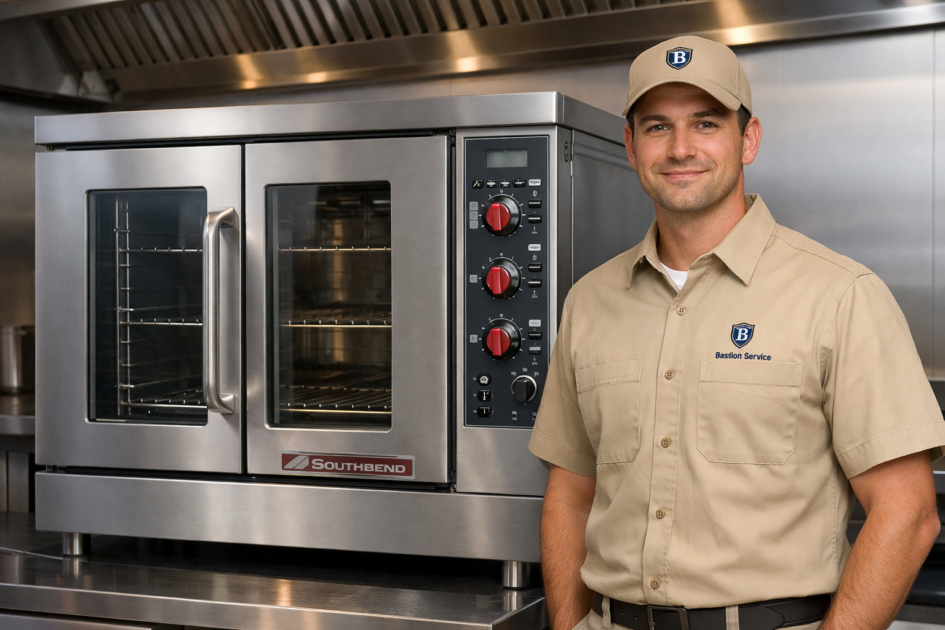
Production problems escalate fast when a Southbend oven starts missing temperature, heating unevenly, dropping out mid-cycle, or taking too long to recover between loads. For businesses in Del Rey, the most useful next step is service built around the exact failure pattern, so the repair decision is based on what the oven is actually doing rather than assumptions. Bastion Service works with businesses in Del Rey to diagnose Southbend oven faults, explain what is affecting performance, and schedule repair with downtime and workflow in mind.
Related commercial service paths in Del Rey include Southbend Commercial Repair in Del Rey, Commercial Oven Repair in Del Rey, and Southbend Range Repair in Del Rey.
Common Southbend Oven Problems That Disrupt Daily Output
Slow preheat or failure to reach the set temperature
When preheat drags on or the oven stalls below the selected setting, the issue may involve an ignitor that is no longer drawing properly, a weak burner condition, a temperature sensor that is drifting out of range, or a control problem that is reading heat incorrectly. In busy kitchens, this often shows up as longer ticket times, underfinished products, or staff compensating by extending cook times from batch to batch.
Uneven heating and inconsistent baking results
If one side cooks faster than the other, pans need to be rotated constantly, or results vary even with the same menu item, the oven may have airflow problems, partial burner performance, sensor inaccuracies, calibration drift, or heat loss around the door. What looks like a recipe issue is often an equipment issue once the pattern becomes repeatable.
Ignition faults and intermittent startup
An oven that clicks without lighting, lights after several tries, or starts inconsistently can point to ignition wear, flame-sensing trouble, gas-valve response issues, or a fault in the control chain. These symptoms are important to address early because intermittent ignition tends to become more disruptive over time, especially during heavy use periods.
Unexpected shutdowns during operation
If the oven starts normally but shuts off before the cycle is complete, the problem may involve overheating protection, unstable ignition, sensor feedback errors, or control failure. Sudden shutdowns are especially costly because they interrupt product flow and make it difficult for staff to trust the unit during active production windows.
Door seal, hinge, and latch problems
A damaged gasket, sagging hinge, or misaligned door can let heat escape and make the oven work harder to maintain temperature. These issues are easy to overlook because the oven still appears to run, but they can contribute to slow recovery, uneven browning, and unnecessary stress on heating and control components.
Why Is My Southbend Oven Not Heating Evenly or Reaching Set Temperature?
This symptom can come from several different faults that create similar results. A Southbend oven may run cool or heat unevenly because of sensor drift, thermostat or control problems, weak ignition, poor burner performance, blocked airflow, worn door gaskets, or convection-related failure on models that depend on consistent air movement. The visible symptom is uneven cooking, but the source may be electrical, gas-related, mechanical, or a combination of smaller issues.
That is why diagnosis matters before approving a repair. Replacing one part based only on the surface symptom can leave the actual cause unresolved. A proper service visit helps determine whether the problem is isolated, whether other components have been affected, and whether the repair is likely to restore stable operation.
Signs the Problem Is Getting Worse
Many oven failures do not happen all at once. They usually start as a minor inconsistency and become harder to manage over time. Service should be scheduled soon when you notice patterns such as:
- Preheat times getting longer week to week
- Products coming out lighter, darker, or less consistent than usual
- The temperature display not matching actual cooking results
- Burners or heat cycles sounding irregular
- The oven needing repeated restarts to stay in use
- Error codes, control resets, or intermittent shutdowns
- Doors that no longer seal tightly during operation
If staff are changing procedures just to work around the oven, the equipment is already affecting output more than it may seem from a single shift.
What a Symptom-Based Service Visit Should Clarify
For a Southbend oven, the repair process should answer more than whether a part failed. It should also show how that fault is affecting heat production, temperature control, ignition reliability, and repeatability across the day. In a business setting, the goal is to understand the scope of the issue and whether the oven can return to stable service without ongoing disruption.
A useful evaluation typically helps clarify:
- Whether the problem is tied to ignition, sensing, controls, heating, airflow, or door sealing
- Whether the symptom is isolated or part of broader wear
- Whether continued use is likely to worsen the failure
- How urgent the repair is based on current operating behavior
- Whether repair makes more sense than replacement for that unit
When Continued Use Becomes Risky
Running an oven with unstable temperature control, repeated ignition failure, or frequent shutdowns can create more than an inconvenience. It can increase wear on connected parts, reduce product consistency, and make the unit unreliable at the worst time. If the oven must be watched constantly, restarted repeatedly, or adjusted to finish normal cooking loads, delaying service usually raises the chance of a larger interruption.
If there is a strong or persistent gas smell, stop using the oven and follow appropriate gas-safety steps before arranging repair.
Repair or Replace: How Businesses Usually Decide
Many Southbend oven problems are repairable when the fault is limited to a specific system such as ignition, sensing, controls, burner performance, or door-related components. Repair is often the better choice when the oven still fits production needs and the rest of the unit remains in solid condition.
Replacement becomes a stronger consideration when failures are recurring across multiple systems, reliability has been poor for an extended period, or the unit no longer supports the pace and output required by the kitchen. The better decision depends on current condition, service history, the severity of the present fault, and how critical that oven is to daily operations.
Preparing for Southbend Oven Repair in Del Rey
Before service, it helps to note exactly what the oven is doing. Useful details include whether the issue happens during preheat or after the oven is hot, whether the problem affects every cook cycle or only some, whether the unit shuts down with or without an error, and whether staff have noticed unusual sounds, delayed ignition, or changing cook results. These symptom details make diagnosis more direct and help connect the repair plan to real operating conditions.
If your Southbend oven is slowing production, missing temperature, showing ignition faults, or becoming unreliable during service, scheduling repair early is usually the best way to limit downtime. A focused diagnosis can identify the source of the problem, outline the repair path, and help your Del Rey operation decide on the most sensible next step.