
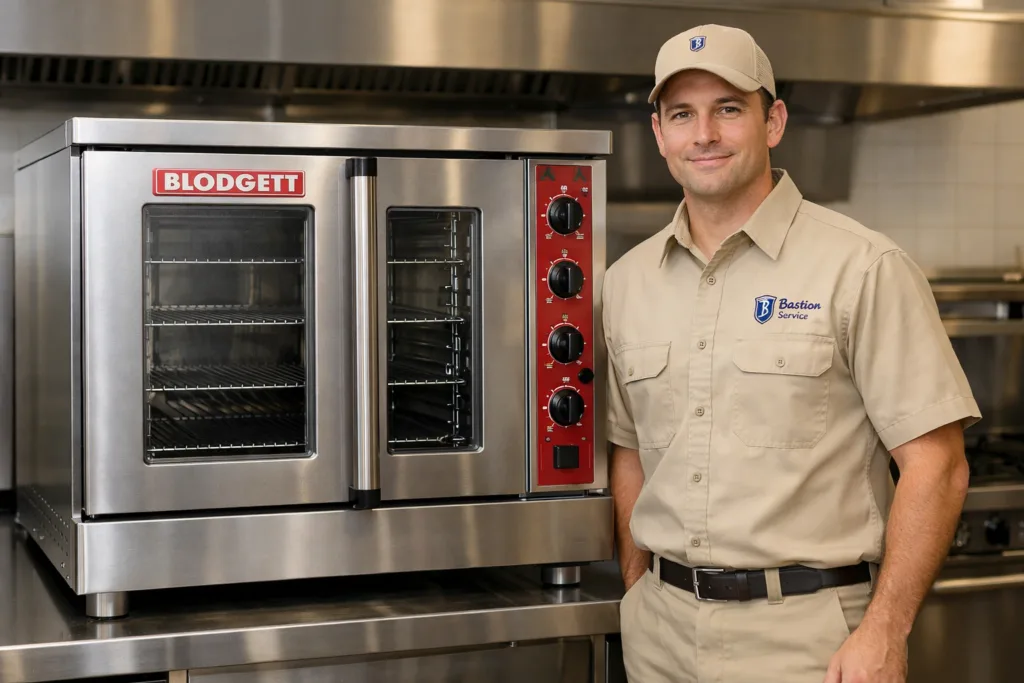




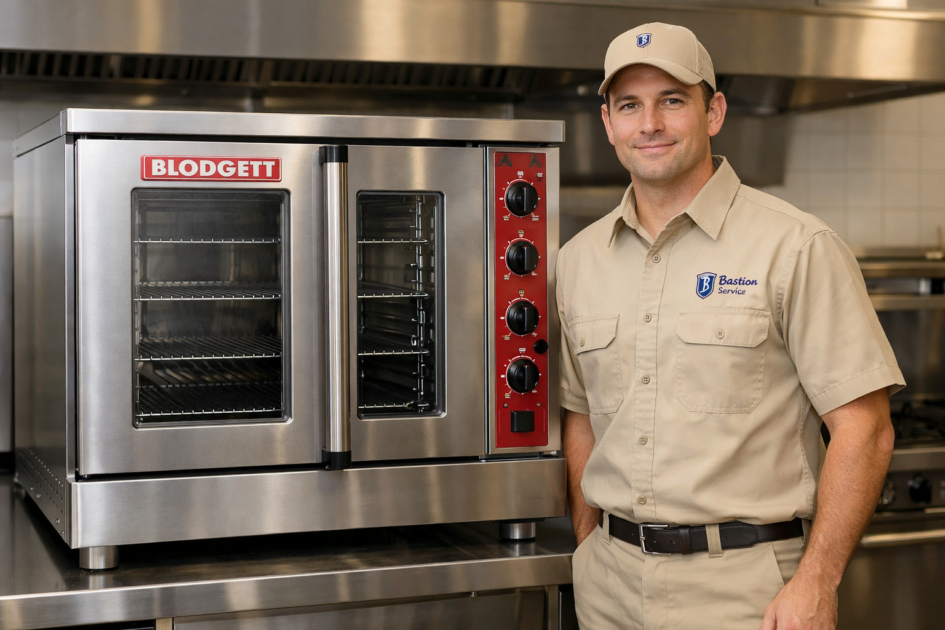
When a Blodgett oven starts running hot, baking unevenly, failing to ignite, or dropping temperature during service, the issue quickly affects ticket times, product consistency, and kitchen workflow in Del Rey. The most effective repair call starts with the symptom pattern: when the problem happens, whether it is constant or intermittent, and how it affects preheat, recovery, and batch results. Bastion Service works with businesses in Del Rey to diagnose those faults, narrow the cause, and schedule repair based on urgency, safety, and daily operating needs.
Related commercial service paths in Del Rey include Blodgett Commercial Repair in Del Rey, Commercial Oven Repair in Del Rey, and Southbend Oven Repair in Del Rey.
How Blodgett oven problems affect daily operations
Oven problems rarely stay limited to one inconvenience. A unit that preheats slowly can delay opening prep. An oven that overshoots temperature can create waste and inconsistent browning. A cavity that loses heat after the door opens can slow down high-volume production and force staff to adjust timing from one load to the next. Even when the oven still turns on, unstable performance often means the equipment is no longer supporting normal output.
That is why symptom-based service matters. The same complaint can come from different causes, including ignition faults, sensor drift, burner issues, fan problems, failing controls, door sealing problems, or airflow restrictions. Repair decisions are more accurate when the actual failure is verified instead of assuming one part is responsible.
Common Blodgett oven symptoms and what they may indicate
Not heating or struggling to reach set temperature
If the oven does not heat at all, the fault may involve ignition components, electrical supply, controls, safety circuits, or failed heating elements depending on the configuration. If it heats but stays below the selected temperature, possible causes include a weak igniter, poor burner performance, sensor inaccuracy, airflow issues, or calibration problems. In many kitchens, this first appears as longer cook times, pale finishes, or a need to keep increasing the temperature setting to get normal results.
Uneven baking, roasting, or hot and cold spots
When one rack finishes faster than another or one side of the cavity cooks differently, the problem may involve circulation, fan operation, blocked airflow, worn door seals, sensor issues, or heat distribution faults. Uneven performance is not always a thermostat problem. On convection models especially, air movement inside the cavity plays a major role in consistency.
Slow preheat and poor temperature recovery
Slow preheat can point to weak ignition, incomplete burner operation, control problems, heat loss, or internal wear that reduces efficiency. Poor recovery after loading often shows up during rush periods, when the oven cannot return to target temperature fast enough between batches. This can disrupt timing across the whole line and make a reliable menu item suddenly difficult to execute.
Ignition faults, delayed startup, or burner dropout
If the oven clicks, hesitates, starts late, or shuts down partway through a cycle, there may be an issue with the igniter, flame sensing, gas valve function, burner cleanliness, wiring, or the control system. Intermittent ignition problems are especially important to address early because they often worsen under heat load and repeated cycling.
Temperature swings during use
An oven that runs too hot, too cool, or fluctuates through the cycle may have a faulty sensor, calibration issue, relay problem, control failure, or airflow imbalance. Operators may notice that identical products come out too dark in one batch and underfinished in the next. When staff begin compensating with constant setting changes, that usually signals a repair issue rather than an operator issue.
Door seal problems and heat loss
Worn gaskets, hinge wear, latch problems, and door misalignment can all affect oven performance. Heat escaping around the door can make the oven seem weak even when the burner or heating system is functioning. It also lengthens run times, slows recovery, and can add wear to other components by forcing the unit to cycle longer than it should.
Why symptom details help speed up diagnosis
Before service is scheduled, it helps to note exactly what the oven is doing. Useful details include whether the fault happens during preheat or after the oven has been running, whether the issue affects all racks or only certain positions, whether the temperature display matches actual results, and whether the problem is continuous or comes and goes. A pattern like “fails after lunch rush” or “only heats unevenly when fully loaded” often points the diagnosis in a more productive direction than a general report that the oven is “acting up.”
For businesses in Del Rey, that kind of information can help prioritize the call and prepare for whether the likely issue is related to ignition, heat regulation, circulation, mechanical sealing, or electronic control behavior.
When to stop using the oven and schedule repair
Service should be scheduled when performance changes begin affecting output, food quality, timing, or operator confidence. If staff are restarting the oven to keep it running, rotating pans more than usual, avoiding certain menu items, or constantly adjusting settings just to get acceptable results, the unit is no longer operating normally.
Continued use can make some problems worse. Overheating may stress controls and internal components. Repeated ignition attempts can increase wear on the ignition system. Poor door sealing can extend cook times and hide the real source of heat loss. Intermittent shutdowns can also turn into complete failure with little warning.
If there is a persistent gas odor, stop using the oven immediately and follow appropriate safety steps before arranging repair. If there is no gas smell but ignition is delayed, inconsistent, or unreliable, the oven should still be evaluated before returning to full production.
Repair or replace?
Many Blodgett oven problems are repairable when the issue is limited to controls, sensors, ignition components, fan-related parts, door hardware, gaskets, or other isolated failures. Repair is often the more practical path when the oven still fits the kitchen’s production needs and the rest of the unit remains in solid working condition.
Replacement becomes a more serious consideration when the oven has a history of repeated major failures, extensive wear, unstable performance even after recent work, or repair costs that no longer make sense for the unit’s age and condition. The best decision usually comes from looking at downtime risk, parts condition, labor scope, and how critical that specific oven is to daily operations in Del Rey.
What to expect from a service-focused repair visit
A productive oven repair visit should do more than swap a likely part. It should confirm the complaint, test how the unit behaves under operating conditions, inspect the components tied to the reported symptom, and determine whether the problem is isolated or part of a larger wear pattern. That is especially important with issues like uneven heating, cycling faults, or intermittent shutdowns, where the visible symptom can have more than one root cause.
For kitchens, bakeries, and other food-service businesses in Del Rey, the goal is to restore stable heat performance with a repair plan that matches the actual condition of the oven. If your Blodgett oven is affecting production, slowing prep, or creating inconsistent results, the next step is to schedule diagnosis based on the symptoms you are seeing so the repair can be prioritized before downtime spreads further.


