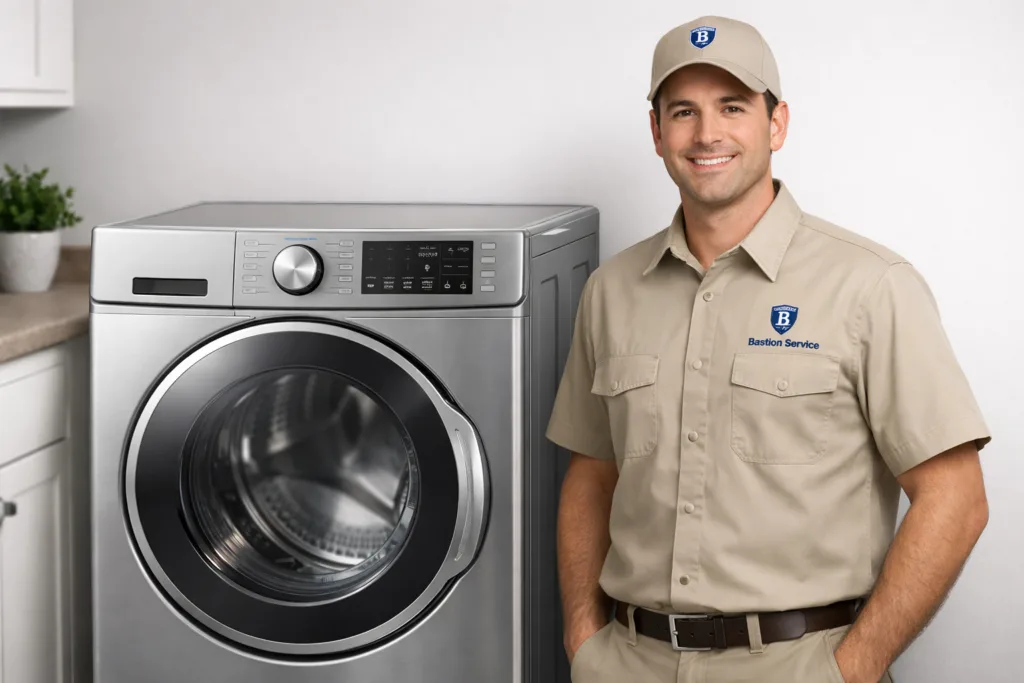
Dryer problems are easiest to solve when the symptom is matched to the actual failed part or airflow issue. A Samsung unit that tumbles without heat, runs too long, shuts off mid-cycle, or starts making a new sound can point to very different repair paths, even when the problem looks similar at first.
Start with what the dryer is doing
Samsung dryers commonly develop a handful of repeat issues in residential use: no heat, poor drying performance, no start, drum movement problems, abnormal noise, overheating, and recurring error codes. The useful clue is not just the symptom itself, but how it behaves. A dryer that never heats is different from one that heats briefly and then stops. A machine that leaves clothes damp may have a heating problem, but it may also be struggling with restricted airflow.
For homeowners in Mid-City, that distinction matters because it affects both the repair scope and whether continued use could make the problem worse. A correct diagnosis helps avoid replacing parts based on guesswork and gives a clearer idea of whether the issue is electrical, mechanical, or vent-related.
Common Samsung dryer problems and what they may mean
No heat or not enough heat
If the dryer runs but clothes come out cold, damp, or only partly dried, the cause may involve the heating element, thermal fuse, thermostat, sensor circuit, control problem, or incoming power issue. In some cases, the dryer is producing heat but cannot move moist air out effectively, which makes it seem like the heater has failed.
This is one of the most important symptoms to address promptly. Poor airflow can increase cycle times, overwork heating components, and create repeat shutdowns from overheating.
Long dry times
When loads need two or three cycles, the most common explanations are vent restriction, weak heat, moisture-sensing issues, or excessive strain from heavy loads. If lint screen cleaning does not improve performance, the issue usually needs closer inspection. Long dry times are easy to ignore at first, but they often signal a problem that is already reducing efficiency and adding wear.
Dryer will not start
A Samsung dryer that does nothing when Start is pressed may have a door switch problem, blown thermal fuse, control board issue, user interface fault, or power-related failure. If the display lights up but the cycle will not begin, that often narrows the problem to a different set of components than a dryer with no response at all.
Drum will not turn
If the machine powers on but the drum does not move, possible causes include a broken belt, seized rollers, a worn idler pulley, motor trouble, or a switch issue. A humming sound without drum movement often suggests the motor is under strain. Repeated attempts to start the dryer in that condition can increase wear and turn a smaller repair into a larger one.
Squealing, scraping, thumping, or rattling
New noises usually point to worn support rollers, glides, pulley assemblies, or items caught in the drum path or blower area. A rhythmic thump may indicate a worn roller or an item trapped where it should not be. A sharp squeal often suggests friction in moving parts. Mechanical noise rarely improves on its own, and continued use can spread damage to adjacent components.
Dryer shuts off mid-cycle
Unexpected shutdowns can be caused by overheating, restricted airflow, sensor faults, motor problems, or control failures. If the dryer restarts after cooling down, overheating is a common possibility. If it stops randomly with no pattern, testing is usually needed to separate a heat-related issue from an electrical one.
Airflow problems are often part of the repair picture
Many drying complaints that seem like heater failure actually involve poor airflow. When warm air cannot move out efficiently, clothes stay damp, cycle times increase, and internal temperatures may rise enough to trigger protective shutdowns. That is why a Samsung dryer with long dry times, hot cabinet surfaces, or repeated thermal issues should be checked for both component failure and vent performance.
Signs that airflow may be contributing include:
- Clothes are still damp after a normal cycle
- The dryer feels unusually hot on the outside
- Laundry comes out hotter than usual
- The machine shuts off before the load is finished
- Drying results vary from one load to the next
When to stop using the dryer
Some issues can wait a short time. Others are a reason to stop using the machine until it is checked. It is smart to pause use when:
- There is a burning smell
- The dryer overheats or the laundry feels excessively hot
- The drum will not turn
- The machine makes scraping, banging, or squealing noises
- Error codes keep returning after a restart
- The dryer trips a breaker or loses power during normal use
If a Samsung dryer in Mid-City is overheating or producing an odor, continuing to run it can increase damage and make the final repair more expensive.
Repair or replace?
Many Samsung dryer problems are still repairable, especially when the issue is limited to parts such as belts, rollers, pulleys, switches, fuses, thermostats, or heating components. Repair usually makes sense when the dryer is otherwise in decent condition and the problem is isolated rather than system-wide.
Replacement becomes more likely when the dryer has multiple major failures, a long history of repeat repairs, or overall wear that makes a larger repair harder to justify. The better approach is to diagnose first and compare the repair scope with the age and condition of the appliance, rather than deciding based on symptom alone.
What helps before a service visit
A few simple notes can make the problem easier to identify. It helps to know:
- Whether the dryer heats at all
- Whether the drum turns normally
- When the noise starts, if there is one
- Whether the problem happens on every load or only sometimes
- Whether an error code appears on the display
Cleaning the lint screen is always worthwhile, but repeated resets, forced restarts, or taking the machine apart without testing usually make the situation less clear. For most households in Mid-City, the fastest way forward is to identify the exact failure pattern first and then decide on the right repair.
Why symptom-based diagnosis matters with Samsung dryers
Two dryers can show the same basic complaint and still need completely different repairs. A unit that is “not drying” may need a heating part, a vent-related correction, a sensor repair, or a motor-related fix. A dryer that “will not start” may have a latch issue, a blown fuse, or an electronic control problem. Looking at the full symptom pattern helps narrow the cause and keeps the repair process focused.
That is what most homeowners want from Samsung Dryer Repair in Mid-City: a reliable explanation of what failed, whether the repair is worthwhile, and what steps will restore normal laundry use without unnecessary part replacement.