
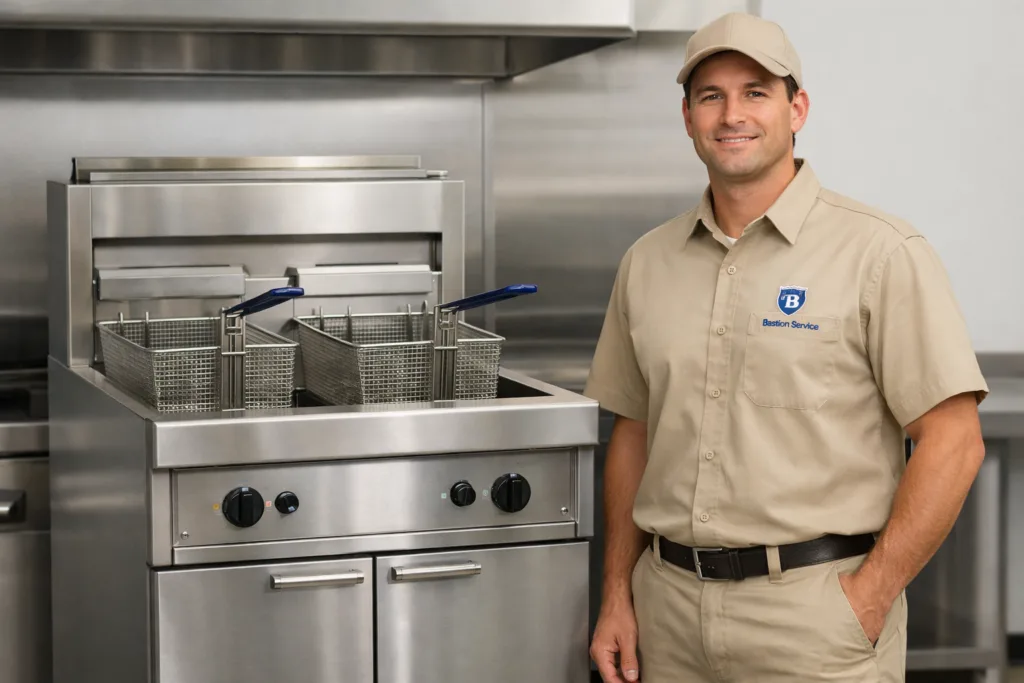




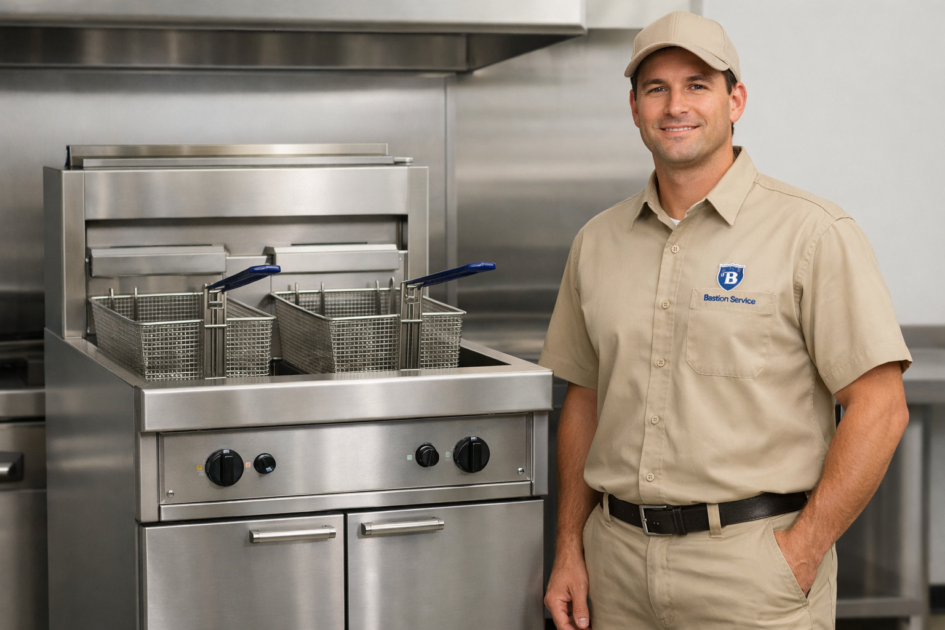
When Pitco cooking equipment starts falling behind during service, the real issue is rarely just “it is not heating right.” A fryer may be cycling inconsistently, recovering too slowly, shutting down on safety, or showing intermittent ignition trouble that becomes more disruptive as the day goes on. For businesses in Rancho Palos Verdes, the first priority is to identify the failed component or operating condition quickly so repair scheduling, parts decisions, and downtime planning are based on what the equipment is actually doing.
For specific equipment paths in Rancho Palos Verdes, review Pitco Fryer Repair in Rancho Palos Verdes and Commercial Appliance Repair in Rancho Palos Verdes.
Bastion Service provides Pitco repair support for businesses that rely on cooking equipment to stay on pace during prep and service. Whether the symptom is total heat loss, unstable temperature control, recurring lockouts, or declining output, service is most effective when the diagnosis connects the complaint to the burner system, controls, safety chain, or heat performance instead of relying on trial-and-error part replacement.
What Pitco cooking equipment problems usually need service
Pitco equipment problems often start as performance complaints before they become full shutdowns. A unit may still run, but if it is no longer heating evenly, holding set temperature, or recovering fast enough for normal demand, it is already affecting ticket times, food consistency, and staff workflow. In many kitchens, fryer issues show up first as reduced confidence in the equipment rather than a completely dead unit.
No heat or failed startup
If the equipment will not ignite, will not heat, or stops before reaching operating temperature, the fault may involve ignition components, gas flow, flame sensing, control communication, or safety devices. A unit that fails to light consistently should not be treated as a minor inconvenience, especially when staff are repeatedly restarting it just to stay in operation.
Temperature running too hot, too low, or unevenly
When temperature control drifts away from the set point, product quality usually suffers before anyone sees a hard fault. Food may cook too dark, too light, or at inconsistent speeds from batch to batch. Common causes include sensor problems, thermostat or probe issues, control faults, calibration errors, or burner performance problems that prevent stable heating.
Slow recovery during busy periods
Slow recovery is one of the most common reasons businesses request Pitco fryer service. The equipment may technically still operate, but once demand increases, the fryer cannot keep up. That can point to weak burner output, restricted heating performance, control issues, or components that are degrading under load. In a working kitchen, slow recovery is not just a nuisance—it limits production.
Repeated shutdowns or nuisance lockouts
If the unit cuts out mid-cycle, trips safety limits, or requires repeated resets, it should be inspected before the problem turns into a longer outage. Shutdown patterns can involve overheating conditions, faulty controls, flame-sensing issues, or other safety-related faults. Even if the equipment restarts, repeated shutdown behavior is a warning sign that should not be ignored.
Visible leaks, unusual smells, or abnormal operation
Leaks around the fryer area, unusual burner behavior, delayed ignition, or operating changes that staff can see or hear often indicate a service issue that should be addressed promptly. Symptoms like these can accompany broader performance faults and may affect whether the equipment should remain in use until repair is completed.
Why fryer symptoms need a full diagnosis
Many fryer complaints sound similar from the outside. “Not heating,” “taking too long,” and “shutting off” may all come from different failures. A proper service visit helps separate an ignition problem from a temperature-control problem, a burner issue from a control issue, and a repairable fault from a larger reliability concern.
That distinction matters because the repair decision affects more than one piece of equipment. Managers often need to decide whether the unit can stay in limited use, whether production needs to be shifted, and whether a parts order will create additional downtime. A thorough inspection gives a more realistic picture of what the repair involves and how urgent the condition is.
Common operating signs that should not be ignored
Businesses in Rancho Palos Verdes often schedule service after a pattern becomes hard to work around, but earlier attention can reduce disruption. Warning signs worth addressing include:
- the fryer takes noticeably longer to heat up
- oil temperature does not match the control setting
- the burner drops out during normal operation
- recovery time slows during rush periods
- the unit locks out or needs repeated resets
- performance changes from shift to shift
- product consistency is declining without a recipe change
- staff are adjusting routines to compensate for unreliable heat
These symptoms do not always mean major failure, but they do usually mean the equipment is moving away from normal operating condition.
How repair planning helps protect kitchen flow
Good repair planning is not only about replacing the failed part. It is about understanding how the current fault affects daily output and whether the equipment can reasonably stay in rotation. For example, a fryer with mild temperature drift may still be usable in a limited role until service, while a unit with repeated shutdowns, overheating behavior, or ignition instability may need to be taken offline sooner.
That is why symptom-based service matters. The goal is to match the repair response to the actual business impact: immediate outage, reduced capacity, food-quality risk, or an intermittent problem that is likely to worsen. For kitchens trying to maintain throughput, that kind of repair planning is often as important as the repair itself.
Repair or replace?
Not every Pitco problem points toward replacement. Many heating, control, ignition, and recovery issues can be corrected with targeted repair once the fault is confirmed. Replacement usually becomes a more serious consideration when the equipment has a long history of repeated failures, ongoing parts issues, or repair costs that no longer make sense for the unit’s condition and role in the kitchen.
In practice, businesses usually benefit from evaluating three things together: the current symptom, the overall condition of the equipment, and the cost of continued downtime. That approach helps owners and managers decide whether to repair now, stabilize operations while planning a future equipment change, or retire a unit that has become too disruptive to rely on.
Pitco repair support for businesses in Rancho Palos Verdes
For businesses in Rancho Palos Verdes, service is most useful when it moves quickly from symptom to action: identify the fault, determine whether the equipment should stay in use, and schedule the repair path that best protects production. If your Pitco cooking equipment is dealing with ignition trouble, weak heat recovery, unstable temperature control, leaks, or repeated shutdowns, arranging service is the next practical step to reduce downtime and get the kitchen back to predictable operation.


