





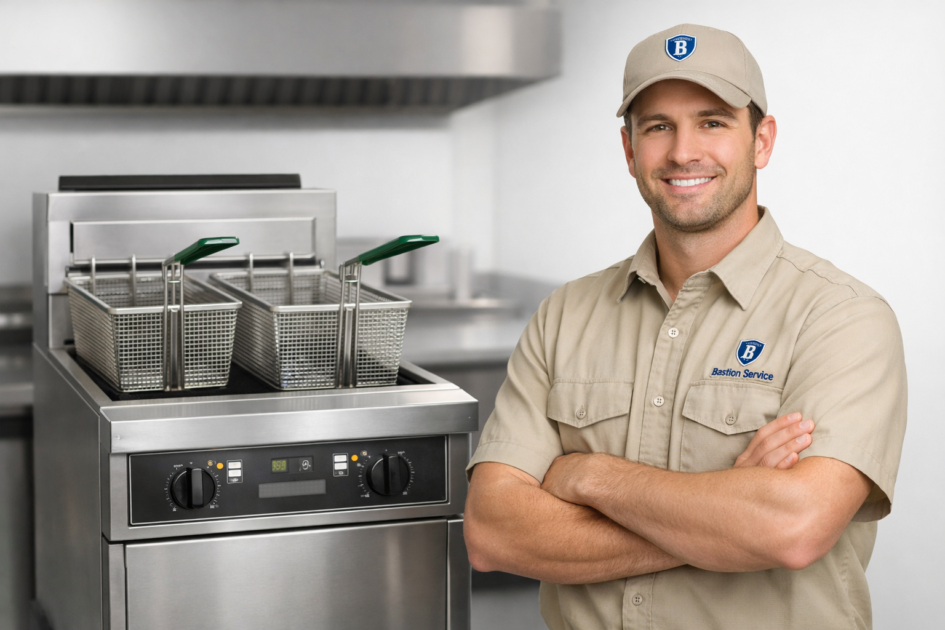
When a Pitco fryer starts drifting off temperature, failing to recover during busy periods, or shutting down mid-cycle, the impact is immediate: slower ticket flow, uneven product, extra oil stress, and disruption across the line. In Mid-Wilshire, the right next step is service based on the actual symptom pattern, not guesswork. Bastion Service helps businesses identify whether the issue points to ignition trouble, a temperature-control fault, a safety shutdown, a gas-side problem, or wear in related components so repair scheduling can be based on what the fryer is really doing.
Related commercial service paths in Mid-Wilshire include Pitco Commercial Repair in Mid-Wilshire, Commercial Fryer Repair in Mid-Wilshire, and Frymaster Fryer Repair in Mid-Wilshire.
Common Pitco fryer symptoms and what they can indicate
Fryer not heating or not reaching set temperature
If the fryer does not heat, stalls during warm-up, or never reaches the programmed temperature, several fault paths are possible. Depending on the model and configuration, the problem may involve the temperature probe, thermostat function, ignition components, gas valve operation, high-limit circuit, wiring, or the control board. In day-to-day kitchen use, this usually shows up as longer cook times, lighter product color, and poor recovery after loading baskets.
Slow recovery during production
A fryer that eventually heats but struggles to recover between batches can create a steady drop in output quality. This symptom may be tied to weak burner performance, restricted heat transfer, sensor drift, control issues, gas-flow problems, or maintenance-related buildup. Recovery complaints matter because they often appear first under real workload conditions rather than during idle testing.
Oil temperature swings and inconsistent cooking
When oil runs too hot, too cool, or fluctuates from one batch to the next, the fryer may be reading temperature incorrectly or responding poorly to changing demand. Common causes include probe problems, calibration errors, unstable controls, burner irregularities, or internal conditions that reduce consistent heat delivery. Businesses usually notice this as mixed product results, more frequent cook-time adjustments, and increased oil breakdown.
Ignition failure or intermittent startup
If the fryer clicks repeatedly, attempts to light and fails, locks out, or starts only some of the time, the issue may involve the igniter, flame-sensing circuit, control sequence, gas delivery, or electrical supply to the unit. Intermittent ignition problems are especially disruptive because the fryer may appear normal for one shift and fail the next, making production planning harder.
High-limit trips or unexpected shutdowns
A Pitco fryer that shuts itself down may be responding to an overheat condition or to a fault in the safety chain. This can happen because of sensor errors, control failure, airflow or combustion issues, or related component wear. Repeated resets should not be treated as a routine workaround. A fryer that keeps tripping out needs inspection before the shutdown pattern leads to broader downtime.
Oil leaks, drain-valve issues, or filtration problems
Leaks around the drain area, trouble filtering oil, slow return flow, or difficulty emptying the vat can point to worn seals, valve wear, pump trouble, obstructions, or damage caused during cleaning and maintenance. These faults affect more than sanitation. They can interrupt workflow, waste oil, create slip hazards, and turn a manageable repair into a larger operational problem.
Why a symptom-based diagnosis matters
Two fryers can show the same outward problem and need entirely different repairs. A unit that will not hold temperature may have a bad probe, a failing controller, weak burner performance, or a gas-side fault. A fryer that appears dead may actually be shut down by a safety device rather than a failed main component. That is why diagnosis should follow the symptom path from startup through heating, cycling, and recovery instead of jumping straight to parts replacement.
For businesses in Mid-Wilshire, that approach helps answer the questions that matter most: whether the fryer can be returned to stable operation, whether it should remain off until a safety issue is corrected, and whether the repair is isolated or part of a larger reliability trend. It also helps reduce wasted time on repeat visits caused by treating only the visible symptom.
Signs the fryer should be serviced soon
It is time to schedule repair when the fryer shows any repeated problem that affects heat, ignition, recovery, oil control, or normal production. Even if the unit still runs, unstable performance usually means the fault is progressing.
- Cook times are getting longer without a menu change
- Product color is inconsistent from one basket to the next
- Staff are resetting the fryer to keep it running
- The fryer struggles most during peak periods
- Temperature display and actual cooking results do not match
- Startup is unreliable, delayed, or inconsistent
- Oil is leaking, draining poorly, or filtering slowly
These warning signs often appear before a full shutdown. Addressing them early can prevent a smaller fault from turning into a longer outage during service hours.
When continued operation can make the problem worse
Some fryer issues should not be pushed through another shift. Continued use may worsen damage when the unit is overheating, tripping the high limit, leaking oil, failing ignition repeatedly, or cooking so inconsistently that staff are compensating with manual timing changes. Repeated resets can also mask the root cause while increasing stress on controls and related parts.
If the fryer is unstable under normal load, it is usually better to stop and evaluate it than to let the problem spread into lost product, oil waste, or a broader interruption across the kitchen.
Repair versus replacement considerations
Many Pitco fryer problems still support a sensible repair path. Issues involving sensors, controls, ignition parts, valves, wiring, limits, and filtration components are often repairable when the fryer cabinet and vat condition remain sound and the unit still fits the kitchen’s production needs.
Replacement becomes a stronger consideration when the fryer has repeated shutdowns, multiple failing systems, significant wear, a poor recent repair history, or a cost path that no longer matches the age and condition of the equipment. The goal of service is not just to identify a bad part. It is to help the business decide whether the fryer can return to stable daily use or whether continued investment is becoming harder to justify.
What to have ready before a service visit
A few details from the kitchen can make diagnosis faster and more accurate. It helps to note:
- Whether the fryer fails at startup, during warm-up, or during active cooking
- Any error codes, lockout behavior, or reset patterns
- Whether the issue affects heating, recovery, filtration, or all of the above
- If the problem is constant or mainly appears during peak demand
- Any recent cleaning, maintenance, or part replacement before the fault began
That information helps connect the complaint to the likely fault path and can shorten the time needed to move from symptom review to an informed repair decision.
Service focused on uptime and safe operation
Good fryer repair should do more than get the burners back on for the moment. It should identify why the unit stopped performing properly, verify temperature behavior under operating conditions, and address the issue that is affecting throughput and consistency. For Mid-Wilshire businesses, that means scheduling service when the first signs of unstable heat, ignition trouble, or shutdown behavior appear, then using the findings to decide on repair timing, temporary workflow adjustments, and the most practical next step for the equipment.


