
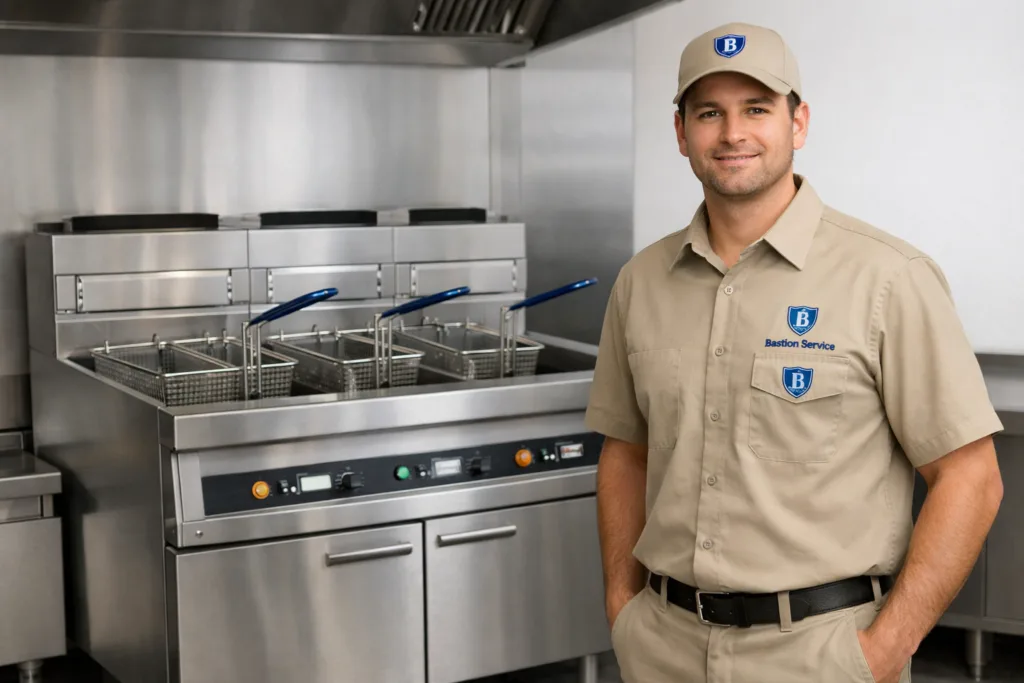




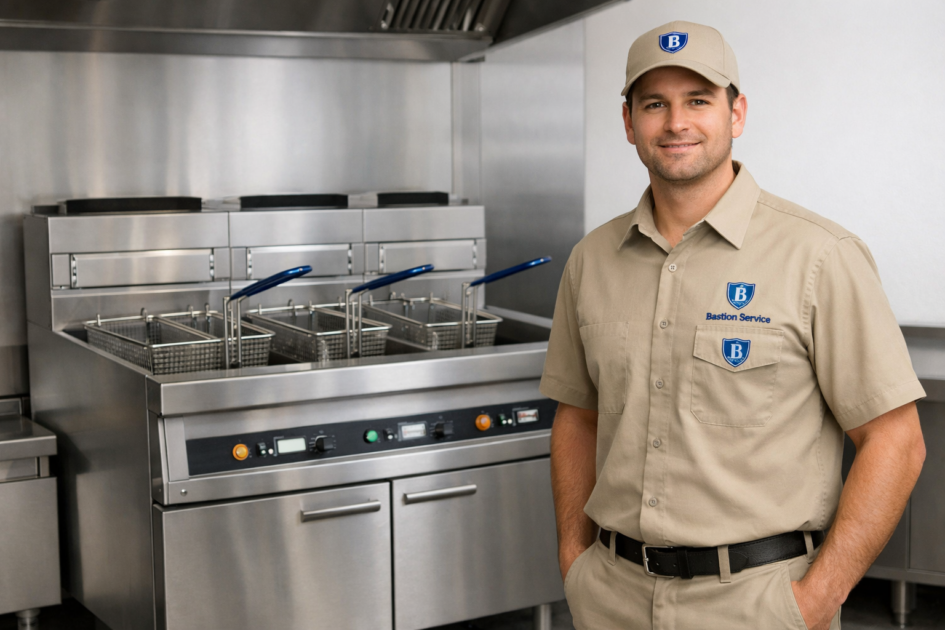
Equipment trouble in a busy kitchen rarely stays isolated for long. When a Pitco unit begins missing temperatures, recovering too slowly, failing to ignite, or shutting down during service, the result is immediate pressure on output, staffing, and food consistency. For businesses in Mid-Wilshire, repair service should quickly answer the important questions: what failed, how urgent it is, whether the equipment can remain in use, and what repair scheduling makes the most sense for daily operations.
For specific equipment paths in Mid-Wilshire, review Pitco Fryer Repair in Mid-Wilshire and Commercial Appliance Repair in Mid-Wilshire.
Bastion Service helps Mid-Wilshire businesses troubleshoot Pitco cooking equipment problems with service-oriented evaluation and repair planning based on the actual symptom pattern. That matters because temperature faults, burner issues, ignition failures, and control problems can overlap, while the correct fix depends on which component or system is truly causing the disruption.
Common Pitco cooking equipment problems that need diagnosis
Pitco equipment is often expected to deliver stable heat, fast recovery, and repeatable performance under constant demand. When that changes, the symptom may appear simple while the underlying fault is not. A unit that runs too cool, too hot, or inconsistently can be dealing with thermostat problems, sensor issues, burner trouble, ignition faults, control failures, limit-device trips, wiring problems, or fuel-related irregularities.
For kitchens that rely on fryers and other hot-side equipment to maintain ticket flow, even a small performance shift can turn into slower output, uneven product quality, and avoidable downtime. Service becomes less about replacing parts by guesswork and more about identifying the cause before the problem affects the rest of the line.
Symptom patterns that often point to repair needs
Slow heat-up or poor heat recovery
When cooking equipment takes too long to reach temperature or cannot recover quickly between cycles, production slows almost immediately. This may show up as longer cook times, inconsistent finished product, or staff having to wait on equipment that normally keeps pace with demand. In many cases, slow recovery is tied to burner performance, temperature regulation, heat transfer issues, or controls that are no longer responding correctly.
If the problem is allowed to continue, the kitchen may start compensating by overloading other units or changing workflow around a piece of equipment that no longer performs as expected. Early diagnosis helps determine whether the issue is a single failing component or part of a broader wear pattern.
Ignition failures or inconsistent startup
If the equipment does not ignite reliably, needs repeated attempts to start, or lights intermittently, the problem should be treated as a repair issue rather than normal wear. Ignition assemblies, flame sensing, gas delivery, wiring, and control response can all contribute to unreliable startup behavior. These symptoms often lead to nuisance lockouts, inconsistent heating, and unexpected interruptions during busy periods.
Unreliable ignition also makes planning difficult for managers trying to decide whether a unit can stay in rotation for the next shift. A proper service visit helps clarify whether the problem is isolated and repairable on a normal schedule or whether continued use creates too much operational risk.
Temperature swings and poor control accuracy
Equipment that overshoots set temperature, undershoots during use, or cycles unpredictably can affect both food quality and service timing. This symptom group commonly points toward sensors, thermostats, control boards, calibration issues, or linked heating components that are no longer operating in sync.
These faults are especially disruptive because they may seem intermittent at first. One cycle appears normal, the next runs too hot or too cool, and the kitchen loses confidence in the equipment. That uncertainty is often reason enough to schedule repair before the problem becomes a complete shutdown.
Unexpected shutdowns during use
A unit that drops out mid-cycle, trips a safety device, or requires resets should be evaluated promptly. Shutdowns can be caused by high-limit problems, unstable burner operation, ignition loss, electrical faults, or control failures. Even when the equipment restarts, repeated interruption points to an unresolved issue that can worsen under continued load.
For businesses in Mid-Wilshire, this is where repair timing matters most. A shutdown pattern may allow for planned service if caught early, but once the fault becomes frequent, it can force immediate changes to production and staffing.
How fryer-related problems affect kitchen operations
Pitco fryers are often central to fast, repeatable output, so fryer symptoms tend to become operational problems quickly. Slow recovery means longer waits between batches. Inconsistent temperature means inconsistent product. Ignition trouble means delayed startup or mid-shift interruptions. A fryer that falls behind during peak volume can push pressure onto other stations and create a chain reaction across the kitchen.
Because several different failures can produce similar fryer complaints, symptom-based diagnosis is especially important. Burner performance, controls, thermostatic regulation, high-limits, and ignition systems each affect heating in different ways. The value of service is not simply confirming that the fryer has a problem, but determining which system is responsible and whether the repair path is straightforward or more involved.
When continued use may increase downtime risk
Some equipment can remain in limited use while awaiting repair, but certain symptoms should move service higher on the schedule. Repeated shutdowns, unstable flame behavior, inability to hold temperature, frequent lockouts, and obvious control irregularities all suggest that continued operation may lead to deeper failure or more disruptive downtime.
In business kitchens, teams often try to work around one underperforming unit by shifting volume elsewhere. That can keep service moving temporarily, but it also places more strain on the remaining equipment and makes a localized repair issue become a wider production problem. Scheduling repair before that happens is often the most cost-effective decision.
Repair versus replacement decisions
Not every service call ends with the same recommendation. Sometimes the fault is isolated and the most sensible path is a targeted repair. In other cases, repeated breakdowns, multiple failing systems, age-related wear, or chronic control and heating issues may justify a replacement discussion. The right decision usually depends on condition, frequency of recent problems, parts status, and how much downtime the business can absorb.
A good diagnosis helps owners and managers compare the real impact of one repair against the pattern of future disruption. If the issue is contained, repair may restore stable operation without major interruption. If reliability has become unpredictable, replacement planning may better support long-term kitchen performance.
What a service visit should help you understand
For Pitco cooking equipment, a repair appointment should provide more than a basic part identification. It should clarify whether the equipment is safe to continue using, whether the symptom is likely to worsen, what systems need to be tested, and how urgently repair should be scheduled. That includes evaluating ignition performance, burner operation, temperature control behavior, shutdown causes, and the relationship between intermittent complaints and likely hard failures.
This information is useful not just for technicians, but also for operators making real-time decisions about staffing, prep timing, menu flow, and whether one unit can cover demand while another is being repaired. The clearer the findings, the easier it is to plan around downtime instead of reacting to it.
Scheduling Pitco repair service in Mid-Wilshire
If Pitco cooking equipment in your Mid-Wilshire kitchen is heating inconsistently, losing ignition, recovering too slowly, or shutting down without warning, the next step is to schedule service before the issue spreads into larger production delays. A repair visit can identify the fault, outline the repair path, and help your team decide whether the unit should stay in use, be taken offline, or be evaluated for replacement based on condition and downtime impact.


