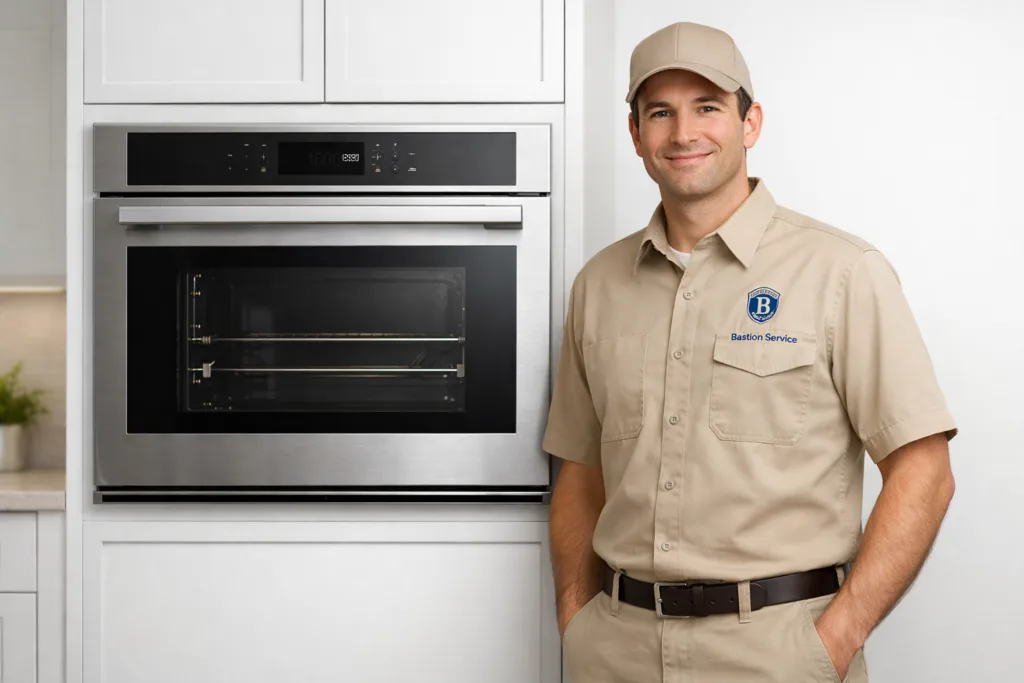
Common Monogram Wall Oven Problems in Venice Homes

Monogram wall ovens usually give a fairly clear set of warning signs before they stop working entirely. Paying attention to the pattern helps narrow down whether the issue is tied to heat production, temperature sensing, the control system, or the door and latch assembly.
Oven will not heat
If the display powers on but the cavity stays cold, the failure may involve a bake element, broil element, sensor, wiring connection, relay, or electronic control. In some cases, the oven starts a cycle normally and then never builds enough heat to cook. That difference matters because a complete no-heat problem is diagnosed differently than weak or partial heating.
Slow preheating
A wall oven that eventually gets hot but takes much longer than normal may have a weakened heating component, inaccurate sensor feedback, or a control problem that is not cycling the heat properly. Slow preheat can also show up before a full heating failure, so it is worth addressing early rather than waiting for the oven to stop working during regular meal prep.
Uneven baking and temperature swings
When cookies brown unevenly, casseroles finish on top but stay cool in the center, or one rack cooks much faster than another, temperature regulation is usually the main concern. A drifting sensor, poor convection performance, a worn door gasket, or inconsistent element operation can all affect cooking results. Many homeowners first notice this as “recipes suddenly taking longer” rather than a total breakdown.
Control panel and display issues
Unresponsive buttons, flashing error codes, random beeping, resets, or a display that works intermittently often point to an electronic fault rather than a heat-only issue. On a built-in oven, these symptoms can interrupt cooking cycles, prevent start-up, or trigger a lock condition that makes the appliance unusable until the underlying cause is corrected.
Door, hinge, and latch problems
If the door does not close squarely, will not stay sealed, or gets stuck locked after a cycle, performance can drop quickly. Heat loss from a poor seal can create longer cook times and inconsistent temperatures. Latch problems may also prevent the oven from starting, especially if the control does not recognize the door position correctly.
What Different Symptoms Often Mean
Two ovens can look like they have the same problem from the outside and still need very different repairs. That is why symptom-based troubleshooting is so useful.
- Cold oven with working display: often traced to a heating circuit, sensor, relay, or control fault.
- Oven runs but cooks too cool or too hot: more commonly related to temperature sensing, calibration drift, or control accuracy.
- Long preheat with poor baking results: can suggest one heating function is weak or not engaging consistently.
- Error code after self-clean: may involve the latch system, temperature protection response, or an electronic component stressed by high heat.
- Intermittent shutoff during cooking: can indicate overheating protection, a failing control, wiring problems, or a power supply issue.
Because these symptoms overlap, replacing parts without testing can lead to extra cost without solving the actual problem.
When to Stop Using the Oven
Some wall oven issues are inconvenient but contained. Others are signs that continued use could create more damage. It is smart to stop using the appliance and schedule service if you notice any of the following:
- The oven trips the breaker
- There is a burning or sharp electrical smell
- The unit overheats or scorches food unexpectedly
- The display goes blank mid-cycle
- The door will not lock or unlock properly
- The oven shuts off during preheat or active cooking
These conditions can point to electrical or control-related faults that should not be ignored. Even if the oven still works part of the time, intermittent operation usually means the failure is progressing.
Why Built-In Wall Ovens Need a Careful Repair Approach
Monogram wall ovens are integrated into cabinetry, which changes how service should be handled. Access has to be managed carefully, especially when the issue may involve internal components, airflow, mounting, or heat-sensitive surrounding finishes. A proper diagnosis should account for both the appliance failure and the realities of the built-in installation.
That matters in Venice homes where kitchen layouts often make replacement more disruptive than a targeted repair. If the problem is isolated to a specific component, fixing the existing unit is often the more sensible route than opening up a larger cabinet and installation project.
Repair or Replace: How to Think It Through
For many households, repair makes sense when the oven is otherwise in good shape and the problem is limited to a part such as a sensor, element, latch, or control-related component. Replacement becomes more likely when there are repeated major failures, broader electronic wear, or repair costs that do not make sense compared with the remaining value of the appliance.
A practical decision usually comes down to:
- The exact component that failed
- The overall condition of the oven
- Whether other issues are developing at the same time
- The difficulty of replacing a built-in unit without additional kitchen work
In many cases, an oven that has one confirmed failure is a good repair candidate. An oven with multiple performance and control issues at once may need a closer cost-benefit review.
What to Have Ready Before Service
If you are scheduling Monogram wall oven repair in Venice, a few details can make the visit more productive. Try to note whether the problem happens every time or only on certain settings, whether bake and broil both fail the same way, and whether an error code appears before the oven stops. If food is consistently overcooked or undercooked, that is also useful information because it helps separate heat production issues from temperature regulation problems.
It also helps to mention if the trouble started after a self-clean cycle, a power interruption, or a recent period of heavy holiday cooking. Those timing clues often point technicians toward the most likely system to inspect first.
What a Service Visit Should Clarify
A useful visit should answer more than “what part failed.” It should also clarify whether the oven is safe to use, whether the problem is isolated or affecting multiple systems, and whether repair is likely to restore normal cooking performance without guesswork. That gives homeowners a realistic path forward instead of relying on trial-and-error part replacement.
For a Monogram wall oven, the goal is to restore stable heating, accurate temperature control, and reliable everyday operation. When the symptom pattern is understood correctly, the repair decision becomes much easier.