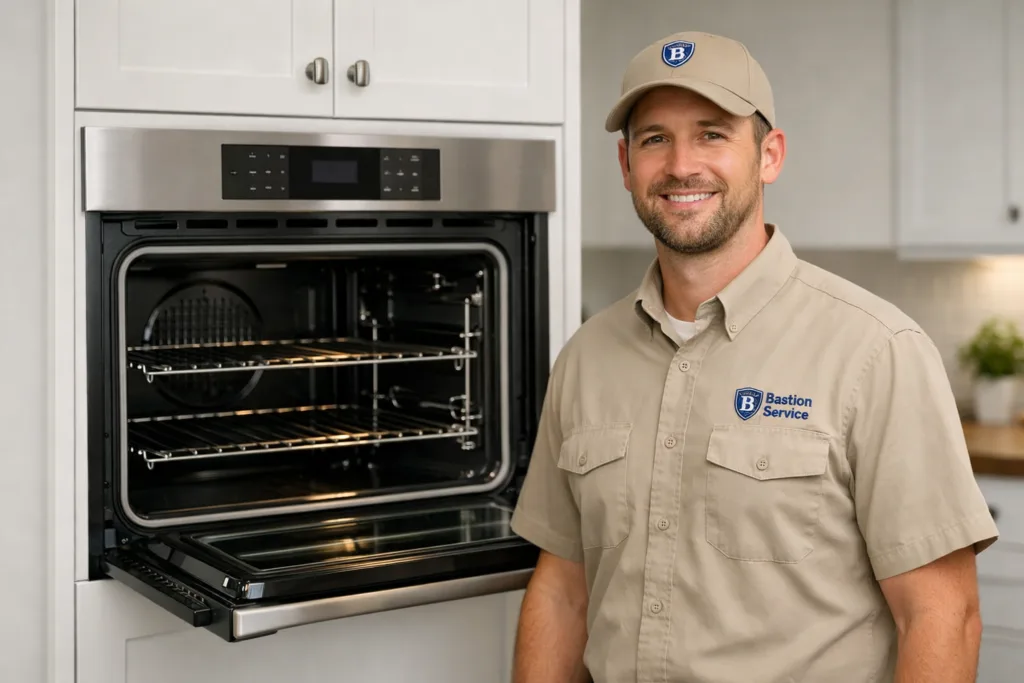
Wall oven problems are easier to solve when the symptom is described clearly. A Bosch unit that will not heat, runs too hot, takes far too long to preheat, or shows a control error may have a very different repair path depending on whether the failure is in the heating circuit, sensor system, door assembly, or electronic controls. In Venice homes, that difference matters because built-in appliances are harder to work around when the kitchen depends on them every day.
How Bosch wall oven problems usually show up
Most failures begin in one of a few recognizable ways. Some ovens stop heating altogether. Others still run, but cooking results become unreliable: casseroles stay cool in the center, cookies brown unevenly, or a dish that normally takes 30 minutes suddenly needs 45. In other cases, the display works but the oven does not respond normally to bake, broil, or timer commands.
These patterns help narrow the problem, but they do not confirm the exact failed part on their own. Two ovens can show the same symptom for different reasons, which is why diagnosis should focus on what the appliance is actually doing during operation.
Not heating or barely heating
If the cavity stays cold or never gets close to the set temperature, likely causes include a failed bake element, broil element, temperature sensor, thermal protection component, relay, or control board issue. On some models, the oven may appear to start normally while one part of the heating circuit never energizes. That can make the unit seem slow rather than fully dead.
A partial heating failure often becomes noticeable before a complete shutdown. Homeowners may first notice longer preheat times, pale baking results, or the need to increase the temperature setting just to get normal cooking performance.
Uneven baking and temperature swings
When one rack cooks faster than another or food browns heavily on top while staying underdone below, the issue may involve sensor inaccuracy, poor heat distribution, or one heating function not cycling correctly. Temperature drift can also come from a control problem that causes the oven to overshoot or undershoot the target temperature.
These issues are frustrating because the oven still works enough to be used, but results become inconsistent. That often leads to overcompensating with longer cook times or higher settings, which does not fix the underlying problem.
Slow preheat
Slow preheat is one of the most common early warning signs. A Bosch wall oven that used to reach temperature quickly but now lags may have a weakening element, sensor problem, or relay that is not delivering heat correctly through the full cycle. This is worth checking sooner rather than later, since the oven may continue to decline until it stops heating altogether.
Display, keypad, and control issues
A blank display, flashing panel, frozen touch controls, or repeated resets can point to a power-supply problem, wiring fault, user interface issue, or main control failure. Some control problems also affect heating, which is why an oven that will not bake properly is not always dealing with a heating element alone.
If the unit shuts off mid-cycle, loses settings, or shows recurring error messages, continued use can make diagnosis harder and may increase the chance of a more involved repair.
Door and latch problems
If the door will not close correctly, will not unlock, or triggers a latch-related fault, the problem may involve the latch motor, switches, hinges, alignment, or control logic. These issues often become more noticeable after self-clean cycles because of the extreme heat involved.
Forcing a stuck door or repeatedly cycling power to clear the problem can turn a manageable repair into a larger one, especially on a built-in oven where access is tighter and surrounding cabinetry must be protected.
What common symptoms can indicate
- Oven will not heat at all: possible failure in the heating circuit, sensor, fuse, control, or incoming power path.
- Oven heats unevenly: possible sensor drift, element weakness, airflow issue, or control cycling problem.
- Preheat takes much longer than normal: often linked to a weakening heating component or inaccurate temperature feedback.
- Error code appears repeatedly: may indicate a sensor, latch, communication, or control fault that needs model-specific testing.
- Unit shuts off during baking: possible overheating condition, wiring issue, failing control, or power interruption.
- Door stays locked: possible latch assembly or self-clean related failure.
When to stop using the oven
It is usually best to stop using the oven if it overheats, trips the breaker, smells hot or electrical, shuts off unexpectedly, or locks the door improperly. Those symptoms can point to faults that go beyond simple temperature inaccuracy. An oven that is merely cooking unevenly is still inconvenient, but one that is overheating or losing control of the cycle raises a different level of concern.
Even milder symptoms deserve attention if they repeat. An occasional slow preheat can become a no-heat call. A display that glitches once can turn into a full loss of control response. Catching the problem while the failure is still limited often makes the next step simpler.
Repair or replace?
Many Bosch wall oven repairs are reasonable when the issue is limited to a sensor, element, latch component, fuse, fan-related part, or isolated control problem. Replacement becomes more likely when the oven has multiple major faults, significant electronic damage, or repair cost that no longer makes sense for the appliance’s age and condition.
The decision is easier once the failed system is identified. A single bad component in an otherwise solid oven is very different from a unit with repeated heat-related failures or broader control instability.
What helps before a service visit
If you are scheduling Bosch wall oven repair in Venice, it helps to note a few details first:
- Whether the oven reaches temperature at all
- Whether bake and broil both respond
- Any error code shown on the display
- Whether the issue started suddenly or worsened gradually
- Whether the problem appeared after self-clean or a power interruption
That information can make symptom-based diagnosis faster and more accurate. For Venice homeowners, the goal is not just getting the oven running again, but understanding whether the repair is straightforward, whether additional components may be involved, and whether the appliance is a good candidate for continued use after service.