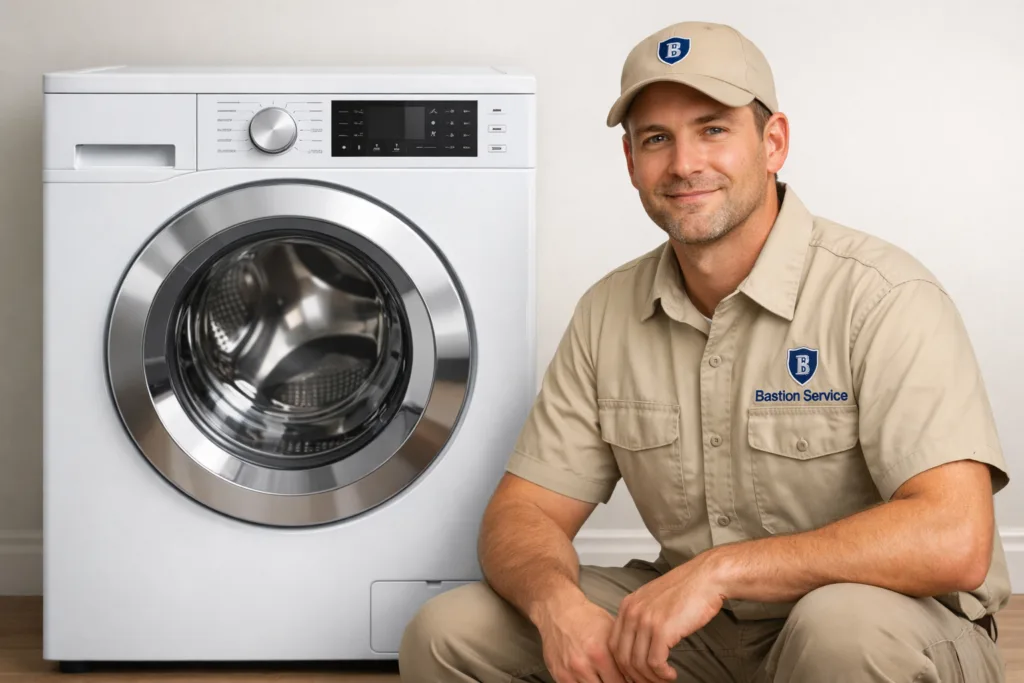
Miele washers are designed to run efficiently and quietly, so a change in performance is usually worth attention. If laundry is coming out wetter than usual, cycles are taking longer, or the machine has started leaking or stopping unexpectedly, the most useful next step is to match the symptom to the likely system involved. That approach helps avoid guesswork and makes it easier to decide whether service is worthwhile.
Common Miele washer problems homeowners notice first
Washer problems rarely begin as a complete breakdown. In many homes, the first sign is a subtle one: slower draining, extra vibration, a door that does not latch smoothly, or a cycle that seems to pause longer than normal. On a Miele unit, these early signs can point to drainage restrictions, fill issues, door lock faults, control problems, or wear in moving parts.
Paying attention to when the issue happens matters. A washer that only struggles during spin suggests a different problem than one that fails at the start of every cycle. A machine that leaks only during drain-out can lead diagnosis in a different direction than one that leaks while filling.
Symptoms and what they may mean
Not draining fully
If water remains in the drum at the end of the cycle, the problem may involve a blocked drain path, a weak or obstructed pump, or a sensor-related issue that prevents the washer from moving into the next stage properly. In some cases, the machine will also refuse to spin at full speed if it detects that water has not cleared as expected.
Typical signs include:
- Standing water after the cycle ends
- Clothes that feel unusually heavy
- Long pauses before the machine attempts to spin
- Humming sounds during drain portions of the cycle
Poor spin performance
When clothing comes out damp even though the tub appears empty, the washer may be dealing with an imbalance condition, suspension wear, motor control trouble, or a spin safety interruption. Miele washers are designed to protect internal components, so they may reduce or cancel a high-speed spin if the load cannot be stabilized.
If this happens repeatedly with normal loads, it is usually more than a one-time loading issue.
Leaks around the washer
Leaks can come from several points, including fill hoses, drain connections, the door area, internal seals, or oversudsing caused by detergent issues. Even a small recurring leak should be taken seriously because water can spread under the appliance and damage nearby flooring or trim before the source becomes obvious.
A few clues can help narrow it down:
- Leaks at the start of a cycle may suggest fill-related issues
- Leaks during agitation may point to the door area or internal circulation
- Leaks near the end of a cycle may be tied to draining
Won’t start or won’t continue
If the display responds but the cycle will not begin, the washer may not be recognizing a closed and locked door, or it may be stopping because a water supply or control condition has not been satisfied. If the machine loses power entirely, the issue can shift toward electrical supply, interface failure, or an electronic control fault.
When a washer starts and then stops mid-cycle, the cause may be different from a no-start condition. Interruptions during operation can be linked to temperature sensing, drainage timing, communication errors, or safety lock issues.
Unusual noise or shaking
Not every noise means a major mechanical failure, but repeated banging, grinding, scraping, or loud humming should not be ignored. Excessive movement during spin can come from an unbalanced load, worn suspension components, drum support problems, or a developing issue in the drive system.
Warning signs that deserve prompt service include:
- The washer walks or shifts position
- Spin noise gets louder over time
- Metallic sounds appear during drum movement
- The cycle stops when vibration increases
Heating or wash-performance issues
If clothing is not coming clean, detergent residue remains, or cycles seem ineffective even with normal loads, the machine may have a heating problem, water intake issue, or control-related fault affecting cycle progression. Some heating-related failures do not look dramatic at first; they simply show up as poor cleaning, longer wash times, or inconsistent results.
When to stop using the washer
It is usually best to stop running the machine if it is leaking, tripping power, producing a burning smell, making sharp mechanical noises, or leaving significant water in the tub. Continuing to use it under those conditions can turn a manageable repair into a larger one by stressing the pump, motor system, suspension, or control components.
The same is true if fault codes keep returning after a reset. A recurring code is a sign that the washer is detecting an unresolved condition, not just a temporary interruption.
What you can check before scheduling service
There are a few simple checks that may help rule out basic setup or loading issues before a technician visits:
- Confirm the water supply valves are fully open
- Make sure the door closes securely and latches properly
- Check that the drain hose is not kinked or crushed
- Reduce oversized or heavily unbalanced loads
- Note any error code shown on the display
- Pay attention to whether the problem happens on every cycle or only certain settings
These observations can make diagnosis faster and help identify whether the issue is consistent, intermittent, or tied to a particular stage of the wash cycle.
Repair or replace: what usually matters most
The right decision depends less on one detail like age alone and more on the overall condition of the washer, the failed system, and whether the repair restores normal use without pointing to a string of additional problems. Many washers are good repair candidates when the issue is limited to a specific serviceable component and the rest of the machine is in solid condition.
Replacement becomes more reasonable when there is extensive internal wear, repeated control-related trouble, major mechanical damage, or multiple failing systems at the same time. For homeowners in Inglewood, the practical question is often whether the washer can return to reliable weekly use rather than whether it can be made to run one more cycle.
Why symptom-based diagnosis matters on a Miele washer
The same outward symptom can have different causes. A unit that does not spin might actually be reacting to a drain issue. A machine that appears not to start may be waiting on a door lock confirmation or a fill condition. A fault code may point to a system involved in the problem, but not necessarily the exact part that has failed.
That is why Miele washer repair in Inglewood is most effective when the machine is evaluated by symptom pattern and confirmed through testing. It gives homeowners a clearer picture of what is wrong, whether continued use could lead to added damage, and whether repair is a sensible investment for the appliance they already have.
Service considerations for homes in Inglewood
In a household setting, washer issues become disruptive quickly. Delayed laundry, repeat wash loads, and water on the floor can all turn a small problem into a larger inconvenience. If your Miele washer is not draining, not spinning properly, leaking, stopping mid-cycle, or showing repeated errors, timely service can help prevent avoidable wear and shorten the path back to normal laundry use.