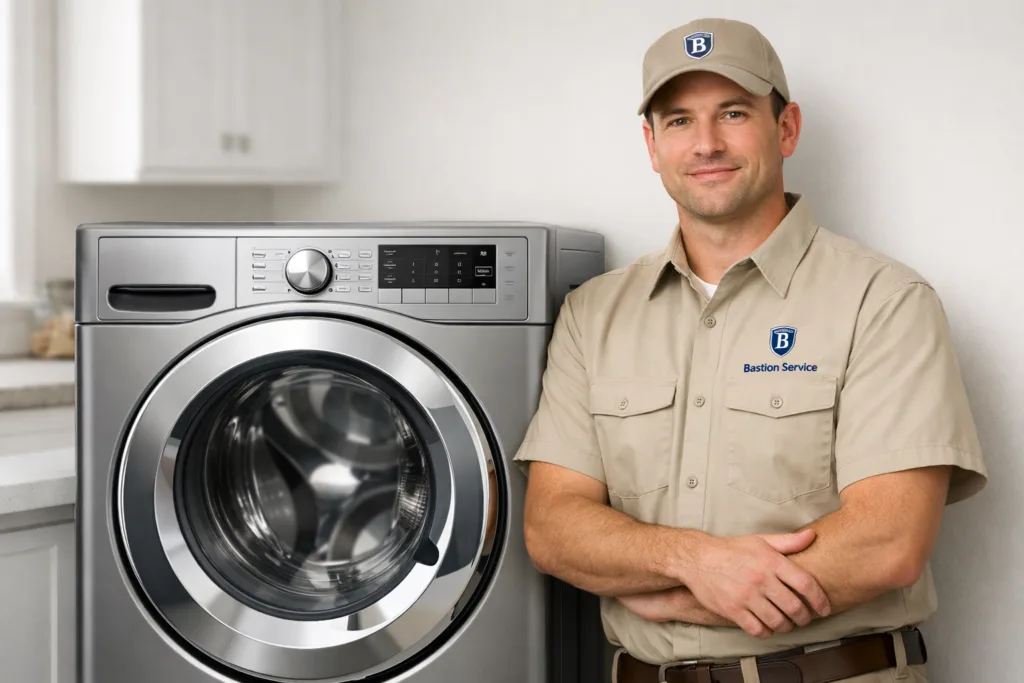
Washer problems tend to look simple from the outside, but the symptom you see is not always the part that failed. A Maytag washer that leaves clothes wet may have a drain problem, a spin problem, a lock issue, or a control fault. Water on the floor may come from a loose hose connection, a pump leak, a door seal issue, or a problem that only shows up during draining. That is why the most useful starting point is to match the repair path to the exact behavior of the machine.
Common Maytag washer symptoms in Inglewood homes
Most service calls fall into a few recognizable patterns. Paying attention to when the washer stops, what sounds it makes, and whether water remains in the tub can help narrow down the likely cause.
Washer will not start
If the unit has power but will not begin a cycle, the problem may involve the lid switch, door lock, control panel, start button response, or a fault in the main control system. Some Maytag models will appear unresponsive when the machine cannot confirm that the door or lid is safely locked. In other cases, the washer may power on normally but refuse to advance beyond the first step of the cycle.
Washer will not drain
A no-drain complaint usually shows up as standing water in the tub, clothes left soaking wet, or a cycle that stops before completion. Common causes include a clogged drain pump, restricted drain hose, blockage in the drain path, or pump failure. If the washer hums during drain but water does not move out, the pump may be trying to run under strain.
Washer will not spin properly
Spin issues can be mistaken for drain issues because both leave laundry wetter than expected. If the tub drains but the load is still heavy and dripping, the washer may not be reaching full spin speed. That can point to suspension wear, motor or drive trouble, load sensing problems, or a lid-lock issue that prevents the machine from entering high-speed spin.
Leaks during or after a cycle
Leaks can come from several different points depending on when the water appears. Water during fill may suggest an inlet hose or valve issue. Water during wash or drain may be related to the pump, internal hoses, or tub components. On front-load Maytag washers, a worn or damaged door boot can also allow water to escape. If leaking happens repeatedly, it is best to stop using the machine until the source is identified.
Shaking, banging, or walking
Some vibration is normal, but repeated banging, cabinet strikes, or a washer that moves across the floor often points to suspension problems, balance issues, worn support components, or installation concerns. A machine that has started making louder noise over time may have parts wearing beyond normal tolerance. Continued operation can increase damage to the basket, supports, or cabinet.
Fill problems and cycle interruptions
If the washer fills slowly, overfills, stops mid-cycle, or gets stuck on one part of the program, the issue may involve the water inlet valve, pressure sensing system, drain function, or control board response. Error codes can help, but they should be treated as clues rather than final answers. One failed component can trigger symptoms in several parts of the cycle.
What different symptom patterns often mean
Looking at the full pattern matters more than focusing on one isolated complaint. A few examples:
- Water left in the tub and a humming sound: often points toward a restricted or failing drain pump.
- Washer drains but clothes remain very wet: more likely a spin, balance, or drive-related issue.
- Machine stops before spin on every load: may involve lid lock confirmation, sensing, or drain performance.
- Leak only while filling: often connected to supply hoses, inlet connections, or the fill system.
- Leak only while draining: may indicate a pump housing, drain hose, or internal drain path problem.
- Loud banging on larger loads: commonly tied to suspension wear or an unstable basket movement issue.
These patterns are useful because they help distinguish between electrical, mechanical, and water-flow problems before parts are replaced unnecessarily.
Why diagnosis matters on newer Maytag washers
Modern Maytag washers rely on sensors, locks, controls, valves, drain systems, and drive components working in sequence. When one part fails, the machine may stop in a completely different place than expected. A washer that will not spin may actually be failing to drain correctly. A washer that appears dead may be waiting for a door-lock signal it never receives. A cycle that times out may be related to water intake rather than the control itself.
That is why symptom-based troubleshooting is more useful than guessing from a single code or replacing the most obvious part first. Proper diagnosis helps determine whether the issue is isolated and repairable or whether multiple systems have begun to fail together.
When to stop using the washer
Some problems can wait a short time for service, but others should be treated as urgent to avoid water damage or added wear. It is smart to stop running the washer if you notice any of the following:
- Water leaking onto the floor
- Burning smell or unusual heat
- Repeated breaker trips or power loss during operation
- Metallic grinding, harsh banging, or scraping noises
- Standing water that will not drain out
- The drum failing to spin while the motor continues trying to run
Even if the washer still works intermittently, recurring drain delays, lock failures, or off-balance shutdowns usually do not improve on their own. They tend to become more frequent until the machine stops completing cycles altogether.
Repair or replace?
For many households in Inglewood, repair is still the sensible option when the washer is in otherwise solid condition and the issue is limited to a serviceable part such as a pump, valve, hose, door lock, suspension component, or similar assembly. Replacement becomes more likely when the appliance has several major faults at once, significant rust or structural wear, repeated control-related failures, or repair costs that are too close to the value of the unit.
The decision usually comes down to three things:
- The age and overall condition of the washer
- Whether the failure is isolated or part of a larger pattern
- How much dependable life is reasonably expected after repair
A good assessment keeps the choice grounded in the machine’s actual condition rather than in guesswork.
Helpful details to note before service
If you are scheduling Maytag washer repair in Inglewood, a few observations can make the visit more efficient. Try to note:
- Whether the washer fills with water
- Whether it drains fully
- Whether the lid or door locks as expected
- At what point the cycle stops
- Whether the noise happens during wash, drain, or spin
- Whether leaking occurs during fill, agitation, drain, or after the cycle ends
- Any exact error code shown on the display
That information helps separate a water-flow problem from a drive issue, or a lock fault from a control symptom. It also helps determine whether the machine is failing consistently or only under certain load conditions.
Residential washer issues that deserve prompt attention
In a busy household, washer trouble can quickly affect the whole laundry routine. Small symptoms often become larger repairs when the machine keeps being used under stress. A pump that struggles to drain can burn out completely. A leaking hose can damage flooring. A suspension problem can lead to heavier internal wear if the basket repeatedly strikes the cabinet.
For homeowners in Inglewood, the most practical approach is to act when the pattern becomes clear rather than wait for a complete breakdown. If your Maytag washer is stopping mid-cycle, leaving water behind, producing unusual noise, or showing inconsistent performance from load to load, the next step should focus on identifying the exact fault and whether repair is the sensible long-term choice.