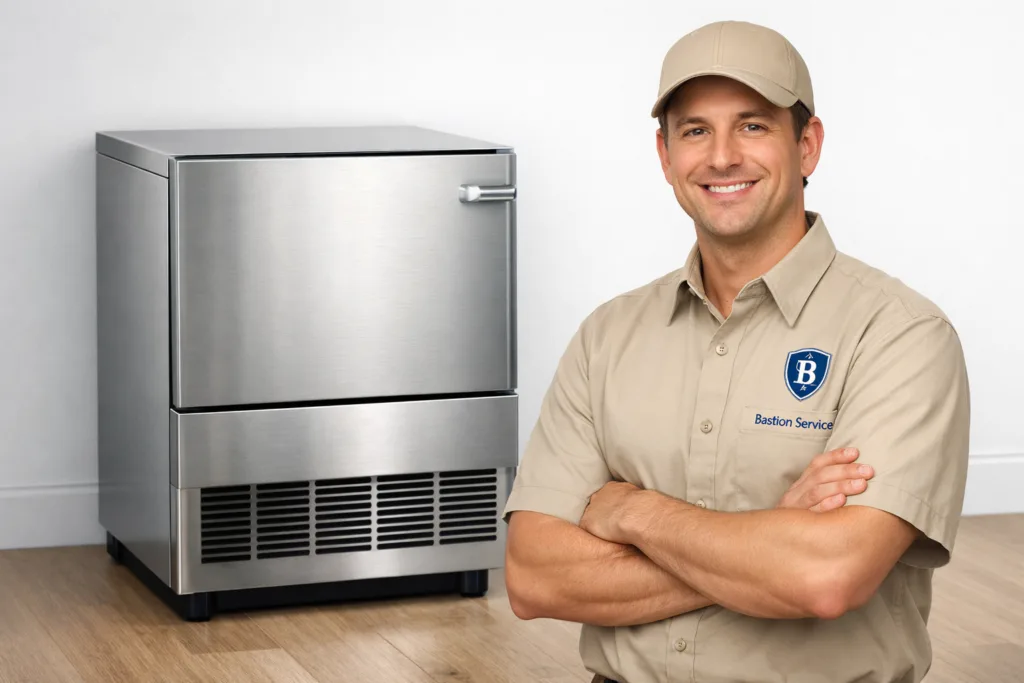
Ice maker problems rarely have a single obvious cause. Two units can both stop making ice, yet one may have a water delivery problem while the other is dealing with temperature loss, a stuck harvest cycle, or a sensor fault. Looking at the exact symptom pattern first is the best way to avoid replacing parts that do not solve the issue.
How True ice maker problems usually show up
Most failures start with a change in performance rather than a complete shutdown. You might notice smaller batches, uneven cube size, extra frost, water under the unit, or a change in sound during the fill or harvest cycle. Those details matter because they help narrow down whether the problem begins with incoming water, freezing conditions, ice release, or drainage.
In Mid-City homes, homeowners often first notice that the ice bin is no longer keeping up with normal household use. Others find clumped ice, hollow cubes, or a machine that seems to run without producing a usable batch. These are all signs that the unit needs more than a simple reset.
Common symptom patterns
- No ice at all: Often linked to a failed inlet valve, blocked water line, control issue, sensor problem, or temperatures that are too warm for normal ice production.
- Slow ice production: May point to weak cooling performance, restricted water flow, early component wear, or buildup that affects the freezing cycle.
- Small, hollow, or misshapen cubes: Common with incomplete fills, water pressure issues, scale buildup, or timing problems during the fill stage.
- Clumped or fused ice: Can happen when cubes partially melt and refreeze, when the bin area is too warm, or when the unit is cycling irregularly.
- Leaking water: May come from loose connections, a cracked line, drain trouble, overfilling, or an internal freeze-up that redirects water where it should not go.
- Buzzing, clicking, or grinding noises: Often related to a struggling valve, jammed ice, worn moving parts, or repeated attempts to complete a cycle.
What can cause a True ice maker to stop making ice
If a True ice maker produces no ice, the issue is not always inside the ice mold itself. The machine depends on several systems working together: electrical control, water supply, freezing temperature, harvest movement, and proper shutoff sensing. A fault in any one of those areas can interrupt production.
Some of the more common causes include a restricted supply line, a bad water inlet valve, temperature drift inside the compartment, sensor or switch failure, ice jam conditions, or wear in the harvest mechanism. In built-in refrigeration setups, an ice complaint may also overlap with a broader cooling issue that affects performance across the appliance.
Slow production and inconsistent batches
When the unit still makes ice but not enough of it, homeowners sometimes wait because the machine appears to be working. That can be misleading. Reduced output is often an early warning that the appliance is operating under strain.
Slow production may result from warmer-than-normal operating temperatures, partial water restrictions, dirty or scaled components, or controls that are no longer timing the cycle correctly. If the problem continues, the unit may eventually stop producing altogether or begin creating poor-quality ice that melts faster and clumps in the bin.
Leaks, puddles, and excess moisture
Any water around an ice maker deserves prompt attention. Even a small leak can damage adjacent cabinetry, flooring, or the area beneath the unit over time. Leaks can originate from the water supply connection, internal tubing, a fill problem, drainage issues, or an uneven installation that causes water to move in the wrong direction.
Sometimes the leak is not constant. It may only appear during the fill cycle or after ice starts to build up where it should not. That pattern can help identify whether the issue is overfilling, freezing in the wrong place, or poor water control inside the assembly.
Clumped ice, cloudy cubes, and taste issues
Not every service call starts with a total loss of ice. Some homeowners in Mid-City notice that the cubes are sticking together, turning cloudy, or developing an off taste. These issues can come from scale buildup, poor water flow, residue inside the ice path, or temperature fluctuations that allow partial melting and refreezing.
Clumped ice is especially important because it may signal that the machine is producing ice unevenly or storing it in conditions that are too warm. If left alone, the same issue can lead to jams, blocked movement, or extra stress on internal parts.
When continued use can make the problem worse
An ice maker does not have to be completely dead to be damaging itself. Repeated attempts to fill, freeze, or harvest while something is wrong can wear out components faster. A buzzing valve can continue straining. A freeze-up can interfere with moving parts. A small leak can become a larger moisture problem.
It is usually smart to schedule service if you notice any of the following:
- the bin is no longer filling as expected
- ice is coming out in uneven shapes or sheets
- water appears under or around the unit
- the machine makes new noises during cycling
- the unit repeatedly starts and stops without producing a full batch
- ice quality has changed along with production
Helpful checks before service
There are a few simple things a homeowner can look at before scheduling a repair. Confirm that the unit has power, that any shutoff arm or control setting is in the correct position, and that the water supply is turned on. If the ice bin is misaligned or overpacked with clumped ice, clearing that can also help rule out a simple obstruction.
If those checks do not change the symptom, the next step is a proper diagnosis. At that point, guessing at a valve, sensor, or ice-making assembly often costs more time than it saves.
Repair or replacement depends on the full condition of the unit
A True ice maker is not automatically ready for replacement just because it stops producing. Many problems are isolated to a specific part or operating condition and can be repaired without replacing the full appliance. On the other hand, a unit with repeated failures, heavy wear, corrosion, or larger cooling problems may be harder to justify repairing.
The better decision usually comes from looking at the age of the appliance, the condition of the surrounding refrigeration system, the exact failed component, and whether this is a first-time issue or part of a longer pattern. That gives homeowners a realistic sense of repair value and likely reliability after service.
What to expect during a service visit
A useful service call should focus on what the machine is actually doing rather than assuming the same fix applies to every no-ice complaint. That typically means checking water supply performance, verifying operating temperature, inspecting the ice-making assembly, looking for signs of scale or moisture, and testing the parts involved in fill and harvest.
For households in Mid-City, that approach helps answer the questions that matter most: what failed, whether the repair is practical, and whether the issue is limited to the ice maker or connected to a larger refrigeration concern. Once the source is identified, the repair path is much easier to judge with confidence.