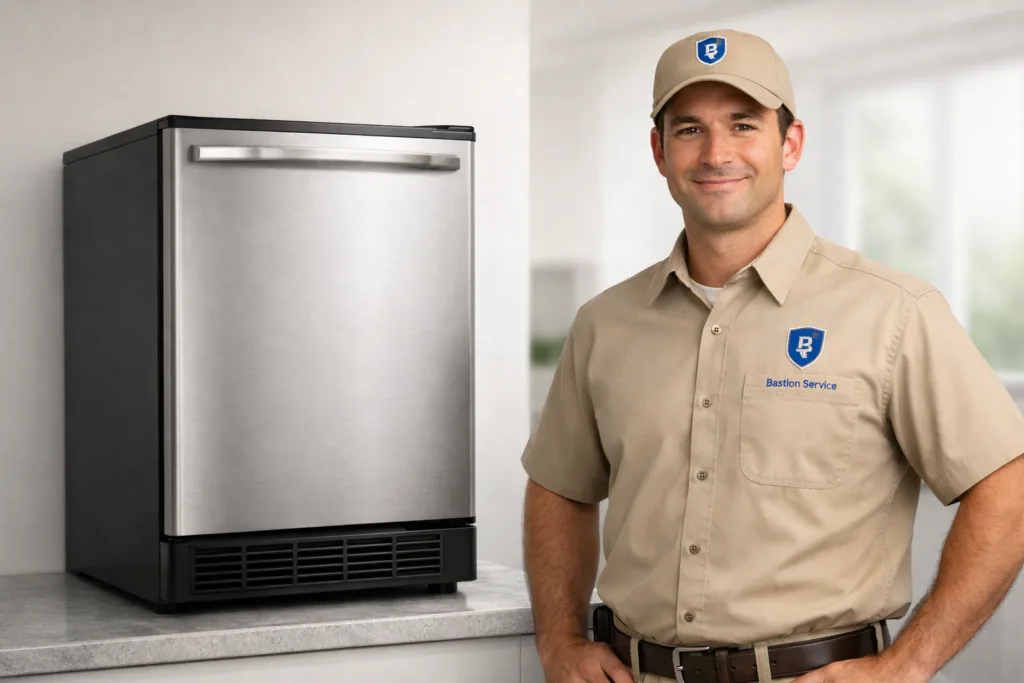
Ice maker problems tend to show up in a few recognizable ways, but the underlying cause is not always obvious from the symptom alone. An EdgeStar unit that stops making ice may have a water supply problem, a temperature issue, a failed inlet component, a sensor fault, or trouble completing the freeze-and-harvest cycle. A machine that still makes some ice, but does it slowly or inconsistently, often points to a different repair path entirely.
What common EdgeStar ice maker symptoms can mean
Looking at the exact pattern helps narrow down what is happening inside the appliance. Small changes in how the machine fills, freezes, releases, or drains water can produce noticeably different symptoms in daily use.
No ice in the bin
If the machine is powered on but the bin stays empty, the problem may involve a shutoff issue, restricted water flow, improper freezing temperature, a control failure, or a mechanical problem during harvest. In some cases, the appliance appears to be running normally even though one part of the cycle has stopped.
Slow ice production
When production drops off, homeowners often notice it first during gatherings, hot weather, or heavier daily use. Slow batches can be caused by weak water fill, mineral buildup, reduced cooling performance, airflow issues, or a component that is delaying the next cycle. A machine that makes ice too slowly is usually signaling a developing problem rather than normal operation.
Small, hollow, clumped, or misshapen ice
Changes in cube size or shape often suggest that the unit is not receiving the right amount of water or is not freezing the batch evenly. Clumped ice can also mean partial melting inside the bin, inconsistent cycling, or trouble with temperature control. When the ice itself changes, it is often one of the most useful clues during diagnosis.
Leaks, pooling water, or overflow
Water around an ice maker should be taken seriously. The cause may be a drain issue, a fill problem, a loose or damaged line, or internal ice formation where it does not belong. Even a small leak can turn into cabinet, flooring, or moisture damage if the appliance keeps cycling.
Clicking, buzzing, grinding, or repeated cycling sounds
Unusual sounds can happen when the machine is trying to fill, pump, freeze, release ice, or restart a stalled cycle. Sometimes the sound is caused by an ice jam that is easy to see, but just as often it reflects a deeper issue with circulation, controls, or a failing component.
Why these issues show up in household use
Residential ice makers often run in bursts, especially before meals, weekends, and at-home entertaining. That pattern can hide a problem for a while. A unit may seem “mostly fine” because it still produces some ice, even though it is already falling behind, overfilling, or starting to leak between cycles.
In Mid-City homes, the most important thing is to pay attention to changes in performance early. A machine that suddenly gets louder, leaves wetter ice in the bin, or produces thinner cubes is often easier to repair before the symptom becomes a complete failure.
Household checks worth trying before scheduling repair
Before arranging service, a few basic checks can help rule out simple causes:
- Make sure the unit has power and is switched on.
- Confirm the water supply to the appliance is not shut off.
- Check whether the bin or internal area is blocked by an ice clump or jam.
- Look for obvious kinks in any visible water line.
- Notice whether the machine is silent, constantly running, or starting and stopping abnormally.
If those basic checks do not restore normal operation, the problem usually requires closer testing. That is especially true when the unit leaks, makes repeated noises, or only works intermittently.
When to stop using the ice maker
It is usually best to stop running the appliance if it is leaking onto the floor, overflowing, tripping power, or making harsh mechanical sounds. Continued use can add stress to internal parts and may create secondary damage around the appliance. If the machine is producing irregular batches while sounding strained, turning it off is often the safer choice until the cause is identified.
What repair decisions usually depend on
Not every malfunction leads to the same recommendation. A good candidate for repair is typically an ice maker with one isolated failure and otherwise solid overall condition. In those cases, restoring normal fill, freezing, or harvest function is often straightforward.
Replacement becomes more likely when the unit has multiple active problems, signs of longer-term wear, repeated breakdown history, or repair needs that are out of proportion to the appliance’s condition. Age matters, but it is not the only factor. The real question is whether the diagnosis points to a fix that makes sense for how the machine is used in your home.
Signs the problem is getting worse
Ice maker issues rarely improve on their own. A small symptom can turn into a larger repair if the machine keeps operating under stress. Watch for warning signs such as:
- ice production that becomes slower week by week
- cubes that are getting smaller or softer
- new puddles, drips, or moisture around the unit
- the machine restarting repeatedly without finishing a cycle
- noise that grows louder or happens more often
These patterns often mean the original fault is starting to affect other parts of the cycle.
What Mid-City homeowners can expect from a symptom-based service visit
The most useful approach is to match the repair plan to what the appliance is actually doing: whether it is failing to fill, freezing incorrectly, not releasing ice, draining poorly, or cycling at the wrong times. That keeps the visit focused on the symptom pattern instead of guessing based on one broad complaint like “not working.”
For Mid-City homeowners, that usually leads to a clearer answer on whether the EdgeStar ice maker is worth repairing, whether continued use risks more trouble, and what next step makes the most sense for the household.