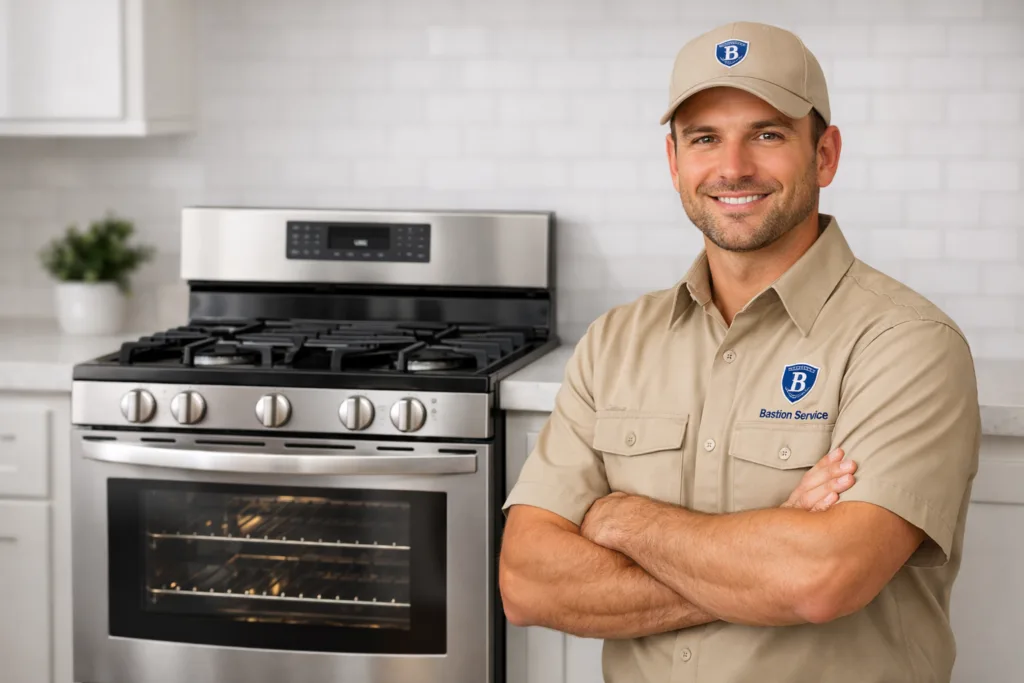
Range problems can interrupt everything from quick weeknight meals to longer baking and roasting, especially when the symptom seems to change from one use to the next. On LG models, a burner that clicks, an oven that drifts off temperature, or a display that suddenly stops responding can each point to several different causes, so the most useful starting point is matching the repair plan to the exact behavior of the appliance.
How LG range problems usually show up at home
Many homeowners first notice a small pattern rather than a full failure. The oven may preheat more slowly than usual, one surface burner may light only after several tries, or the control panel may work inconsistently. Those details matter because they help separate a simple component failure from a broader issue involving ignition, temperature sensing, power supply, or electronic controls.
It also helps to note whether the issue affects the cooktop, the oven, or both. A single symptom in one section of the range often narrows the likely cause. When several functions start acting up together, the problem may involve shared wiring, incoming power, or the main control system.
Burners that click, fail to light, or heat unevenly
If a gas burner keeps clicking but does not ignite reliably, common causes include a dirty or misaligned burner cap, moisture around the igniter, a worn spark switch, or an ignition system fault. When the burner lights after a delay, that is still worth addressing because delayed ignition can make normal cooking frustrating and may point to a part that is getting weaker over time.
On electric models, a surface element that stays cool, heats only partly, or cycles strangely may be dealing with a failed element, a damaged receptacle, a faulty switch, or a control problem. If one burner consistently runs hotter or weaker than the setting suggests, the issue may not be the same as a burner that does not heat at all.
- Clicking without ignition
- Burner lights only after repeated attempts
- Weak or partial heating on an electric element
- Flame or heat output that does not match the setting
- Only one burner affected while others work normally
Oven not heating, overheating, or taking too long to preheat
When the oven will not reach the selected temperature, a weak igniter, bad bake component, failed sensor, or control issue may be behind it. Long preheat times are easy to dismiss at first, but they often show up before a complete heating failure. If the oven eventually gets hot but cooking results are inconsistent, the problem may be regulation rather than total heat loss.
Overheating is a different symptom and should not be treated as just poor calibration. An LG range that runs too hot can burn food quickly, create uneven baking results, and place extra strain on internal parts. If food comes out overdone on one rack and underdone on another, airflow, sensor readings, or a worn door gasket may be affecting performance.
Control panel, display, and power-related issues
Modern ranges depend on stable power and responsive controls. If the clock resets, buttons stop responding, or error codes appear at random, the fault may involve the user interface, the main control board, or the incoming electrical supply. Some symptoms only happen during preheat or when multiple functions are in use, which can make the problem seem inconsistent even when there is a specific failed component behind it.
Intermittent shutdowns are especially important to take seriously. A range that loses power in the middle of cooking may be reacting to an electrical fault rather than a simple surface-level control issue.
Signs the range should not keep being used normally
Some problems can wait a short time for scheduling, while others should pause normal use until the appliance is checked. If the oven temperature is clearly unstable, burners ignite unpredictably, or the range begins tripping power, continued use can lead to worse damage or unreliable operation at the worst time.
Gas-related symptoms need extra caution. If there is a persistent or strong gas odor, stop using the range rather than continuing to test burners or the oven. Repeated clicking without a gas smell is often an ignition-system issue, but delayed lighting or inconsistent ignition still deserves prompt attention before the appliance goes back into regular use.
- Strong or persistent gas odor
- Burners that light late or unpredictably
- Oven temperature that swings far above or below the setting
- Control panel failures during cooking
- Breaker trips or partial power loss when the range is operating
Why the same symptom can have different causes
One reason range repairs can be frustrating is that the same complaint does not always mean the same failed part. An oven that will not heat could be dealing with an igniter problem on one model, a sensor issue on another, or a control failure on a third. A burner that clicks constantly may be caused by moisture after cleaning, but it can also be tied to a worn switch or ignition fault.
That is why symptom-based evaluation matters more than replacing parts by guesswork. A useful service call should identify not just what is failing, but whether related components have been affected as well. That can help prevent a repeat problem shortly after repair.
Repair or replacement: what usually makes sense
For many households in Venice, repair is often the better choice when the issue is limited to a specific part such as an igniter, heating element, sensor, switch, or door seal and the rest of the LG range is in good condition. These are the kinds of failures that can restore normal cooking without turning into a larger appliance decision.
Replacement becomes more worth considering when the range has multiple active problems, recurring electronic control issues, severe wear, or a repair cost that starts approaching the value of keeping the current unit. Age alone does not decide the answer. A newer appliance with a major control failure may deserve a different decision than an older range with one isolated burner issue.
For homeowners weighing that choice, the most helpful path is to compare the failed system, the overall condition of the appliance, and how dependable the range is likely to be after the repair is completed.
What to note before scheduling LG range repair in Venice
A few observations can make service more efficient and help narrow the likely cause before any parts are considered. Try to note whether the issue happens every time or only occasionally, whether it affects bake, broil, convection, or surface burners, and whether any error codes appear on the display. It also helps to know if the problem started after a power interruption, heavy cleaning, or a recent spillover near the burners.
- Which burner or oven function is affected
- Whether the symptom is constant or intermittent
- Any error codes, beeping, or display resets
- Whether preheat times have changed
- If the issue began after cleaning, a spill, or a power event
Choosing service that matches the actual problem
Homeowners usually want one thing from a range repair visit: safe, predictable cooking again without replacing parts unnecessarily. For LG range repair in Venice, that means focusing on the exact symptom pattern, confirming the failed component, and checking whether the repair is sensible based on the appliance condition and expected result. When that process is done well, it becomes much easier to decide whether the right next step is a straightforward repair or a move toward replacement.