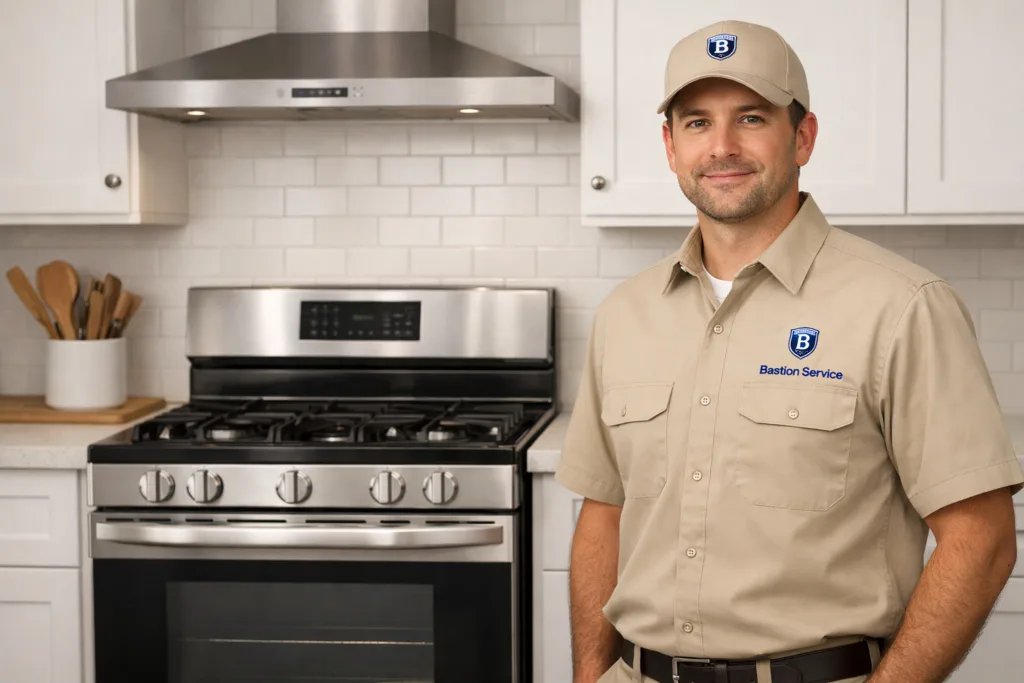
Cooking problems with a Kenmore range usually show up as symptoms first: a burner that will not light, an oven that runs too cool, a display that stops responding, or heat that becomes inconsistent from one meal to the next. The key is matching that symptom to the right system before replacing parts that are not actually causing the failure.
Common Kenmore range problems homeowners notice first
Most range calls start with a performance change that affects everyday cooking. On some units, the issue is isolated to the cooktop. On others, the oven is the main problem. In some cases, both point back to a shared electrical or control issue.
- Surface burners that click but do not ignite
- Burners that heat unevenly or will not regulate temperature
- Oven not reaching the set temperature
- Food baking unevenly or taking too long
- Oven overheating or shutting off during use
- Controls, clock, or display not responding properly
- Power loss, tripped breaker symptoms, or intermittent operation
Because these symptoms can overlap, a burner problem is not always just a burner problem, and an oven heating complaint is not always caused by the heating element alone.
Burner ignition and cooktop heating issues
If a gas burner clicks repeatedly, lights slowly, or fails to ignite, the problem may come from moisture around the ignition components, a worn spark system, misaligned burner parts, or a switch issue. If one burner acts up while the others work normally, that often helps narrow the fault to a more localized component.
On electric models, a surface element that stays cold, cycles poorly, or only works on certain settings may point to the element itself, the infinite switch, or a wiring connection problem. Homeowners in Venice often notice this first when water takes too long to boil or a pan heats unevenly even though the control is set correctly.
Signs the cooktop issue should not be ignored
- Clicking continues after the burner is lit
- Flame is inconsistent or delayed
- One burner gets much hotter than expected
- Heat cuts in and out during normal use
- There is visible sparking or a burning smell
These symptoms can move from annoying to unsafe if the range continues to be used without finding the cause.
Oven not heating, overheating, or baking unevenly
Oven performance problems can be subtle at first. You may notice longer preheat times, food that is pale on one rack and overdone on another, or recipes that suddenly need more time than usual. On a Kenmore range, this can involve the bake element, broil element, igniter, temperature sensor, control board, or related wiring.
If the oven does not heat at all, the failed part may be easier to isolate. If it heats somewhat but never quite correctly, diagnosis becomes more important because several different parts can create nearly identical cooking results.
Typical oven symptom patterns
Slow preheating: Often connected to a weak igniter on gas models or a heating element that is no longer performing at full strength on electric models.
Uneven baking: May indicate a sensor issue, partial element failure, poor temperature regulation, or a control problem.
Overheating: Can point to a sensor reading fault or electronic control failure and should be addressed quickly.
Intermittent shutoff: Sometimes tied to power delivery, loose connections, overheating controls, or internal safety-related faults.
Control panel and electrical faults
When the display goes blank, buttons stop responding, or settings change unpredictably, the issue may not be limited to the panel itself. A control failure can be caused by the board, but it can also be triggered by another component affecting the circuit.
That is why it helps to check the full operating pattern rather than assuming the most visible symptom tells the whole story. A range that loses power during baking, trips power when a burner is turned on, or works normally one day and not the next may have a deeper electrical problem that needs to be isolated before any repair decision is made.
When to stop using the range
Some range problems allow limited use for a short time, but others are good reasons to stop and schedule service. Continued operation can worsen damage, especially when overheating, sparking, or erratic ignition is involved.
- The oven overheats or will not shut off properly
- A burner sparks unexpectedly or clicks nonstop
- The range trips power repeatedly
- Controls behave unpredictably during cooking
- Heat output is unstable enough to affect safe cooking
If the appliance behaves differently from normal in a way that affects ignition, temperature control, or electrical operation, it is usually smarter to pause use until the cause is known.
Repair or replace a Kenmore range?
Many Kenmore range problems are still worth repairing, especially when the issue is confined to an igniter, sensor, burner switch, heating element, or another targeted part. A replacement discussion becomes more relevant when the range has multiple major failures at the same time, recurring breakdown history, or signs of broader wear across the oven, cooktop, and controls.
Age matters, but condition matters more. A well-kept unit with one specific failure is very different from a range that has had ongoing heating, control, and power issues over time. For homeowners in Venice, the most useful approach is to compare the actual repair scope with the overall condition of the appliance rather than making the decision on age alone.
What a symptom-based service visit should accomplish
A productive service visit should do more than name a part. It should connect the way the range is behaving with the system that is failing, confirm whether the problem is isolated or more widespread, and explain whether repair makes sense for the appliance you have.
That usually includes checking:
- Cooktop ignition or element performance
- Oven heating response and temperature behavior
- Sensors, switches, and control inputs
- Wiring and power-related conditions
- Whether one failure may be affecting another function
For households that rely on the range daily, that kind of practical repair guidance helps avoid wasted time, repeat problems, and unnecessary part replacement.
Choosing the next step for your range in Venice
If your Kenmore range is clicking, not heating correctly, baking unevenly, or showing control problems, the most helpful next step is to match the symptom pattern to the actual fault. That makes it easier to decide whether the repair is straightforward, whether the unit should be taken out of use, and whether the appliance is still a good candidate for repair.
In many cases, the right fix is simpler than the symptoms make it seem. In others, the pattern of failures makes it clear that a larger decision is needed. Either way, accurate diagnosis is what turns a frustrating cooking problem into a workable plan.