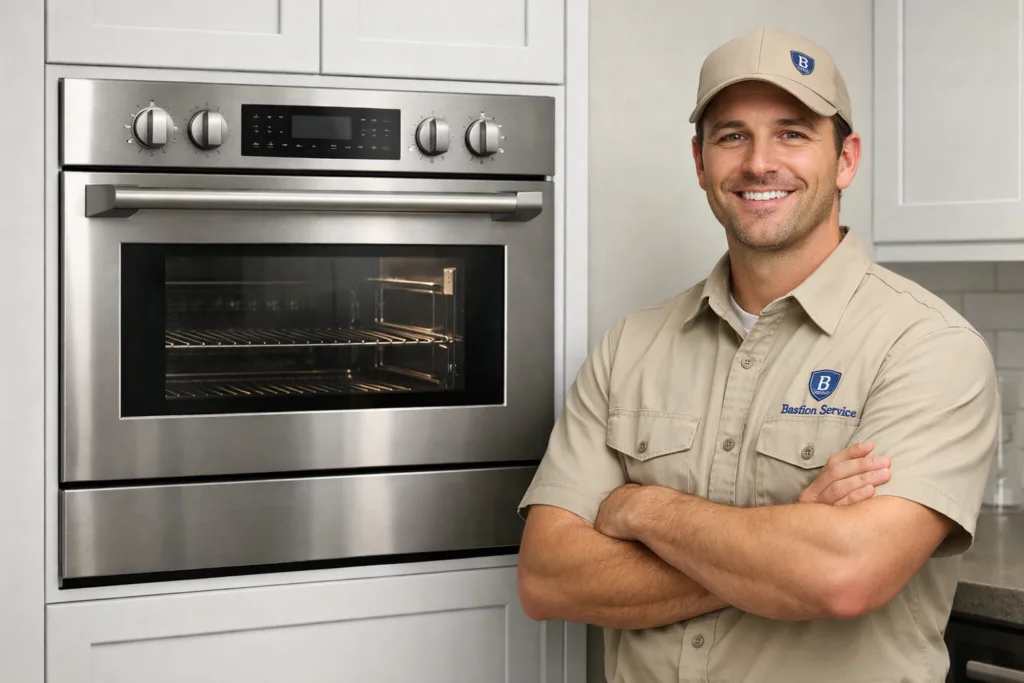
Cooking problems often show up gradually. A Monogram oven may still turn on, but meals start taking longer, baked goods come out unevenly, or the set temperature no longer matches what is happening inside the cavity. Looking closely at the symptom pattern helps separate a minor performance issue from a component failure that needs service.
How Monogram oven problems usually show up
Most oven failures are easier to identify when you focus on what the appliance is doing before, during, and after a cook cycle. A unit that never heats points to a different path than one that heats a little, overshoots temperature, or shuts off mid-cycle. In Mid-City homes, those differences matter because they affect whether the issue is likely tied to ignition, heating elements, sensing, controls, power supply, or the door system.
Monogram ovens use model-specific controls and temperature management features, so the same complaint can still have several possible causes. That is why symptom-based testing matters more than replacing parts based on a guess.
Common Monogram oven symptoms and what they may mean
Oven will not heat at all
If the oven does not heat, the first question is whether it is an electric or gas model. On electric ovens, the failure may involve a bake element, broil element, wiring issue, thermal protection component, or electronic control problem. On gas ovens, a weak igniter is a frequent cause. It may glow but still fail to draw enough current to open the gas valve properly.
If the display works but the cavity stays cold, that usually suggests the problem is not a total power loss. If the oven is completely dead, the issue may be tied to incoming power, a fuse, wiring, or the control system itself.
Slow preheating
When preheat times keep getting longer, the oven may still appear usable, but performance is already slipping. Electric models can struggle when one heating element is weak or partially failed. Gas models may preheat slowly because the igniter is deteriorating and no longer lighting the burner efficiently. Temperature sensors and control faults can also cause the oven to lag behind the set point.
Slow preheat tends to worsen over time. Homeowners often notice it first when weeknight meals become harder to time or recipes that used to work reliably start falling behind schedule.
Uneven baking
Uneven browning, one side cooking faster than the other, or needing to rotate pans constantly can point to heat distribution problems. In some cases, the sensor is reading inaccurately. In others, convection performance is reduced, the door seal is leaking heat, or the oven is cycling incorrectly around the target temperature.
This kind of problem is especially frustrating because the oven can seem mostly functional while still producing inconsistent results. If multiple recipes are turning out differently than usual, the issue is probably more than cookware or rack position alone.
Temperature swings or inaccurate temperature
An oven that runs too hot, too cool, or fluctuates heavily during baking may have a sensor problem, calibration issue, or control-board fault. Normal ovens do cycle on and off to maintain heat, but wide swings that affect food quality are different from ordinary cycling.
- Food finishes much earlier than expected
- Items remain underdone even after normal cook times
- The oven shows preheated status before it is actually ready
- Recipes that were once reliable suddenly become inconsistent
Display, keypad, or control trouble
If the display is blank, touch controls do not respond, settings change unexpectedly, or the oven shuts off during use, the fault may be in the interface, the main control, or the wiring between components. These symptoms can be misleading because a control problem may look like a heating problem from the outside.
Intermittent shutdowns should not be ignored. A unit that loses power during cooking may be dealing with an electrical fault that can become more disruptive over time.
Door, latch, and seal issues
The oven door affects more than convenience. If it will not close fully, will not unlock, or leaks heat around the gasket, cooking performance can suffer even when the heating system is otherwise working. Worn hinges, latch failures, and damaged seals can all contribute to poor temperature retention.
Heat loss at the door often shows up as longer cook times, inconsistent baking, or cabinets around the oven feeling warmer than usual during operation.
Signs you should stop using the oven and schedule service
Some issues are inconvenient but manageable for a short time. Others are a reason to stop using the appliance until it has been checked. It is wise to pause use if the oven trips breakers, shows repeated error codes, shuts off unexpectedly, produces a strong burning smell unrelated to food spills, or fails to regulate temperature safely.
Gas-related concerns deserve extra caution. If there is a persistent gas odor, do not keep testing the oven. Leave the area if necessary and contact the gas utility or emergency services first.
What can cause repeated cooking problems even when the oven still turns on
One of the more confusing situations for homeowners in Mid-City is when the oven appears to work but delivers poor results day after day. That usually means the failure is partial rather than total. A weak igniter, drifting sensor, damaged element, failing relay, or leaking door seal can all allow the oven to operate while still performing badly.
Because of that, repeated food quality problems are often a valid repair issue, not just a matter of adjusting cook times. When the oven is no longer consistent, the appliance is telling you something has changed.
Repair or replace?
Many Monogram oven problems are repairable when the appliance is otherwise in good shape. Components such as igniters, sensors, elements, door parts, and some control-related parts can often be addressed without replacing the full unit. Repair tends to make sense when the oven has been reliable overall and the current problem is limited to one main failure.
Replacement becomes a more serious consideration when several major systems are failing at once, the appliance has a long history of recurring problems, or the repair cost is high relative to the condition of the oven. The best choice usually depends on age, parts condition, and whether the confirmed fault is isolated or part of broader wear.
What homeowners in Mid-City should expect from a service visit
A useful appointment should do more than name a part. It should connect the observed symptom to the actual failure, explain whether continued use could worsen the issue, and lay out the repair path in plain terms. For premium cooking appliances, that step is especially important because trial-and-error repairs can create extra cost without fixing the real problem.
Most homeowners want the same outcome: an oven that heats properly, cooks evenly, and can be trusted again for daily use. When the cause is identified correctly, it becomes much easier to decide whether repair is the right next step.