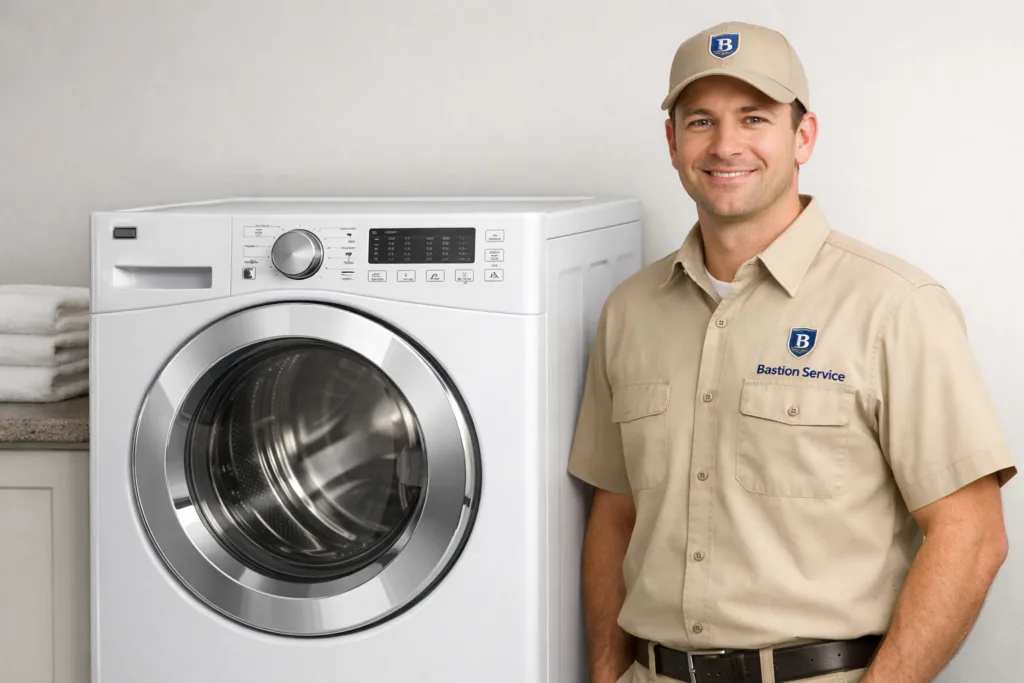
Laundry problems escalate quickly when a dryer stops finishing loads, will not start, or begins making new sounds. With Kenmore dryers, the most important first step is matching the symptom to the right system, because similar complaints can come from very different causes. A machine that seems to “run fine” may still have a heating failure, a vent restriction, a sensor issue, or worn drum parts affecting performance.
Common Kenmore dryer problems and what they often mean
Most dryer issues fall into a few recognizable patterns. Understanding those patterns helps homeowners in Westwood know when the problem may be minor, when it points to internal wear, and when it is best to stop using the appliance until it is checked.
Dryer runs but clothes are still damp
If the drum turns and the cycle completes but clothing stays wet, the problem is often related to heat or airflow. A weak heating element, faulty thermostat, blown thermal fuse, restricted venting, or moisture sensor problem can all lead to long dry times. In some cases, the dryer produces some heat, but not enough to dry a normal load efficiently. In others, lint buildup or poor airflow traps moisture in the system and slows drying dramatically.
This symptom is also one of the easiest to misread. Many homeowners assume the heating element has failed, but vent restrictions and cycling issues are just as common. That is why symptom-based testing matters before replacing parts.
Dryer will not start
When a Kenmore dryer does nothing after pressing the start button, the cause may be a failed door switch, start switch, thermal fuse, control problem, or power supply issue. If the interior light or panel responds but the drum never begins turning, the diagnosis is usually different from a unit that appears completely dead.
Power-related symptoms can be especially confusing with electric dryers. A dryer may appear to have power while still lacking the full supply needed for normal operation. That can create inconsistent behavior that looks like a control failure when the real issue is elsewhere.
Dryer heats but the drum does not turn
If the dryer gets warm but the drum is not moving, worn belts, broken idler components, seized rollers, or a failing motor are common suspects. This is not a condition to ignore. Running a dryer with a non-turning drum can overheat fabrics, strain other components, and lead to more expensive internal damage.
Loud thumping, squealing, scraping, or rattling
Noise usually points to a mechanical wear problem. Drum rollers, support glides, idler pulleys, blower wheel issues, and foreign objects caught in the drum path are all common sources. A soft thump can turn into a harsher banging sound as parts wear further out of alignment.
Changes in sound are often early warnings. Addressing them promptly can prevent damage to the drum, motor system, or cabinet interior.
Dryer overheats or shuts off during a cycle
Excessive heat should always be taken seriously. Restricted airflow, thermostat problems, motor overheating, or clogged exhaust paths can force the dryer to shut down before the cycle ends. Overheating can also cause repeat thermal fuse failures if the underlying airflow or temperature-control problem is not corrected.
How airflow problems affect drying performance
Airflow is one of the biggest factors in dryer performance. Even when a Kenmore dryer still tumbles and produces heat, poor air movement can prevent moisture from leaving the drum. That leads to longer cycles, hotter cabinet temperatures, and extra stress on heating and safety components.
Signs that airflow may be part of the problem include:
- Clothes feel hot but still come out damp
- Dry times gradually get longer over weeks or months
- The laundry room feels unusually warm during operation
- The dryer shuts off before the load is finished
- Lint seems heavier than usual around the appliance
Because airflow issues can imitate heating failures, a proper inspection should consider both the dryer itself and how efficiently air is moving through the exhaust path.
When a no-heat dryer is not just a heating element problem
No heat is one of the most common service complaints, but it does not always mean the element is bad. Depending on the model and symptom pattern, the cause may involve the thermal fuse, high-limit thermostat, cycling thermostat, wiring, control board, igniter on gas units, or a supply issue affecting normal heating operation.
That is why replacing the most obvious part first can be inefficient. If the failed component is only a symptom of overheating or restricted airflow, the dryer may stop heating again soon after the repair unless the root cause is addressed.
Signs the dryer should not keep being used
Some problems mainly affect convenience. Others raise concerns about wear, overheating, or safety. It is best to stop using the dryer and arrange service if you notice any of the following:
- A burning smell during or after a cycle
- Grinding, scraping, or metal-on-metal noise
- The drum is not turning normally
- The dryer becomes unusually hot to the touch
- It shuts off repeatedly before clothes are dry
- There is no heat at all, or heat is inconsistent from load to load
Continuing to run the machine in these conditions can increase wear on belts, rollers, motors, controls, and temperature-sensitive components.
Repair or replace a Kenmore dryer?
For many households in Westwood, that decision depends on the age of the dryer, how often it has needed service, and whether the current problem is isolated or part of a larger pattern. Repairs are often worthwhile when the issue involves a heating element, thermal fuse, belt, roller set, switch, or another defined component failure.
Replacement becomes more likely when the dryer has multiple worn systems at once, recurring performance issues, or signs of broader age-related decline. A practical repair assessment should weigh the failed part, the overall condition of the appliance, and the likelihood of reliable operation after service.
What a useful service visit should help you understand
Homeowners usually want direct answers: why the dryer is acting up, whether it is safe to use, and whether the repair makes financial sense. For Kenmore dryer repair in Westwood, that means identifying the failed system, explaining the cause in plain language, and outlining what should be fixed now versus what may simply be monitored over time.
That approach helps avoid guesswork, reduces the chance of repeat breakdowns, and gives the household a clear next step based on the condition of the actual machine rather than a generic recommendation.