Common Speed Queen dryer problems and what they usually mean

Dryer symptoms often seem straightforward, but the same complaint can come from very different failures. With a Speed Queen dryer, the most useful starting point is the exact pattern: whether the drum turns, whether heat is present, whether the cycle finishes normally, and whether the noise or performance issue happens every load or only sometimes.
That symptom-based approach matters in Westwood homes because a dryer that appears to have a heating problem may actually have an airflow restriction, and a dryer that seems dead may be dealing with a switch, fuse, or power issue instead of a failed motor.
Dryer runs but does not heat
If the drum tumbles but clothes stay cool or wet, the problem may involve the heating element, thermal fuse, thermostat, igniter on gas models, or a power supply issue. Electric dryers can sometimes run on partial power, which allows the motor to operate while the heater does not. From the outside, it can look like the machine is working normally even though it cannot produce usable heat.
When this happens repeatedly, extra cycle time usually does not solve the problem. It only adds wear while leaving laundry damp.
Drying takes too long
Long dry times are often tied to poor airflow. Lint buildup, restricted venting, crushed ducting, or weak air movement can prevent moisture from leaving the dryer efficiently. The machine may still heat, but if hot, damp air cannot move out as intended, clothes remain wet far longer than they should.
Another possibility is temperature control trouble. A dryer that heats inconsistently, cycles incorrectly, or misreads moisture levels can stretch a routine load into multiple runs.
Dryer will not start
A no-start complaint can come from several places: a failed door switch, broken start switch, blown thermal fuse, control fault, wiring issue, or incoming power problem. In some cases, the dryer looks completely unresponsive. In others, lights may come on but pressing start does nothing.
Because the symptom can overlap with outlet, breaker, or cord issues, diagnosis should confirm whether the fault is inside the appliance or related to the power path feeding it.
Noise, vibration, or scraping sounds
Speed Queen dryers that begin thumping, squealing, rumbling, or scraping often have wear in the support system. Rollers, glides, idler pulleys, belts, and bearings can all produce distinct noises as they age. A blower wheel problem or loose internal part can also create vibration or rattling.
These sounds usually worsen over time. A small squeal can become a belt failure, and a light scraping noise can turn into drum movement that affects other parts.
Dryer shuts off early or overheats
If the dryer stops before clothing is dry, moisture sensing, controls, or overheating protection may be involved. When the cabinet feels unusually hot or the laundry room warms up more than normal, airflow restriction and thermostat problems move higher on the list of likely causes.
Overheating is worth addressing quickly because it can damage more than one component and shorten the life of the machine.
Signs the problem is getting worse
Some dryer issues stay mild for a while, but others escalate fast. A few warning signs usually mean continued use is more likely to increase repair cost:
- Loads suddenly taking much longer than they did before
- A hot exterior cabinet or strong heat buildup around the dryer
- A burning smell or unusually warm laundry after the cycle
- New squealing, grinding, scraping, or thumping sounds
- The drum turning inconsistently or stopping mid-cycle
- The dryer starting only occasionally or not responding every time
When these symptoms appear across several loads, the issue is usually not temporary. It points to a part that is failing, a venting condition that needs attention, or a control problem that is becoming less predictable.
Why airflow matters so much with dryer repair
Airflow problems are one of the most common reasons a dryer seems weak, slow, or overly hot. Even when the heating system is working, blocked or limited exhaust flow can trap heat and moisture in the machine. That makes drying less effective and forces longer run times.
For homeowners, this can look like a heating failure when the real issue is that the dryer cannot breathe properly. It can also create repeat part failures if heating components are stressed by high internal temperatures. A focused inspection should account for airflow performance rather than assuming every damp-load complaint needs a heater part.
Repair or replace: how the decision usually works
Many Speed Queen dryer problems are worth repairing when the cabinet, drum, and major systems are otherwise in good condition. Common repairable issues include failed thermostats, heating elements, igniters, belts, rollers, switches, and fuses. When the failure is isolated and the machine has held up well overall, repair is often the sensible move.
Replacement becomes more likely when there are multiple worn systems at once, severe internal wear, recurring breakdowns, or signs that the appliance is declining beyond one clear fix. The decision should be based on the actual condition of the dryer, not just the fact that it stopped working on one load.
For households in Westwood, the most helpful outcome is knowing whether the problem is contained to one repair path or whether the machine is showing a broader pattern of age-related wear.
What a thorough service visit should evaluate
A useful dryer service visit should do more than confirm that the machine is malfunctioning. It should narrow the problem to the system involved, whether that is heating, ignition, power supply, controls, drum support, motor operation, or airflow.
On a Speed Queen dryer, that often includes checking:
- Whether the dryer is receiving full power
- Heating or ignition performance during operation
- Air movement through the dryer and exhaust path
- Drum rotation, belt condition, and support wear
- Safety components such as fuses and thermostats
- Control response and cycle behavior
This kind of review helps avoid replacing parts based on guesswork. It also makes it easier to explain why the symptom showed up in the first place and what should be done next.
Practical steps homeowners can take before service
Before scheduling repair, a few basic observations can make the problem easier to pinpoint. Notice whether the drum turns, whether any heat is present at all, whether the problem happens on every cycle, and whether the exhaust airflow feels weak. If the dryer is noisy, pay attention to whether the sound appears immediately at startup or only after the drum has been turning for a few minutes.
It also helps to note whether the machine recently needed longer cycles, shut off unexpectedly, or produced a hot smell. Those details can separate a heating fault from an airflow issue or a mechanical wear problem.
If there is overheating, a burning odor, or harsh metal-on-metal noise, it is better to stop using the dryer until the cause is identified.
Residential Speed Queen dryer repair in Westwood
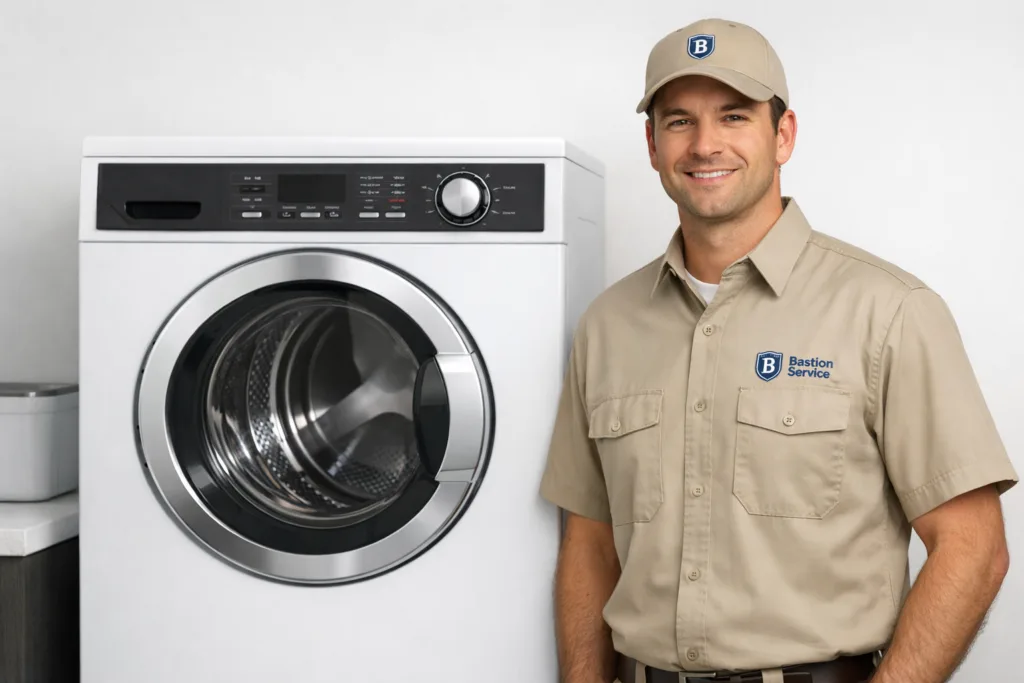
Bastion Service helps homeowners in Westwood with Speed Queen dryer problems that involve no heat, long dry times, no-start conditions, unusual noise, early shutoff, and airflow-related performance issues. The goal is to identify the failed system, explain the repair path clearly, and help you decide whether the machine is a good candidate for repair.