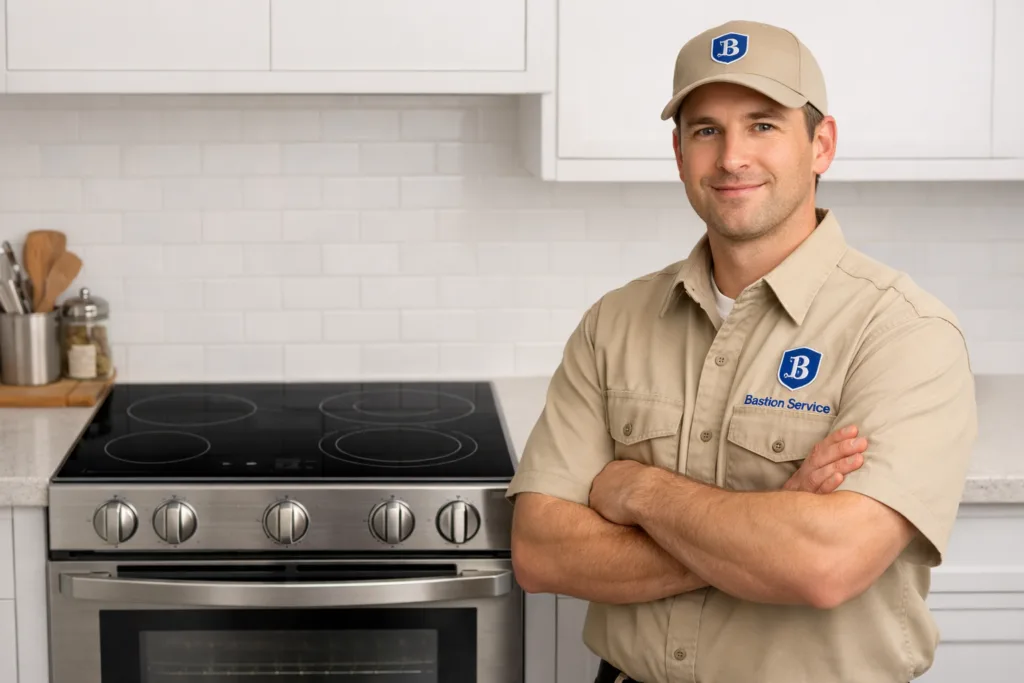
Common Samsung cooktop problems seen in Torrance homes

Cooktop failures usually follow a recognizable pattern. The most useful starting point is the symptom itself, because a burner that will not heat, a unit that keeps clicking, and a surface that powers on unpredictably each point to different parts of the appliance.
Burners that do not heat
On electric Samsung cooktops, a burner that stays cold may be caused by a failed element, a damaged switch, loose wiring, or a control issue. If only one zone is affected, the problem is often isolated. If multiple zones stop working at the same time, the fault may be tied to power supply or the main control system.
Some burners still produce heat but not the right amount. They may cycle too fast, stay hotter than the setting suggests, or struggle to maintain an even cooking temperature. That usually points away from cookware and toward regulation components inside the unit.
Induction zones that do not detect cookware
Samsung induction cooktops can appear to power on normally while refusing to activate a cooking zone. In some cases, the issue is cookware recognition. In others, the problem involves the sensor system, the induction module, or a fault limited to one zone. If the same pan works on one area but not another, that difference helps narrow the diagnosis.
Gas burners that click, spark, or light poorly
For gas models, constant clicking is one of the most common complaints. Moisture after cleaning, food buildup near the igniter, burner cap misalignment, or a worn ignition part can all create the same symptom. If one burner clicks excessively, the issue may be local to that assembly. If several burners misbehave together, the spark system or switch harness deserves closer inspection.
Weak flame, delayed ignition, or flames that light unevenly around the burner head can also signal blockage or alignment problems. Those issues should not be ignored, especially when normal ignition becomes less reliable over time.
Touch controls, beeping, or intermittent power
Samsung cooktops with glass surfaces and electronic controls can develop faults that seem random at first. The unit may beep unexpectedly, flash indicators, stop responding to touch input, or shut off during use. That kind of behavior may come from a failing control board, unstable power input, heat-related sensor response, or moisture reaching sensitive components.
If the cooktop loses power only when a specific burner is used, that detail matters. It can indicate a load-related fault rather than a total appliance failure.
What a cracked glass cooktop really means
A cracked glass surface is more than a cosmetic problem. Even a hairline crack can affect how safely the appliance operates, especially when heat, spills, and electrical parts are all involved. If the crack spreads across a heating zone, performance may change along with safety.
Homeowners in Torrance should treat a damaged cooktop surface as a repair decision point. Depending on the model and extent of the damage, the unit may need a surface replacement or may no longer be worth repairing if additional internal issues are present.
Why symptom overlap makes diagnosis important
Many cooktop problems look alike from the outside. A burner that overheats may seem like an element problem when the real cause is a failed control switch. Repeated clicking may appear to be a bad igniter, but contamination or a stuck switch can create the same behavior. A zone that will not turn on may be tied to the control board rather than the burner itself.
That is why a repair decision should be based on fault isolation, not part swapping. Once the actual failed component is identified, it becomes much easier to judge cost, safety, and whether the repair is likely to restore dependable everyday use.
Signs you should stop using the cooktop and schedule service
Some issues are mostly inconvenient. Others can become unsafe or lead to additional damage. It is smart to stop using the unit and arrange service when you notice any of the following:
- A burner stays too hot or will not cycle down
- A cooking zone turns on but does not respond correctly to settings
- Ignition clicking continues after the burner is lit
- Burners fail to ignite reliably
- The cooktop trips power or shuts off during cooking
- The glass top is cracked, chipped, or impact-damaged
- Error displays or unexplained beeping return repeatedly
- You smell overheating, arcing, or gas when the unit is in use
Continuing to use a malfunctioning cooktop can turn a limited repair into a larger one. Repeated overheating, arcing, or ignition stress can affect related components if the original fault is left unresolved.
Repair or replacement: how the choice is usually made
Samsung cooktop repair in Torrance often makes sense when the problem is limited to a burner, igniter, switch, wiring fault, or a single control-related issue. If the appliance is otherwise in good condition and the repair path is straightforward, fixing it can be the better value.
Replacement becomes more likely when there is major glass damage, multiple failing components, repeated electronic faults, or a repair cost that comes too close to the value of the cooktop. Age matters, but not by itself. Condition, part failure pattern, and expected reliability after repair are usually more important.
What helps speed up a service visit
If you are arranging service, a few details can make the diagnosis more efficient. Try to note which burners are affected, whether the problem happens every time or only occasionally, and whether the fault began after cleaning, a spill, a power interruption, or visible surface damage.
It also helps to describe the behavior precisely. For example, “front right burner overheats on low,” “all burners click after washing the grates,” or “left induction zone will not recognize pans” is far more useful than simply saying the cooktop is not working right.
What homeowners should expect from the evaluation
A useful service visit should answer the questions that matter most: what failed, whether the cooktop is safe to use, whether the issue is likely to spread, and whether the recommended repair is worthwhile. That gives homeowners a practical repair plan based on the exact symptom pattern rather than guesswork.
When a Samsung cooktop in Torrance starts disrupting daily cooking, the best next step is to identify whether the problem involves heat production, ignition, controls, power delivery, or surface damage. Once that is clear, the decision to repair or replace becomes much easier and more cost-conscious.