
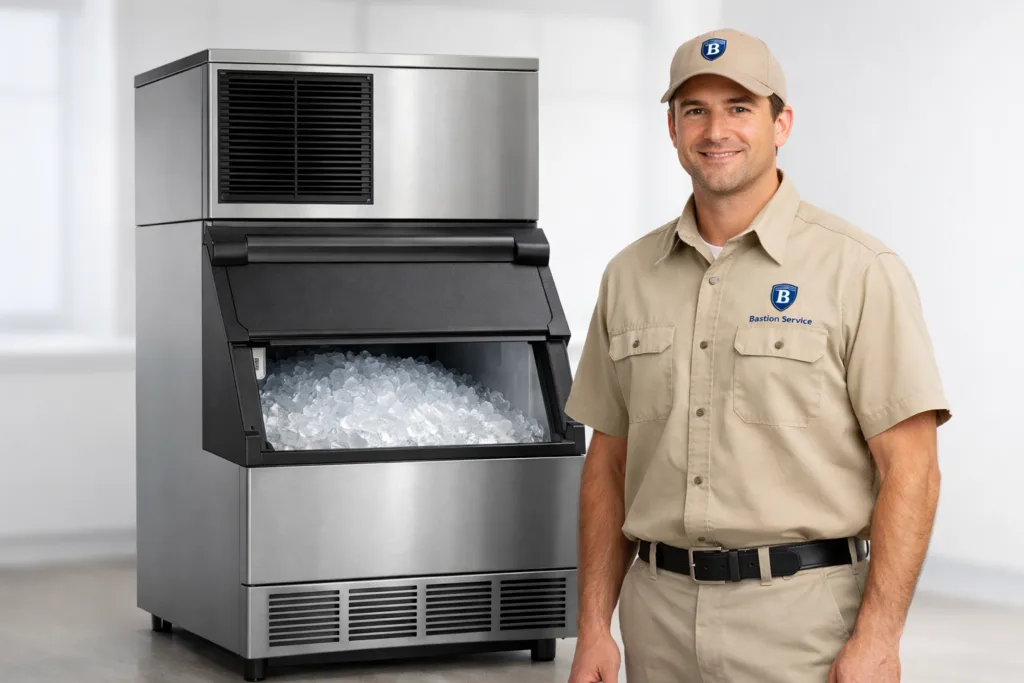




When a Hoshizaki ice machine starts falling behind, the problem quickly reaches beyond the machine itself. Ice shortages interrupt beverage service, strain prep routines, and force staff to work around equipment that should be supporting daily operations. For businesses in West Hollywood, the most useful next step is timely repair evaluation focused on the actual symptom pattern, the likely source of the fault, and how urgently the issue threatens uptime. Bastion Service helps businesses schedule diagnosis, understand whether the machine should stay in use, and move toward repair before a manageable problem turns into a broader shutdown.
For specific equipment paths in West Hollywood, review Hoshizaki Refrigerator Repair in West Hollywood, Hoshizaki Freezer Repair in West Hollywood, and Hoshizaki Ice Machine Repair in West Hollywood.
What Common Symptoms Usually Mean
Ice machines rarely fail in exactly the same way every time. Two machines can show similar output problems while having very different causes. That is why repair decisions should be based on what the unit is doing during fill, freeze, harvest, drain, and shutdown rather than on one visible symptom alone.
Low ice production
If the machine is still running but bin levels stay low, there may be a restriction in water supply, a scale-related performance issue, a sensor problem, a control fault, or trouble in the refrigeration side of the system. In some cases, the machine completes cycles too slowly. In others, it starts cycles but never reaches normal output. Low production is often treated as something staff can work around, but in a busy setting it usually means the machine is already operating outside normal conditions and needs service.
No ice at all
A machine that has stopped making ice completely may be dealing with an inlet failure, control issue, safety shutdown, harvest problem, or another condition that prevents the cycle from completing. If staff notice repeated restart attempts, unusual pauses, or intermittent operation before total stoppage, that pattern can help identify whether the failure is developing or already severe enough to take the unit offline.
Water leaks or overflow
Water around the machine should not be ignored. Leaks can come from blocked drains, cracked or loose lines, fill problems, freeze-related backups, or internal conditions that lead to overflow during operation. In a business environment, even a small leak can become a bigger facility problem by affecting floors, nearby equipment, or sanitation conditions. Early repair is often the difference between a contained equipment issue and a more disruptive cleanup situation.
Bad ice quality
Cloudy ice, irregular cube shape, soft cubes, clumping, or inconsistent sizing often point to water flow problems, scale buildup, freeze-cycle irregularities, or issues with controls and sensing. Ice quality changes matter because they often appear before a complete failure. If staff notice that the machine is making ice that looks different from normal, it is a useful warning sign that production conditions are no longer stable.
Harvest failures and freeze-ups
When a Hoshizaki unit forms ice but cannot release it correctly, production can slow sharply or stop. Failed harvest cycles may be linked to sensor feedback, scale accumulation, hot gas sequence issues, or control-related problems depending on the equipment design. Repeated freeze-up conditions can also place extra stress on the machine, making it unwise to keep restarting the unit without understanding why the cycle is getting stuck.
Unexpected shutdowns
If the machine turns off during operation, shows recurring fault behavior, or only runs again after resets, the issue may involve protections responding to an underlying fault rather than a one-time interruption. A shutdown that seems random to staff is often not random at all. It may be tied to overheating, water problems, cycle timing errors, or component failure developing over time.
How Water Flow and Scale Buildup Affect Performance
Many Hoshizaki ice machine problems trace back to water movement through the system. If incoming water is restricted, if internal passages are scaled, or if drain conditions interfere with normal operation, the machine may struggle to fill, freeze, release, or clear water the way it should. This can show up as slower production, poor cube quality, overflow, or repeated interruption of the ice-making cycle.
Scale buildup is especially important because it does not always look dramatic at first. A machine may continue operating while output declines gradually, cycles stretch longer, or harvest becomes less consistent. By the time staff recognize a serious production problem, the equipment may already need more than a quick adjustment. Repair evaluation helps determine whether the condition is primarily corrective cleaning, part replacement, control diagnosis, or a combination of issues.
Why Brand-Focused Repair Matters
Hoshizaki equipment is valued for consistent performance, but consistency depends on diagnosing faults in the context of how the machine is designed to cycle. Water fill behavior, freeze timing, release patterns, and shutdown responses all provide clues. Looking only at the surface symptom can lead to wasted time, unnecessary parts replacement, or repeat service calls when the real source of the problem was never confirmed.
For businesses in West Hollywood, brand-focused repair matters because the practical question is not just what failed, but how quickly the machine can return to stable operation and whether continued use risks additional damage. A service visit should help clarify whether the issue is limited, progressive, or severe enough to justify immediate repair scheduling.
Signs the Machine Should Be Evaluated Soon
It is usually time to schedule service when staff notice one or more of the following:
- Bin levels dropping even though demand has not changed
- Water pooling near the machine or repeated overflow
- Cloudy, soft, misshapen, or inconsistent ice
- Longer cycles or unusual pauses between batches
- Ice forming but not releasing properly
- Frequent resets or intermittent shutdowns
- Operational sounds that are clearly different from normal
These symptoms are important because they often indicate a machine that is still partly functioning but no longer operating normally. That stage is often the best time to diagnose the issue before it becomes a full outage during service hours.
Should the Machine Stay in Use Until Repair?
That decision depends on the symptom. A mild production drop may allow for scheduled repair if the machine remains stable, while active leaking, repeated shutdowns, heavy freeze-up, or clear harvest failure may justify taking the equipment offline. Continuing to run a machine with the wrong kind of fault can worsen component damage, increase cleanup issues, or create less predictable downtime later.
For managers and staff, the useful question is whether current operation is merely reduced or whether it is unstable. If the unit is cycling erratically, producing poor-quality ice, or leaving water where it should not, repair should be treated as more than routine maintenance. The risk is no longer only lower output; it is broader interruption to workflow and service standards.
Repair Planning for Business Operations
Repair planning should account for both the equipment condition and the demands placed on the machine. A business that relies heavily on steady ice production may need a faster response to symptoms that would seem minor in a lighter-use setting. During diagnosis, it helps to identify when the problem started, whether it is constant or intermittent, and whether output, water behavior, or shutdowns changed first.
In some cases, the outcome is straightforward repair. In others, diagnosis may show layered issues such as scale buildup combined with a failing component or a water flow problem that has begun affecting cycle performance. The goal is to move from symptom guessing to an informed service decision based on the machine’s actual condition.
Service Support for Hoshizaki Ice Machines in West Hollywood
If your Hoshizaki ice machine is showing low production, leaks, water flow trouble, harvest issues, scale-related performance loss, shutdowns, or ice quality changes, scheduling service promptly can help limit downtime and protect day-to-day operations. For businesses in West Hollywood, the best next step is to have the machine evaluated, confirm whether it should remain in use, and move ahead with repair based on the fault pattern rather than temporary workarounds.


