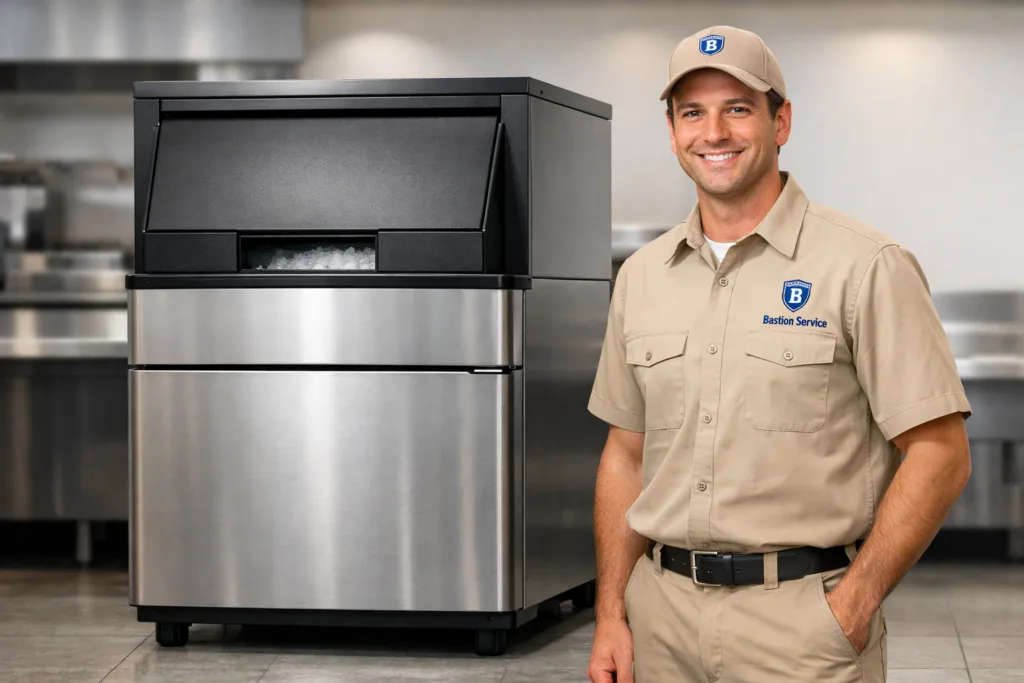




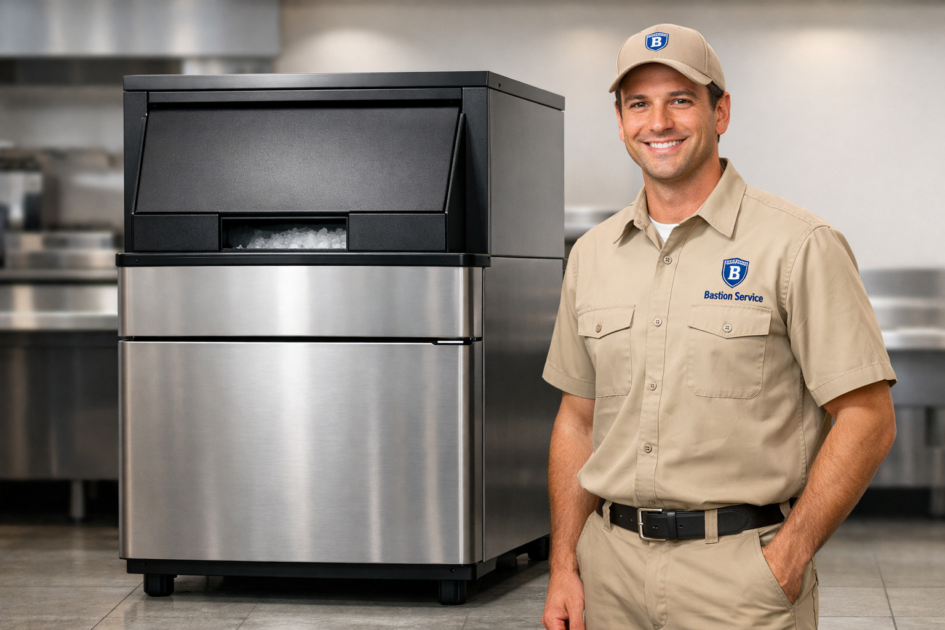
Ice machine problems can interrupt beverage service, prep flow, guest experience, and daily production faster than many operators expect. When a Hoshizaki unit starts slowing down, leaking, shutting off, or making inconsistent ice, the next step should be service based on the actual operating symptom, not guesswork. Bastion Service provides Hoshizaki ice machine repair for Los Angeles businesses with diagnosis centered on what the machine is doing onsite, what may be causing the failure, and how quickly the issue needs to be addressed to reduce downtime.
Related commercial service paths in Los Angeles include Hoshizaki Commercial Repair in Los Angeles, Commercial Ice Machine Repair in Los Angeles, and Hoshizaki Refrigerator Repair in Los Angeles.
Common Hoshizaki Ice Machine Problems Seen in Los Angeles
Most service calls start with one visible problem, but the root cause may sit elsewhere in the system. A machine that is not keeping up may have a water supply issue, scaling inside key components, a control fault, poor heat rejection, or a refrigeration-side problem. A machine that leaks may have a drain restriction, an overflow condition, or a freeze-and-harvest problem that is forcing water where it does not belong. Looking at the full symptom pattern helps determine whether the repair is straightforward or whether multiple conditions are contributing to the same complaint.
Low Ice Production or Slow Recovery
If the bin is not filling at the usual rate, the problem may involve reduced water flow, a restricted inlet valve, mineral buildup, a dirty condenser, weak pump performance, sensor errors, or refrigeration inefficiency. In food-service settings, even a moderate production drop can create service pressure during peak hours. Slow recovery is often one of the first signs that the machine is running, but not cycling as efficiently as it should.
No Ice or Intermittent Operation
When a Hoshizaki ice machine stops producing entirely or works only part of the day, likely causes can include control failures, bin control problems, thermistor issues, water fill faults, safety lockouts, or component failure during freeze or harvest. Intermittent operation is especially important to address quickly because it can create the appearance of random shutdowns when the machine is actually responding to a repeatable fault condition.
Misshapen, Clumped, or Poor-Quality Ice
Changes in cube shape, size, clarity, or batch consistency often point to uneven water distribution, scaling, temperature imbalance, or harvest problems. Clumped ice can also suggest melting and refreezing related to poor production timing or storage conditions. If the ice coming out of the machine no longer looks normal, that usually means the machine is no longer operating through its cycles the way it was designed to.
Leaks, Overflow, or Drainage Issues
Water on the floor around the machine should not be ignored. Drain line restrictions, pump issues, cracked hoses, loose fittings, freeze-up conditions, and overflow during fill or harvest can all lead to leakage. In kitchens, bars, hotels, and other business environments, water around the unit can become both an operational problem and a safety concern, so leak-related service is usually best scheduled promptly.
Unusual Noise, Long Cycles, or Repeated Shutdowns
A machine that suddenly sounds louder, runs longer than normal, or repeatedly stops and restarts may be dealing with fan motor issues, pump wear, scaling, control misreads, or refrigeration strain. Longer cycles do not just affect output. They also increase wear on parts already operating under stress, which can turn a manageable repair into a broader breakdown if left unresolved.
Why Hoshizaki Symptom Patterns Matter During Diagnosis
Hoshizaki ice machines rely on specific timing, controls, water movement, and freeze-harvest behavior. That means the same complaint from two different units can still require different repairs. For example, “not enough ice” may trace back to scale, water supply restrictions, a sensor problem, or a refrigeration issue. “Machine keeps shutting off” might involve a board, a safety response, or a condition elsewhere in the system that the controls are detecting.
Brand-specific diagnosis matters because replacing parts based only on the complaint can increase cost without restoring reliable production. A service visit should identify whether the failure is isolated, whether another condition caused it, and whether the machine can return to stable operation after repair.
When to Schedule Service Instead of Waiting
It is usually time to book service when the machine shows any of the following:
- Ice output has dropped below normal demand
- The machine is making no ice or only occasional batches
- Ice looks cloudy, small, hollow, incomplete, or clumped together
- Water is leaking around the unit or drain area
- The machine starts and stops unpredictably
- Cycle times seem longer than normal
- The unit is making new clicking, grinding, buzzing, or vibration noise
Waiting can make the repair less predictable, especially if staff begin resetting the machine repeatedly just to keep it running. Those temporary workarounds may hide a pattern that helps identify the real source of the problem.
Problems That Can Worsen With Continued Use
Some faults are more than output issues. A leaking unit can create floor hazards and affect surrounding finishes or equipment. A scaled or restricted water system can force longer cycles and reduce harvest consistency. A machine running hot or struggling to complete cycles can place added stress on motors, pumps, and refrigeration components. If the unit is already shutting down on its own, continued operation attempts can turn a smaller repair into a more expensive one.
For businesses that depend on steady ice production, it is often better to address the fault while the machine is still partially operating than to wait for a full outage during a busy period.
What to Check Before the Technician Arrives
Basic observations from staff can make the appointment more productive. Helpful details include:
- Whether the machine is making no ice or simply less ice than usual
- When the problem started and whether it is getting worse
- Any recent leak, overflow, or drain backup
- Whether the machine shuts off at a certain point in the cycle
- Changes in ice appearance, taste, or consistency
- Any recent cleaning, water shutoff, filter change, or nearby plumbing work
- Any alarm lights, fault codes, or repeated reset attempts
These details do not replace diagnosis, but they can help narrow down whether the issue is tied to water supply, controls, drainage, harvest performance, or another system condition.
Repair or Replacement: How the Decision Usually Gets Made
Not every failing machine needs to be replaced, and not every repair is the best long-term choice. The decision usually comes down to the machine’s age, overall condition, repair history, production demands, and what components have actually failed. A targeted repair often makes sense when the problem is isolated and the rest of the unit remains in good working condition.
Replacement becomes more likely when there are repeated major failures, declining reliability, heavy internal wear, or stacked repair needs that no longer support predictable operation. The important thing is to base that decision on confirmed findings from the machine rather than assumptions drawn from one symptom.
Service Planning for Los Angeles Businesses
In Los Angeles, ice machine service is rarely just about the equipment itself. It affects staffing, prep timing, beverage sales, guest service, and backup planning when production drops unexpectedly. That is why the most useful service call is one that connects the symptom to the likely fault, explains the repair path clearly, and helps the business decide what to do next without unnecessary delay.
If your Hoshizaki ice machine is producing less ice, leaking, shutting down, or making inconsistent batches, scheduling repair early can help limit disruption and prevent additional wear. A focused service visit gives you a better picture of what failed, what needs immediate attention, and whether the machine can be returned to stable day-to-day operation.