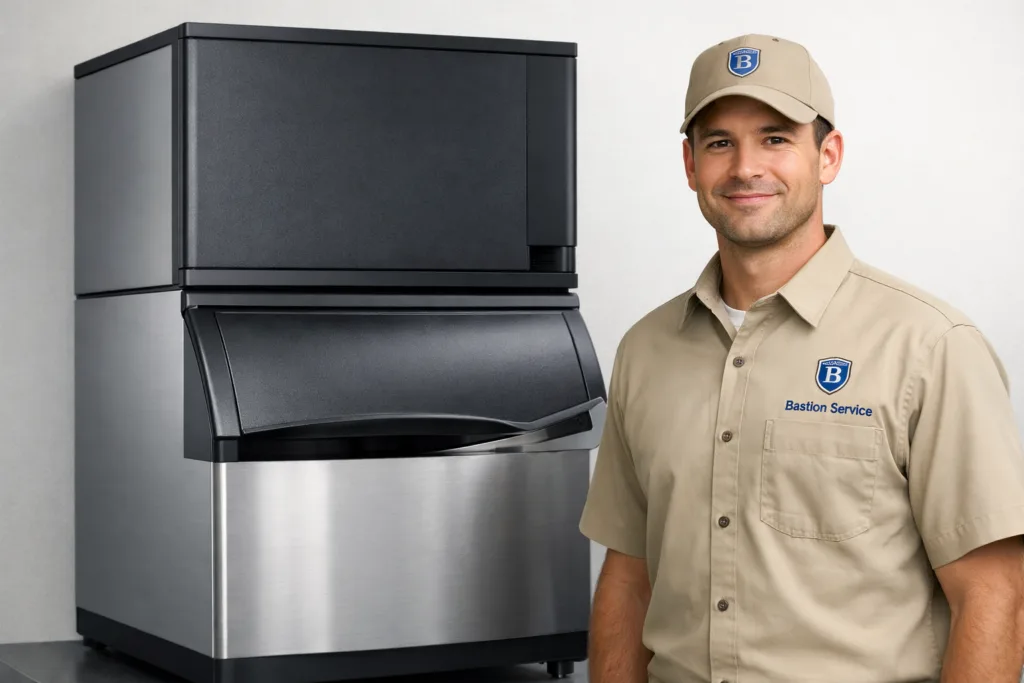




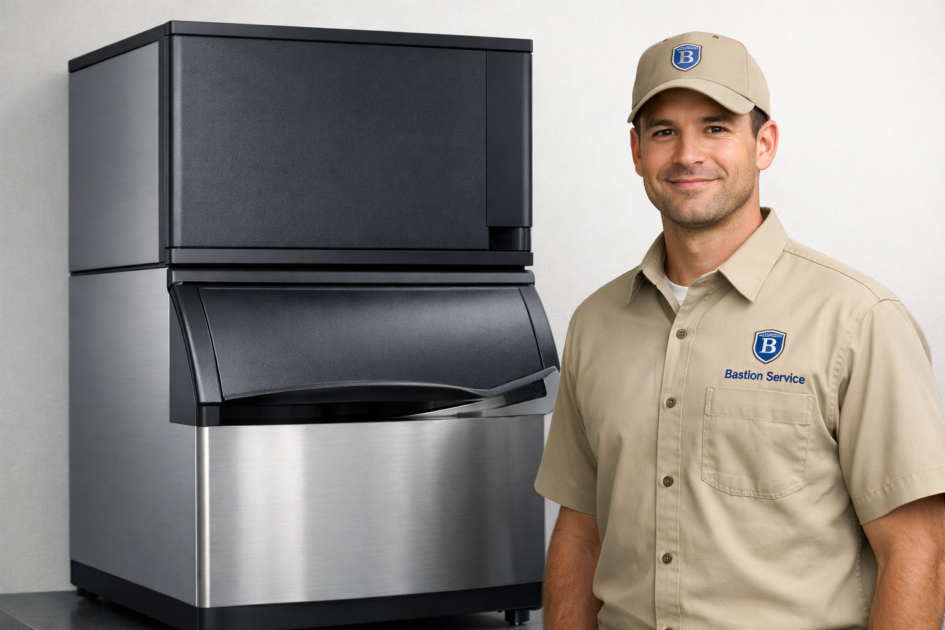
When a Manitowoc ice machine starts losing output, leaking, or shutting itself down, the priority is getting to the cause quickly so the unit can return to stable operation. For businesses in Palos Verdes Estates, ice shortages and unreliable cycling can affect beverage service, kitchen workflow, guest experience, and day-to-day scheduling. Bastion Service provides Manitowoc ice machine repair with a service-first approach focused on symptom patterns, machine condition, and the next repair step that makes sense for the equipment.
Related commercial service paths in Palos Verdes Estates include Manitowoc Repair in Palos Verdes Estates, Commercial Ice Machine Repair in Palos Verdes Estates, and Hoshizaki Ice Machine Repair in Palos Verdes Estates.
Common Manitowoc Ice Machine Problems
Most ice machine failures do not begin with a total outage. They usually appear as performance changes that point to a specific system problem involving water flow, freeze timing, harvest, drainage, airflow, or controls. Identifying the pattern helps determine whether the machine can stay in limited use until service or should be taken offline to prevent additional damage.
Low Ice Production or Slow Recovery
If the bin is not filling as expected, recovery time is getting longer, or the machine cannot keep up with normal demand, the issue may involve restricted incoming water, scale buildup, a dirty condenser, weak airflow, sensor errors, or refrigeration-related performance loss. Low production is often one of the earliest warnings that the machine is struggling through freeze or harvest cycles. A unit that still makes some ice can still be heading toward a full stoppage.
No Ice at All
A complete no-ice condition can come from power and control faults, failed water fill, safety shutdowns, float or thickness sensing issues, freeze-up conditions, or internal component failure. If the machine powers on but never advances properly through its cycle, the problem is usually more specific than the symptom suggests. Repeated resets may temporarily restart the unit without solving the reason it stopped.
Poor Ice Quality or Inconsistent Cube Shape
Cloudy cubes, hollow cubes, thin ice, oversized sheets, partial slabs, or irregular cube formation often point to water distribution problems, mineral buildup, inlet valve issues, temperature imbalance, or timing faults during freeze and harvest. Poor ice quality is not just an appearance issue. It can reduce bin efficiency, affect drink consistency, and signal that the machine is no longer operating within normal parameters.
Leaks, Overflow, or Water Around the Machine
Water where it should not be can be caused by blocked drains, loose fittings, cracked tubing, overflow during fill, melting from harvest trouble, or ice backing up where it cannot clear correctly. In a busy work environment, leaks create more than cleanup concerns. They can interrupt operations, increase slip risk, and turn a manageable service call into a larger repair if water keeps circulating through the wrong areas.
Freeze-Up and Harvest Problems
If ice sticks to the evaporator too long, releases poorly, or forms in a way that disrupts normal harvest, the machine may show longer cycle times, loud release attempts, slab breakage, or shutdown behavior. Harvest issues can be tied to sensors, water volume, temperature conditions, scale, or refrigeration imbalance. These problems often lead to clumped ice, poor bin fill, and increasing mechanical strain.
Unexpected Shutdowns or Fault Behavior
A Manitowoc machine that stops mid-cycle, goes into protection mode, or behaves erratically may be reacting to a failed sensor, board issue, water-level problem, overheating condition, or repeated cycle fault. Shutdowns are often the machine’s way of preventing further damage. The important step is finding out what trigger caused the shutdown rather than simply powering the unit back on.
What the Symptom Usually Tells You
Visible symptoms are useful because they help narrow the repair path. A few common patterns include:
- Low output with normal operation sounds: often related to water restriction, scale, airflow, or declining refrigeration performance.
- Leaking during or after harvest: often points to drainage issues, melting caused by harvest trouble, or fill-related overflow.
- Clumped or fused ice in the bin: can indicate partial melting, delayed harvest, temperature inconsistency, or poor cube formation.
- Machine fills but does not complete a cycle: may involve sensor, control, freeze, or thickness problems.
- Repeated shutdown after restart: often means the underlying fault is still active and should be diagnosed before continued use.
These symptom patterns matter because the same complaint can come from very different root causes. Replacing parts based only on the visible issue can lead to repeat failures and longer downtime.
Why Manitowoc Diagnosis Matters Before Parts Are Replaced
On an ice machine, the part that seems responsible is not always the one that failed first. A harvest problem may begin with water distribution or scale. A no-ice complaint may stem from a fill issue rather than a refrigeration fault. A leak may have more to do with drainage than an internal component breakdown. Proper diagnosis helps determine whether the machine needs a targeted repair, a cleaning-related correction, a control-related fix, or a broader evaluation of overall condition.
For Palos Verdes Estates businesses, that distinction matters because downtime affects staffing, service flow, and product availability. A repair decision should answer three questions clearly: what is failing, what risk comes with continued operation, and what action is most likely to restore reliable ice production without unnecessary delay.
When to Stop Using the Machine and Schedule Service
It is usually best to schedule repair promptly when any of the following conditions appear:
- Ice production drops below normal demand
- The machine stops making ice completely
- Water collects around the unit or inside the bin area
- Ice becomes hollow, thin, cloudy, misshapen, or clumped together
- The machine starts making unusual noise or vibrating more than normal
- Cycles become longer, inconsistent, or incomplete
- The unit shuts down repeatedly or shows persistent fault behavior
If the machine is freezing up, overflowing, or restarting only to fail again, continued use can increase wear on other components. In those cases, pausing operation until the issue is diagnosed is often the safer and less expensive choice.
Repair or Replacement: How Businesses Usually Decide
Many Manitowoc problems are repairable, especially when the fault involves sensors, controls, water components, drainage, fan operation, or isolated cycle issues. Replacement becomes a stronger consideration when the machine has recurring breakdowns, major corrosion, sealed-system problems, or a repair cost that no longer matches the unit’s expected remaining service life.
The right call usually depends on the machine’s age, maintenance history, the severity of the current failure, and how much disruption another breakdown would create. A business that depends heavily on steady ice availability may weigh future reliability differently than a site with lower demand or temporary backup options.
How to Prepare for a Manitowoc Service Visit
Before service is scheduled, it helps to note what the machine is doing now compared with normal operation. Useful details include whether the machine stopped completely or just slowed down, whether water is present around the unit, whether the issue began after cleaning or filter changes, and whether the bin still receives any usable ice. If the machine has been shutting down, knowing how often it happens and at what stage of operation can speed up diagnosis.
It is also helpful to avoid repeated resets or continued operation through obvious leaks, freeze-up, or fault behavior. Preserving the machine in its failed state can make the cause easier to identify and can prevent secondary damage from developing while the unit struggles to run.
Focused Manitowoc Ice Machine Repair in Palos Verdes Estates
Service works best when it is tied to the exact way the machine is failing, not just the fact that it is underperforming. Whether the problem is low production, poor ice quality, leakage, shutdowns, or a complete no-ice condition, the next step is to schedule repair based on the current symptom pattern and the operational impact on your business in Palos Verdes Estates. Timely diagnosis and repair can help limit downtime, prevent added wear, and restore more predictable ice production before a smaller problem turns into a larger outage.