
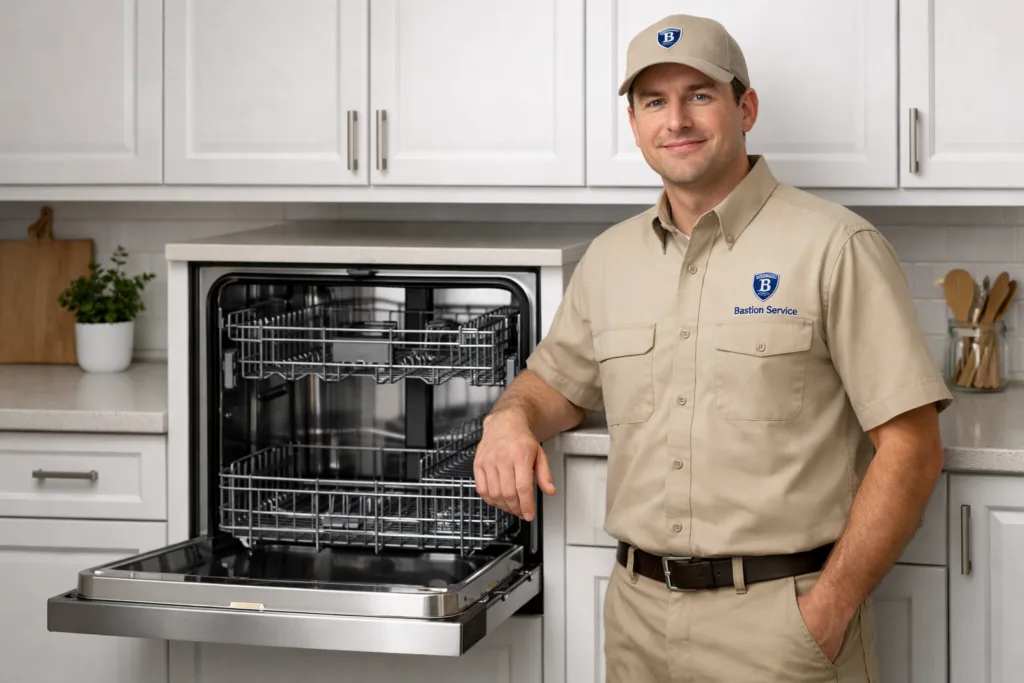




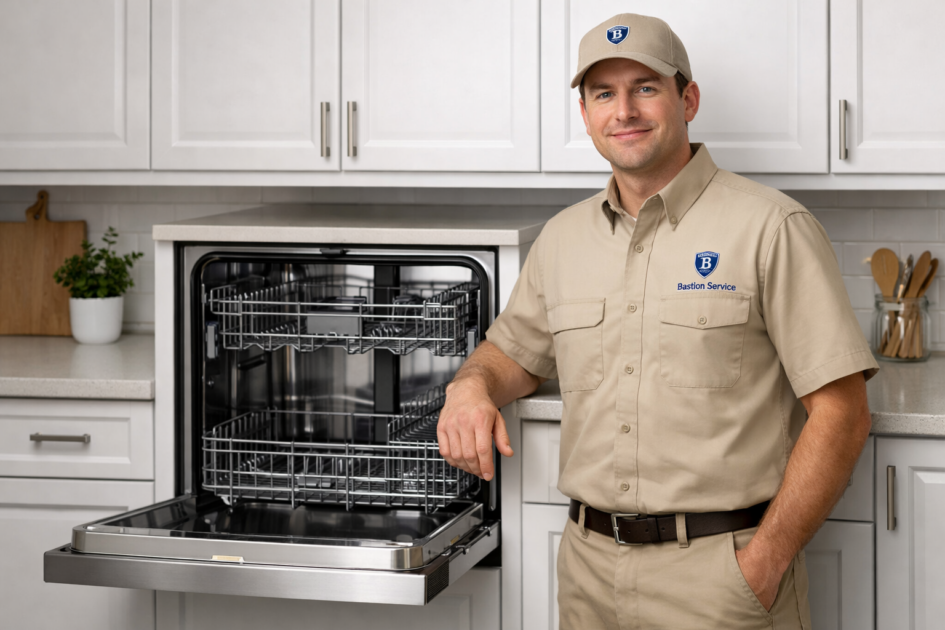
When a GE dishwasher starts leaving residue behind, pooling water in the bottom, or stopping before the cycle finishes, the next step is to match the symptom to the most likely failed system. That matters because the same machine can seem to have a “cleaning problem” when the real cause is low water fill, a weak wash motor, poor heating, or a drain issue that is sending dirty water back through the tub.
Related GE and dishwasher service paths in Cheviot Hills include GE Appliance Repair in Cheviot Hills, Dishwasher Repair in Cheviot Hills, and GE Refrigerator Repair in Cheviot Hills.
In Cheviot Hills homes, dishwashers often get used daily, so small performance changes tend to show up quickly. Glasses may look dull, plates may still feel greasy, or the kitchen floor may show moisture near the door. Those early signs usually mean the machine needs attention before a minor issue becomes a larger repair.
Common GE dishwasher symptoms and what they may mean
Standing water after the cycle
If water remains in the bottom of the tub, the problem may involve the drain pump, a partial restriction in the drain path, a clogged filter area, or a sink-side connection issue. Some GE dishwashers will also pause or end abnormally when they cannot drain properly. Homeowners sometimes notice that dishes come out with a film or that the next load starts with old water still inside.
Drain problems are worth addressing early because continued use can strain the pump and leave food soil circulating back onto dishes.
Dishes are dirty, gritty, or cloudy
Poor wash results can come from several different faults, including blocked spray arms, weak circulation, detergent dispenser trouble, low incoming water, or a heating issue that prevents proper wash or rinse performance. If results changed suddenly rather than gradually, that often points to a mechanical or electrical failure rather than detergent choice alone.
Cloudiness can also appear when rinse performance drops. On GE models, a low rinse temperature or incomplete heating phase may leave dishes looking dull even when the machine seems to run a full cycle.
Leaks around the door or underneath the unit
A leak does not always mean the door gasket is the only problem. Water can escape because of overfilling, a damaged lower seal area, a warped spray pattern, loose internal hoses, or a cracked component below the tub. If the leak appears only during certain parts of the cycle, that timing can help narrow down whether the problem happens during fill, wash circulation, or drain-out.
Even a small intermittent leak deserves prompt attention when moisture is reaching flooring, trim, or cabinetry.
Dishwasher will not start or respond
When a GE dishwasher does not start, the issue may involve power supply, door latch operation, user interface response, control failure, or a safety condition that prevents cycle initiation. In some cases the lights come on but nothing happens after pressing start. In others, the dishwasher appears completely dead.
Whether the display is active, whether the door latches firmly, and whether the machine begins to fill are all clues that help separate a control issue from a latch or power problem.
Cycle stops mid-wash or runs too long
A dishwasher that stalls mid-cycle may be struggling with heating, draining, control communication, or motor performance. Some units appear to run for an unusually long time because they are waiting for a temperature target or repeating part of the sequence after a fault condition. If this happens along with poor cleaning or wet dishes at the end, the symptoms are often connected.
Grinding, buzzing, or rattling noises
Unusual sound often points to debris in the pump area, spray arm interference, motor wear, or a drain pump beginning to fail. A brief hum at startup may be normal, but a louder grinding, repeated buzzing, or a new harsh noise during wash or drain usually means the machine should be inspected before the damage spreads to other parts.
Why symptom patterns matter on GE dishwashers
GE dishwasher failures often overlap. A homeowner may call because dishes are dirty, but the root cause could be a circulation problem. Another may focus on water in the tub, when the original fault is actually a pump issue that also affects wash pressure. Looking at the full sequence of fill, wash, heat, and drain is the best way to determine what actually failed.
This is especially important with intermittent issues. If the dishwasher works one day and fails the next, the problem may involve a control response, a component weakening under load, or a condition that only appears at a certain point in the cycle.
Signs the repair should not be delayed
Some dishwasher problems are inconvenient. Others can affect the kitchen around the appliance or create an electrical concern. It is smart to stop using the unit and schedule service sooner if you notice any of the following:
- Water leaking onto the floor in front of the dishwasher
- A burning smell or signs of overheating
- The breaker trips during operation
- The pump makes a loud straining or grinding noise
- The tub keeps filling, will not drain, or drains inconsistently
- The door will not latch securely
For households in Cheviot Hills, acting early can help prevent damage to nearby flooring and cabinet surfaces while keeping a localized dishwasher problem from turning into a more expensive kitchen repair.
Low rinse temperature and drying complaints
If dishes come out wet, cool, or not fully rinsed, the heating portion of the cycle may not be performing as it should. On GE dishwashers, low rinse temperature can affect drying, leave residue behind, and make plastics especially slow to dry. A heating-related fault can also cause longer cycles or inconsistent final results from one load to the next.
Because drying complaints often seem less urgent than leaks or no-start issues, they are sometimes ignored for too long. But when poor drying is paired with cloudy dishes, cycle delays, or weak cleaning, it often points to a broader operating problem rather than a simple loading issue.
Pump and circulation issues
The pump system is central to how the dishwasher cleans and drains. When circulation weakens, spray arms may not receive enough pressure to wash the upper and lower racks effectively. When the drain pump struggles, water may remain in the tub or leave behind debris. Buzzing, humming, poor wash coverage, and incomplete draining can all trace back to pump-related problems.
A failing pump does not always stop the machine completely. Sometimes the first sign is that one rack cleans worse than usual, or that the dishwasher sounds different during the wash phase. Catching that change early may help limit additional wear on related components.
Repair or replace?
Whether a GE dishwasher should be repaired depends on the age of the unit, the overall condition of the appliance, the parts involved, and whether the problem is isolated or part of broader wear. Many repairs are reasonable when the issue is limited to a pump, latch, valve, seal, drain component, or control-related part and the rest of the machine is still in solid shape.
Replacement becomes more likely when there are multiple failures, significant internal wear, repeated leak history, or structural problems that reduce long-term reliability. The most useful answer usually comes after the fault is identified and the condition of the rest of the dishwasher is considered, not just the single part that stopped working.
What homeowners should note before service
A few observations can make the problem easier to pinpoint. It helps to note:
- Whether the dishwasher fills with water at the start
- Whether the spray sound is normal or noticeably weak
- At what point the cycle stops or changes behavior
- Whether the leak happens early, mid-cycle, or near draining
- If the display shows lights, beeps, or unresponsive buttons
- Whether the issue happens every cycle or only sometimes
Those details can help connect the symptom to the right system more quickly and avoid guesswork.
GE dishwasher repair in Cheviot Hills with a household-focused approach
Residential dishwasher problems are not just about the appliance itself. They affect cleanup, meal routines, and the condition of the kitchen around the machine. A helpful service visit should clarify what failed, whether continued use risks more damage, and whether the recommended repair makes sense for the dishwasher’s condition.
If your GE dishwasher in Cheviot Hills is leaking, not draining, washing poorly, running with low rinse temperature, making new pump noise, or failing to complete cycles, the most useful first move is a symptom-based inspection that identifies the actual cause and the most sensible next step.


