





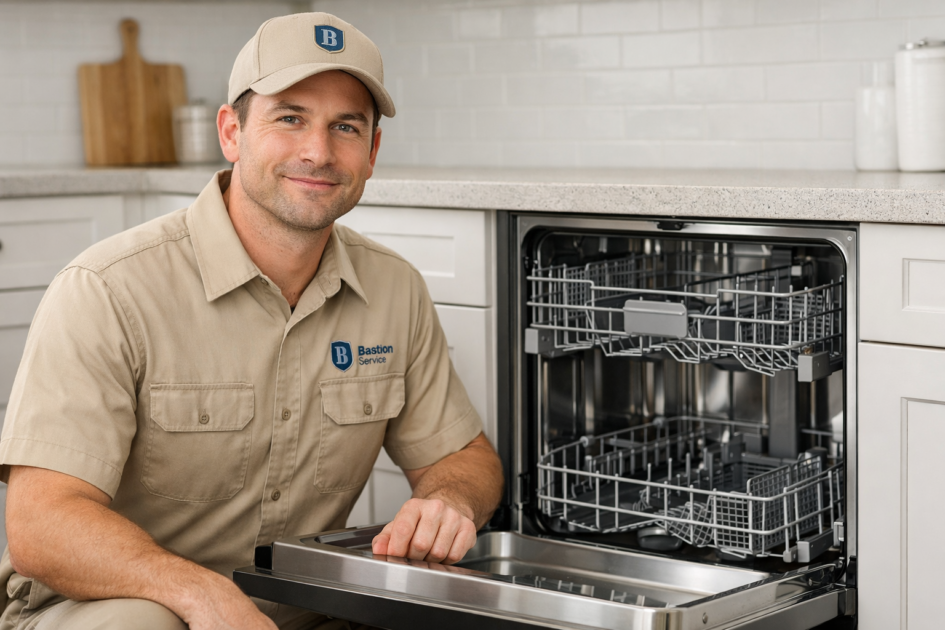
Dishwasher problems can look similar at first, but the symptom pattern usually tells you where the fault is developing. If your Blomberg unit is leaving residue on dishes, stopping before the cycle ends, or holding water in the bottom, the most useful next step is to match the behavior to the part of the system that is failing.
Related Blomberg and dishwasher service paths in Cheviot Hills include Blomberg Appliance Repair in Cheviot Hills, Dishwasher Repair in Cheviot Hills, and Blomberg Refrigerator Repair in Cheviot Hills.
How Blomberg dishwasher problems are usually diagnosed
A dishwasher depends on several systems working in sequence: power and controls, water fill, wash circulation, heating, draining, and door sealing. When one stage breaks down, the machine may still appear to run, which is why the exact symptom matters.
For example, a dishwasher that fills but does not clean points in a different direction than one that never fills at all. A machine that drains slowly suggests a different repair path than one that leaks onto the floor. In Cheviot Hills homes, identifying that distinction early helps avoid replacing the wrong part and gives a better sense of whether the repair is likely to be straightforward or more involved.
Common Blomberg dishwasher symptoms and what they often mean
Dishwasher will not start
If nothing happens when you press start, the issue may involve the door latch, user interface, control board, or incoming power. In some cases, the dishwasher is not fully dead but stuck because it cannot complete a previous drain sequence or register that the door is securely closed.
If lights come on but the cycle does not begin, that often narrows the problem to the latch, controls, or a safety-related interruption rather than a complete power loss.
Dishes are still dirty after the cycle
Poor wash results often come from restricted spray arms, weak wash circulation, low water fill, filter buildup, or detergent performance issues. If upper-rack items stay dirty while lower-rack items improve slightly, that can suggest reduced spray pressure or blocked water distribution.
When dirty dishes are paired with a new humming or grinding sound, the circulation side of the system becomes more suspect. If glassware looks cloudy but food soil is otherwise removed, water quality or detergent use may be part of the issue as well.
Water is left in the bottom
Standing water at the end of the cycle commonly points to a blocked filter area, restricted drain hose, drain pump problem, or a drainage setup issue. If the unit tries to drain but only hums, there may be debris in the pump area or a pump that is failing under load.
This is a symptom worth addressing quickly, since repeated use with poor drainage can create odor, slow future cycles, and increase stress on the pump.
Dishwasher leaks during or after use
Leaks can come from more than one place. Common sources include the door gasket, lower door seal, internal hoses, sump components, overfilling, or wash action that is forcing water where it should not go. A leak that appears only during part of the cycle can be especially helpful in narrowing down the cause.
Even a small recurring leak should not be ignored. Water around the dishwasher opening can affect nearby flooring and cabinetry if the problem continues.
Cycles stop midway or take too long
If the dishwasher starts normally and then stalls, the problem may involve heating, draining, sensors, or controls. Some units pause longer than expected when they cannot reach the needed rinse or wash temperature, while others hang up because they cannot complete a drain step.
A cycle that suddenly becomes much longer than normal is often a sign that the machine is struggling to finish one part of the program rather than simply washing more thoroughly.
Dishwasher makes unusual noise
Buzzing, rattling, grinding, or a louder-than-usual wash sound can point to debris in the pump area, wear in the motor assembly, loose internal components, or spray-arm interference. A new noise matters even if the dishwasher still completes a cycle, because sound changes often show up before a total failure.
Dishes are wet or not drying properly
If dishes come out clean but cold and wet, the issue may involve the heating circuit, temperature sensing, rinse aid use, or cycle selection. Plastic items naturally retain more water, but when the whole load feels noticeably cooler than usual, a heating-related fault becomes more likely.
Signs the problem is getting worse
Some dishwasher issues stay fairly consistent, while others tend to progress. Warning signs that usually mean the condition is worsening include:
- Drain problems that become more frequent from one cycle to the next
- Leaks that spread beyond the front edge of the unit
- Cycles that cancel or stop more often
- Burning smells, sharp grinding, or repeated electrical tripping
- Noticeably weaker cleaning despite normal loading and detergent use
If you notice one of these patterns, it is usually better to stop running extra test cycles. Continued use can turn a single-part repair into a larger pump, motor, or control issue.
What to note before scheduling service
A few details can make troubleshooting much more accurate. Try to note:
- Whether the dishwasher powers on
- Whether it fills with water
- Whether spray action sounds normal
- Whether it drains fully
- Whether the problem happens on every cycle or only certain settings
- Whether there is leaking, odor, or unusual noise
- Whether dishes are dirty, cloudy, cold, or still wet at the end
That information helps narrow the likely fault before any parts decision is made. It also helps separate a simple maintenance-related issue from a component failure.
When repair usually makes sense
Many Blomberg dishwasher issues are worth repairing when the machine is otherwise in good condition and the problem is limited to one system. Drain pump issues, latch problems, circulation faults, some leak sources, and a range of control-related symptoms can often be addressed effectively when the failure is clearly identified.
Repair tends to make the most sense when performance was otherwise normal before the current symptom appeared and there is no sign of multiple unrelated problems happening at once.
When replacement may be the better choice
Replacement becomes more reasonable when the dishwasher has several overlapping failures, a history of recurring service, or evidence of significant water damage. The key question is not simply age. It is whether the machine has one defined problem or several systems showing wear at the same time.
If a unit has leaking, poor wash performance, draining trouble, and control problems together, the cost and risk can shift the decision away from repair. On the other hand, a single confirmed fault in an otherwise solid machine often supports fixing it.
What homeowners in Cheviot Hills should do first
If your Blomberg dishwasher is acting up, avoid forcing repeated cycles to see if it clears on its own, especially if there is standing water, leaking, or a strong change in sound. Emptying the unit, checking for obvious filter buildup, and noting the exact behavior is usually more helpful than continued use.
For Blomberg Dishwasher Repair in Cheviot Hills, the best results usually come from a symptom-based diagnosis and a repair plan based on what the machine is actually doing, not just the most common part associated with the complaint.


