
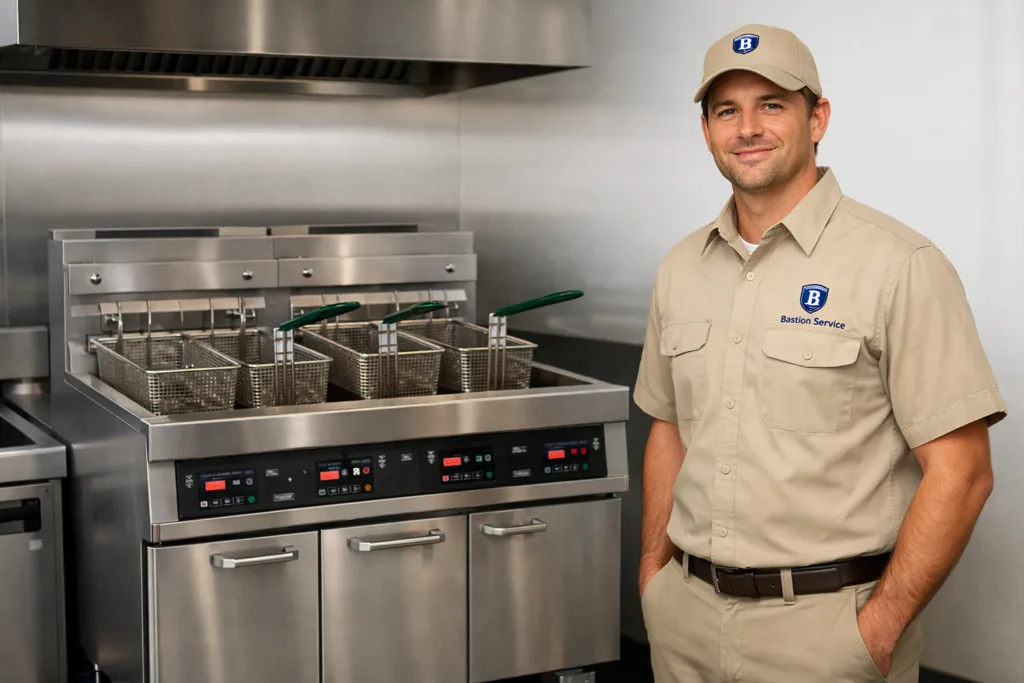




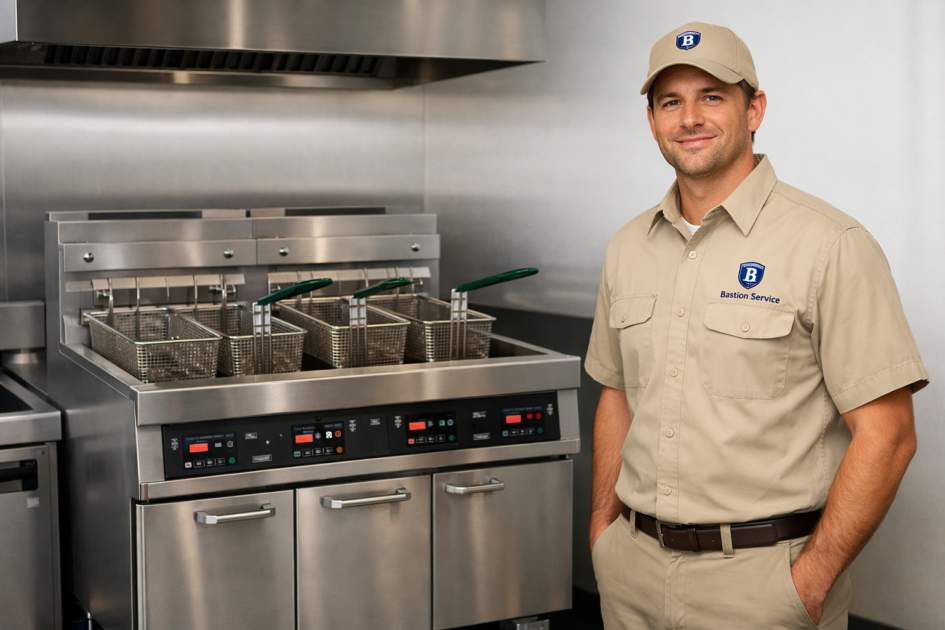
When Frymaster cooking equipment starts missing temperatures, recovering too slowly, or shutting down during a busy shift, the main priority is restoring stable operation without adding unnecessary downtime. For businesses in Venice, service decisions often come down to how the equipment is behaving under load, whether the problem is getting worse, and how quickly the fault needs to be diagnosed to keep production moving. Bastion Service provides repair support focused on identifying the actual failure, explaining the likely repair path, and helping operators schedule work based on urgency and daily kitchen demands.
For specific equipment paths in Venice, review Frymaster Fryer Repair in Venice and Commercial Appliance Repair in Venice.
What Frymaster cooking equipment problems do technicians troubleshoot?
Service calls for Frymaster equipment usually start with symptoms that affect output, timing, or consistency rather than a single obvious failed part. In many kitchens, the same underlying fault can appear as slow heat-up, poor recovery, ignition trouble, erratic temperatures, repeated resets, or full shutdowns. Troubleshooting is meant to narrow those symptoms to the component or system actually causing the interruption.
- Units not reaching or holding set temperature
- Slow recovery between batches
- Ignition failures or burners that do not stay lit
- Unexpected shutdowns during use
- Control errors, lockouts, or repeated reset conditions
- Overheating, temperature drift, or inconsistent cook results
- Performance loss that creates ticket delays
- Oil leaks or visible signs of wear that affect operation
Although fryers are the most common issue on this brand page, symptom-based service also applies to related cooking equipment concerns involving heat delivery, controls, safety circuits, and dependable operation during production hours.
Heating and temperature issues that affect output
If a unit heats too slowly, runs cooler than expected, overshoots temperature, or cycles unevenly, the problem can affect food quality, oil condition, and staff timing almost immediately. Operators may first notice longer cook times or inconsistent finished product before they see an error or complete failure.
These symptoms can be tied to temperature sensing problems, control faults, burner performance issues, or interruptions in the normal heating sequence. In a working kitchen, that matters because staff often begin compensating manually by changing cook times or basket loads, which can mask the real problem while productivity drops. Repair is usually the right next step once the equipment is no longer heating predictably enough to support normal service.
Signs the issue is more than routine fluctuation
- Cook times keep changing from batch to batch
- Product quality varies even with the same procedure
- The displayed temperature does not match actual performance
- The unit reaches setpoint but drops too far under load
- Staff have to wait too long between batches
Ignition and burner problems
Ignition complaints often sound simple at first: the unit will not light, lights only sometimes, or starts heating and then drops out. In practice, these issues can involve several different causes, including ignition components, flame sensing behavior, gas-related problems, wiring faults, or control issues that interrupt the sequence.
Repeated restart attempts may get the equipment running temporarily, but they do not solve the failure pattern. When a burner will not light consistently or cannot stay stable during operation, the safest and most efficient path is to have the problem diagnosed rather than continuing to reset the unit during service.
Common operator observations
- The fryer clicks or attempts to light without successful ignition
- The flame starts but drops out shortly after
- The equipment works during warm-up but fails later in the shift
- The controls enter fault mode after several ignition attempts
Slow recovery and production delays
A unit that still operates but cannot recover properly between loads can be just as disruptive as a full shutdown. Slow recovery reduces throughput, extends wait times, and makes it harder to maintain consistent results during peak periods. This is often when businesses in Venice decide that a problem has moved beyond routine adjustment and needs repair attention.
Slow recovery may point to reduced burner efficiency, control response problems, inaccurate sensing, airflow issues, or other heating-related faults. Because the equipment is still partially functioning, this type of issue is easy to delay, but the cost shows up in order flow, labor strain, and uneven product quality.
Shutdowns, lockouts, and reset-dependent operation
If Frymaster cooking equipment is shutting down unexpectedly, entering a fault state, or requiring repeated resets to keep running, it should be evaluated promptly. Safety systems are designed to interrupt operation when the unit is not behaving normally, and a pattern of lockouts usually means the problem is not minor.
Possible causes may include high-limit trips, control board problems, ignition sequence failures, electrical supply issues, or another condition that makes continued use unreliable. When staff are resetting the equipment several times a day, the question is no longer whether the unit can turn back on, but whether it can be trusted to stay in operation through service.
Leaks, wear, and visible warning signs
Not every service call begins with a temperature complaint. Some start with visible oil leaks, unusual noises, signs of overheating, or components that appear damaged or unstable in daily use. These issues can point to wear that affects both performance and safe operation.
Any leak or physical deterioration should be taken seriously, especially when it is paired with heating inconsistency or shutdown behavior. A unit that is losing oil, showing signs of stress, or operating with damaged parts can create a larger interruption if it stays on the line too long.
Why symptom patterns matter during diagnosis
Cooking equipment problems rarely present in a perfectly consistent way. A fryer may operate normally during startup but fail after extended use. It may recover well during a slow period but struggle during a heavy rush. It may also show one symptom to staff and a different one during testing. That is why noting the pattern is useful before service is scheduled.
Helpful details include when the problem happens, whether it affects one unit or multiple units, what the display or controls are showing, and whether the issue appears during warm-up, steady operation, or high-volume production. That information can reduce guesswork and help determine whether the equipment should remain in use, be limited to lighter demand, or be taken out of service until repairs are completed.
When to stop using the equipment
Some issues should not be pushed through another shift. If the equipment is overheating, failing to ignite consistently, shutting down under load, leaking, or producing unreliable temperature performance, continued use can lead to greater downtime and harder repair decisions later.
It is usually time to stop using the unit when:
- Staff are repeatedly resetting controls to continue service
- Cook quality is no longer consistent
- The equipment cannot recover fast enough for normal volume
- Shutdowns are becoming more frequent
- There are visible leaks or signs of unsafe operation
In those cases, scheduling repair promptly is often the best way to prevent a partial problem from becoming a complete line interruption.
Repair planning for Venice kitchens
Not every Frymaster issue points to replacement, and not every repair should be deferred until the unit fails completely. The right decision depends on the severity of the current fault, the condition of the equipment, recent repair history, and how central the unit is to daily production. For many Venice businesses, the most valuable part of a service visit is understanding whether the problem is isolated, whether follow-up work is likely, and how urgently the repair should be scheduled.
That planning is especially important when one piece of cooking equipment affects multiple stations, staffing flow, or menu timing. A targeted diagnosis helps operators decide whether immediate repair is the best option, whether temporary workarounds are realistic, or whether longer-term equipment planning should begin.
Service support for Frymaster equipment in Venice
When Frymaster cooking equipment is showing heating faults, ignition trouble, poor recovery, control problems, leaks, or repeated shutdowns, a service-focused evaluation helps turn symptoms into a repair decision. For businesses in Venice, the goal is not just getting the unit to restart, but restoring dependable operation and reducing the risk of more downtime during production. If your equipment is affecting service flow, scheduling diagnosis and repair is the practical next step.


