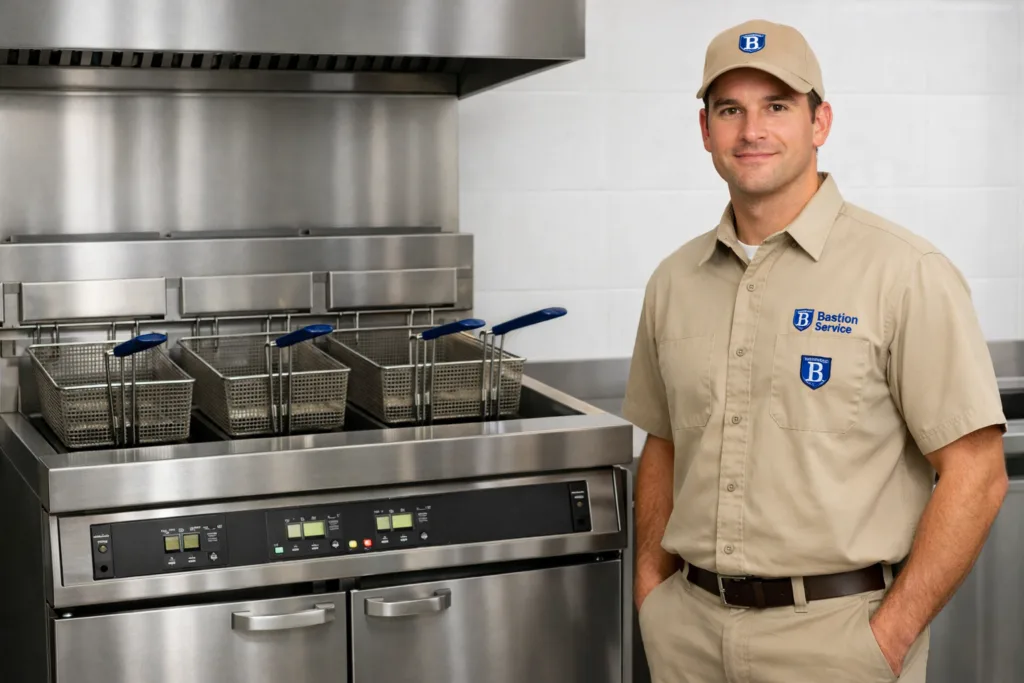




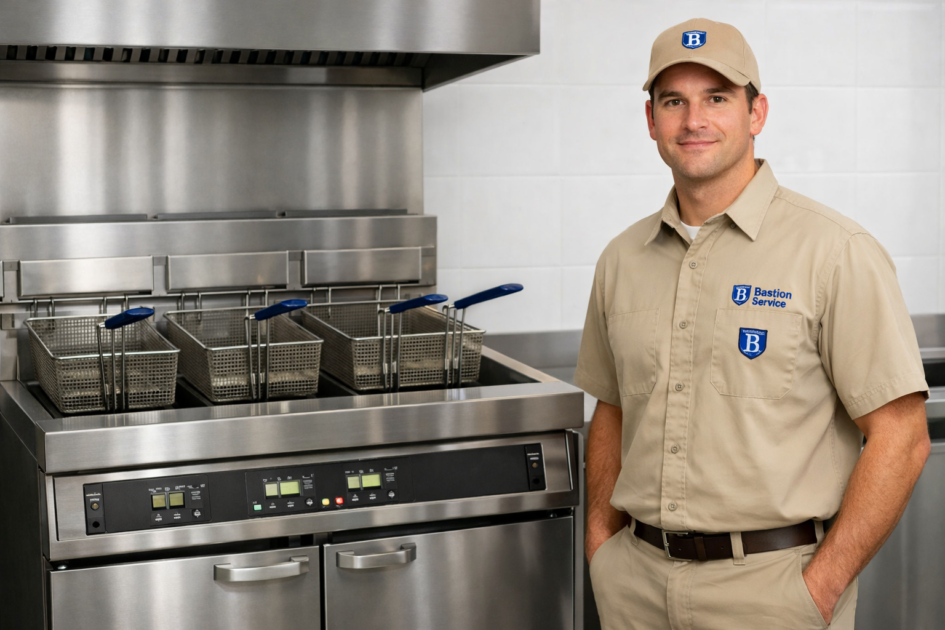
Frymaster cooking equipment problems tend to show up first as slower output, inconsistent temperatures, delayed ignition, or unexplained shutdowns during service. For businesses in Rancho Palos Verdes, the right response is to identify the fault pattern, determine whether the equipment can continue operating safely, and schedule repair based on the actual risk to production. Bastion Service helps local kitchens evaluate those symptoms, narrow down likely causes, and move toward a repair plan that fits the urgency of the downtime.
For specific equipment paths in Rancho Palos Verdes, review Frymaster Fryer Repair in Rancho Palos Verdes and Commercial Appliance Repair in Rancho Palos Verdes.
Frymaster cooking equipment issues that usually need prompt repair
Many problems begin before the equipment fully stops working. A fryer may still heat, but recover too slowly between batches. Controls may respond, but temperatures drift higher or lower than expected. Ignition may become intermittent, or the unit may drop out in the middle of a busy period. Those early symptoms often lead to longer cook times, product inconsistency, and staff workarounds that make service harder to manage.
Scheduling service is usually the better choice when a problem keeps returning after reset attempts, basic cleaning, or normal daily checks. Repeat symptoms often point to a fault in the ignition system, burner operation, temperature sensing, control board behavior, gas flow, safety limits, or electrical components that needs direct testing rather than trial-and-error part changes.
Heating and recovery problems
Slow heat-up
If the equipment takes too long to reach operating temperature, the issue may involve weak burner performance, a control fault, sensor inaccuracy, or another heating-related failure. In a kitchen environment, slow heat-up reduces the ability to keep pace with demand and can create bottlenecks around batch timing. Repair evaluation helps determine whether the problem is isolated to one component or part of a broader heating system issue.
Poor recovery between batches
When oil temperature drops too far and takes too long to recover, production slows and food quality can become inconsistent from one order to the next. Recovery problems can come from burner output issues, sensor drift, control response errors, or conditions that prevent the equipment from maintaining the expected heating cycle. This is often one of the most important symptoms to address before peak hours because it directly affects ticket flow.
Temperature overshooting or running cold
If the actual cooking temperature does not match the setpoint, operators may notice overcooked product, undercooked product, or frequent manual adjustments by staff. That can indicate trouble with probes, controls, calibration, wiring, or other temperature-management components. Repair service is useful here because the same symptom can come from very different faults, and replacing the wrong part does not solve the reliability problem.
Ignition and burner faults
Ignition trouble often appears as failure to light, delayed startup, repeated clicking, short cycling, flame loss, or a burner that starts and then drops out. These symptoms matter because they affect both heat consistency and day-to-day dependability. In many cases, the root cause is not obvious from the operator side and may involve the igniter, flame sensing, controls, fuel delivery, or a related safety circuit.
If the equipment ignites only sometimes, shuts down after startup, or requires repeated restart attempts, it is usually time to stop relying on temporary workarounds. Intermittent burner operation tends to get worse, not better, and can turn a manageable service call into a full outage during a busy shift.
Control and sensor-related problems
Control failures do not always mean the display goes blank. Sometimes the panel responds normally while the equipment behaves unpredictably. A unit may call for heat at the wrong time, stop heating before reaching temperature, fail to hold a stable cycle, or shut down with no clear pattern. Sensor and control issues are especially disruptive because they create uncertainty for both product quality and staffing.
These cases usually need on-site diagnosis. Intermittent electronic faults can disappear once the unit cools down or resets, so the repair decision depends on matching the symptom history with testing results. That is why detailed notes from the kitchen about when the problem happens can help speed up diagnosis.
Intermittent shutdowns during service
One of the more disruptive Frymaster issues is equipment that runs for part of the day and then cuts out unexpectedly. Shutdowns may be tied to overheating, a failing safety device, wiring trouble, unstable controls, or component failure under load. For businesses in Rancho Palos Verdes, this kind of problem affects more than the single unit involved. It can disrupt prep timing, force menu adjustments, and shift labor to backup stations.
If the equipment cannot be trusted to stay online through normal production, repair should be scheduled before the next heavy service window. Unpredictable shutdowns usually create the most costly kind of downtime because managers cannot plan around them.
Symptoms that suggest the equipment should be taken out of use
Some warning signs call for faster action rather than continued operation. It is generally wise to stop using the unit and arrange service when you notice:
- Repeated ignition failure or burner dropout
- Temperature that will not stabilize at the setpoint
- Very slow recovery that affects batch output
- Frequent high-limit trips or unexplained resets
- Intermittent shutdowns during active service
- Performance issues that create consistent production delays
Even when the equipment still powers on, those symptoms often mean it is no longer reliable enough for daily kitchen use. Addressing the issue earlier can help avoid a larger failure that interrupts an entire shift.
How repair decisions are usually made
Not every fault points to replacement, and not every recurring issue should be patched repeatedly. The best decision usually depends on the age of the unit, service history, condition of major components, availability of parts, and the effect the equipment has on daily output. A single contained control or ignition repair may make sense when the rest of the machine is in good condition. A pattern of repeat failures, unstable operation, and mounting downtime may point toward a larger decision.
For kitchen managers, the key question is not only whether the unit can be repaired, but whether the repair will restore dependable operation in a way that supports service. That is why a service visit is useful even before a final fix is approved. It helps define the scope of the problem and the likely next step.
What a service visit helps determine
A repair appointment can do more than identify the failed part. It also helps determine whether the equipment should stay in use, whether additional components may be contributing to the fault, how urgent the repair is, and how to plan service with the least disruption to the kitchen. For Rancho Palos Verdes businesses, that matters when one equipment issue starts affecting prep schedules, staffing flow, or order capacity.
If your Frymaster cooking equipment is showing heating issues, ignition trouble, temperature-control faults, burner problems, or repeated shutdowns, the next practical step is to schedule service based on symptom severity and downtime risk. A timely repair evaluation can help you decide whether to fix now, pause operation, or plan the most efficient path back to stable kitchen performance.