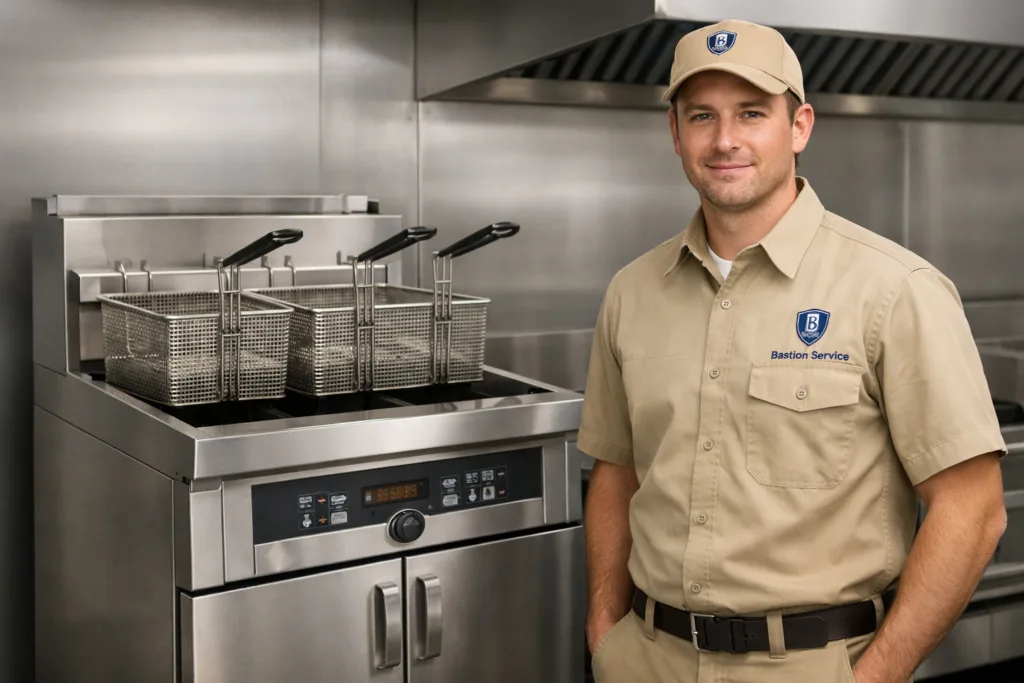




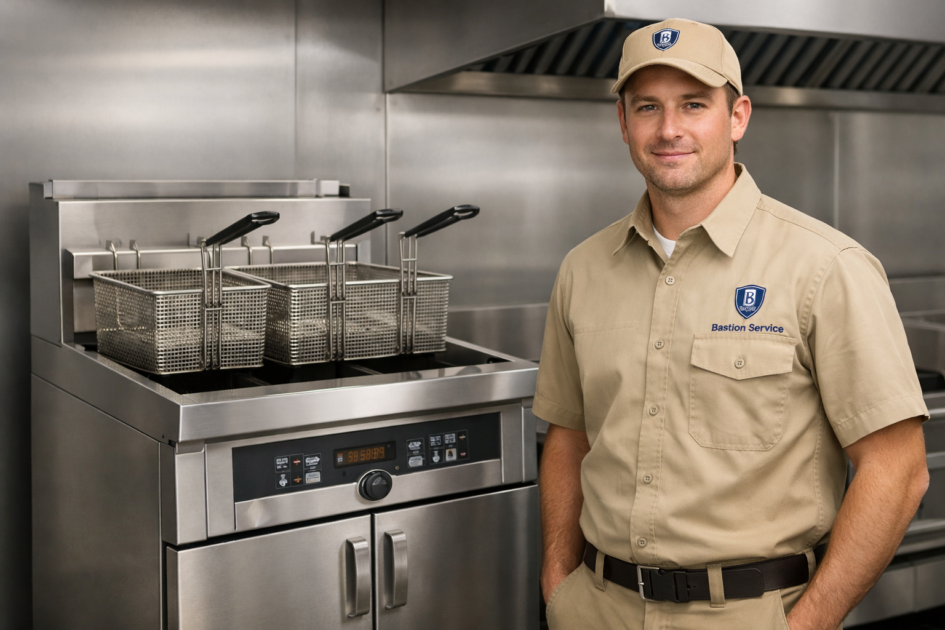
Equipment trouble during service hours rarely stays isolated to one station. When Frymaster cooking equipment starts missing temperature, recovering too slowly, failing to ignite, or shutting down without warning, businesses in Inglewood need repair support that connects the symptom to a real operating decision. Bastion Service evaluates the fault pattern, checks the components most likely to be causing the issue, and helps determine whether the unit can remain in limited use, should be removed from service, or needs prompt repair scheduling to reduce production disruption.
For specific equipment paths in Inglewood, review Frymaster Fryer Repair in Inglewood and Commercial Appliance Repair in Inglewood.
What Frymaster cooking equipment problems usually need service?
Most repair calls begin with a small set of repeat symptoms that affect output right away. Even when the equipment still powers on, inconsistent performance can lead to delayed orders, uneven product quality, added labor pressure, and unnecessary stress on staff trying to work around the problem.
- Unit will not heat or takes too long to reach cooking temperature
- Temperature drifts above or below the set point
- Slow recovery between loads during peak demand
- Ignition failures, delayed startup, or burner dropout
- Controller errors, resets, or unresponsive inputs
- Unexpected shutdowns during active use
- Oil leaks, visible wear, or signs of unsafe operation
These symptoms can come from different sources, including temperature sensing faults, ignition problems, burner issues, control failures, wiring concerns, safety-limit trips, or restricted airflow. That is why repair planning should start with symptom-based diagnosis rather than assuming one part is always responsible.
Heating and temperature-control issues
When cooking equipment cannot hold a stable temperature, the impact shows up quickly in cook times, food consistency, and line speed. A unit that overheats may trigger safety shutdowns or create product-quality problems, while a unit that runs cold can slow production and force repeat batches.
Temperature issues often point to problems with probes, thermostatic control, high-limit components, controllers, or burner performance. In some cases, the equipment may heat normally at startup and then drift out of range later, which can make the issue seem random to staff. In practice, that pattern is often a sign that the problem is progressing and should be inspected before it becomes a complete no-heat failure.
Slow recovery during busy periods
Recovery problems are especially disruptive because the equipment may appear functional until the workload increases. If the temperature drops too far between loads and struggles to return to target, service capacity starts to fall even though the unit has not fully failed. For kitchens in Inglewood, that often means slower ticket times, inconsistent output, and pressure on neighboring equipment.
Slow recovery can be tied to burners, gas-flow performance, controls, heat transfer, or internal wear affecting normal operation. Scheduling service at this stage can help prevent a harder failure at the worst possible time.
Ignition, burner, and startup faults
Ignition trouble is one of the clearest signs that cooking equipment needs attention. The unit may fail to light, light inconsistently, start with delay, or enter repeated lockout. Operators sometimes continue using the equipment when it starts occasionally, but intermittent ignition is still a reliability problem and can turn into a full outage without much warning.
Burner-related issues may also show up as weak heating, uneven flame performance, poor recovery, or nuisance shutdowns. Because these faults affect both output and safe operation, they are not ideal conditions to work around during normal service. If the startup cycle becomes inconsistent or the burner cuts out during use, a repair visit is usually the most practical next step.
Control problems and unexpected shutdowns
Modern Frymaster equipment depends on controls, sensors, and safety circuits working together correctly. When one part of that chain fails, staff may see error codes, random resets, mid-cycle shutdowns, or controls that do not respond as expected. These issues can be intermittent at first, which is why they are often underestimated.
A shutdown may be caused by a protective safety response, a sensor problem, a controller fault, or an electrical issue affecting communication within the unit. The important question is not just whether the equipment can be restarted, but whether it can be trusted to stay in service without repeating the same interruption during a busy period.
Why intermittent faults deserve early attention
Intermittent failures are harder on operations than obvious failures because they create uncertainty. Staff may not know whether to rely on the unit, managers may delay scheduling because the equipment sometimes works, and the underlying problem may continue damaging related components. Early inspection helps narrow down the source before the symptom pattern spreads into wider downtime.
Leak, wear, and performance concerns that should not be ignored
Not every service call begins with a total shutdown. Sometimes the warning signs are gradual: visible leakage, unusual cycling behavior, inconsistent results, unusual odors, repeated high-limit trips, or signs that the equipment is working harder than it should. Those symptoms often indicate that continued use may increase repair scope.
If staff are adjusting workflow around unstable performance, that is usually a strong signal that service should be scheduled. Running equipment in a compromised state can lead to wasted oil, product loss, avoidable delays, and more complicated repairs later.
Repair decisions based on the actual fault pattern
For businesses in Inglewood, the repair-versus-replacement question usually comes down to condition, service history, downtime impact, and whether the current problem is isolated or part of a larger trend. A failed sensor, ignition component, or control part in an otherwise solid unit often supports repair. Repeated problems involving heat control, burner operation, and shutdown behavior may justify a closer review of long-term equipment planning.
The most useful service visit is one that answers operational questions clearly:
- What is causing the current symptom?
- Is the equipment safe to keep using in the short term?
- Is the issue likely to worsen if service is delayed?
- Does the repair appear isolated, or are multiple systems showing wear?
- Will the unit likely return to stable production after repair?
That information helps managers make scheduling and cost decisions based on evidence rather than guesswork.
Scheduling Frymaster repair service in Inglewood
If your Frymaster cooking equipment is heating poorly, losing temperature, failing to ignite, shutting down, or slowing production, the next step is to schedule service while the symptoms are still identifiable. Prompt diagnosis helps determine whether the problem is limited to one failed component or part of a broader reliability issue, and it gives your team a clearer path for keeping the kitchen moving with less disruption.