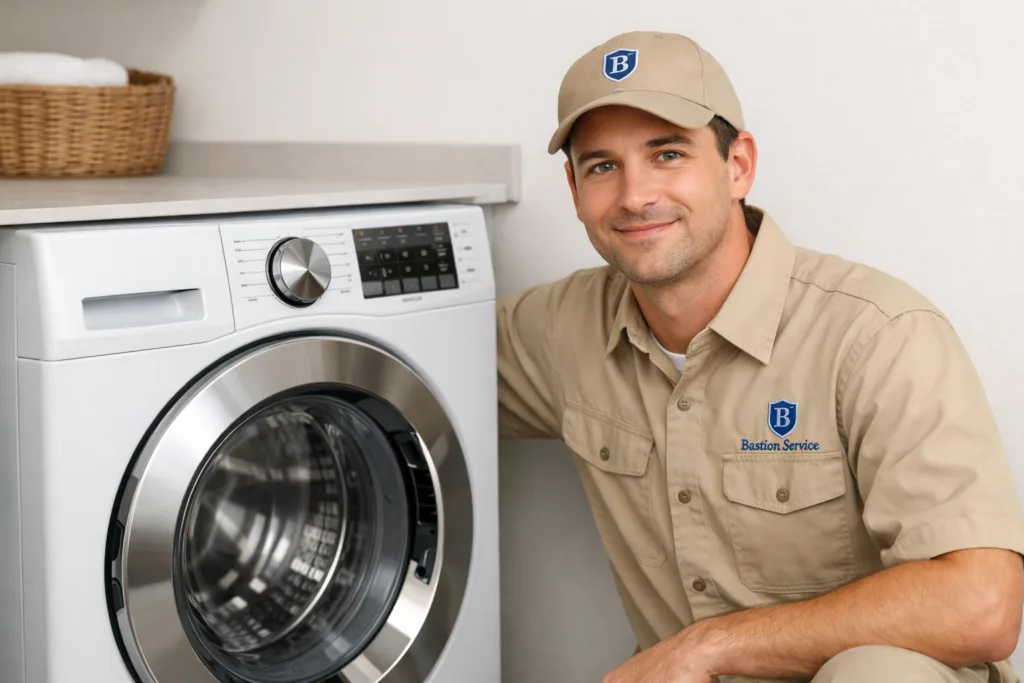
Common Samsung washer problems and what they often mean

Samsung washers can show the same outward symptom for several different internal reasons, which is why the pattern of the failure matters. A unit that stops mid-cycle, leaves clothes wet, or flashes an error code may be dealing with drainage trouble, a door lock problem, an off-balance condition, a sensor fault, or an electronic control issue. Looking at when the problem happens during the cycle usually helps narrow the repair path.
Washer not draining
If water is still sitting in the tub at the end of the cycle, the cause may be a blocked drain path, a clogged pump filter, a weak or failed drain pump, or a control problem that never sends the machine into the proper drain sequence. In some cases, the washer may also refuse to spin because it cannot safely move to the next step until the water is removed.
Homeowners often first notice this as soggy laundry, a musty smell, or repeated stops before the cycle finishes. If the problem keeps returning, it is usually more than a one-time clog.
Washer not spinning or leaving clothes too wet
A Samsung washer that washes normally but does not reach full spin speed may have suspension wear, imbalance detection problems, drainage issues, a door latch fault, or trouble with the motor or control system. Repeating the same load and getting the same poor result is a useful clue that the issue is in the machine rather than the laundry.
When spin problems continue, extra moisture left in fabrics can make drying take longer and can add unnecessary strain across repeated cycles.
Leaks during fill, wash, or drain
Leaks can come from inlet hoses, the door boot, the drain system, pump housing, internal seals, or oversudsing that forces water where it should not go. The timing of the leak matters. Water appearing during fill points to a different repair path than water showing up only during drain or high spin.
Because even a small leak can affect floors, baseboards, or nearby storage, it is best not to treat recurring water on the floor as a minor inconvenience.
Washer will not start
If the control panel lights up but the cycle will not begin, the problem may involve the door lock, touch controls, main board, or a sensor input that is preventing operation. If the machine appears completely dead, the issue may be internal or related to incoming power. The important part is separating an appliance fault from a supply problem before any parts are replaced.
Error codes and intermittent shutdowns
Samsung washer error codes can point toward fill issues, drain issues, door lock faults, imbalance, overheating, or communication problems between components. The code is helpful, but it is rarely the whole story. Matching the code to the washer’s actual behavior, such as stopping at rinse or failing only during spin, leads to a more accurate diagnosis.
Loud noise, shaking, or banging
Unusual noise can come from worn suspension components, a failing bearing, foreign objects in the pump area, drum-related damage, or a load that the washer cannot balance correctly. A banging machine that shifts position or strikes the cabinet should not be ignored. Continued operation can turn a manageable repair into damage affecting multiple parts.
Symptoms that usually call for service sooner rather than later
Some problems can wait a short time. Others tend to get worse quickly. Service is usually the smarter next step when you notice any of the following:
- Water remains in the tub after the cycle ends
- The washer stops mid-cycle more than once
- Clothes come out consistently wetter than normal
- The machine leaks onto the floor
- A new grinding, scraping, or banging sound appears
- Error codes return after a reset or after restarting the load
- The washer shakes much more than it used to with similar loads
These are the kinds of symptoms that usually indicate a real component problem rather than a one-time interruption.
Signs the issue may be related to water supply or wash performance
Not every washer problem looks dramatic. Some faults show up as poor cleaning, detergent residue, cycles that take too long, or a tub that never seems to fill correctly. In Samsung washers, those symptoms can be tied to inlet valve trouble, sensing issues, control faults, or restrictions that interfere with normal water movement.
If the washer is technically running but results keep getting worse, that still points to a repair issue worth checking. A machine does not have to stop completely to need service.
When continued use can make the repair more expensive
There are a few situations where it is safer to stop using the washer until the cause is identified. That is especially true when:
- The washer leaks repeatedly
- The drum makes heavy metal-on-metal noise
- The unit cannot drain and keeps holding water
- There is a burning smell
- The machine moves aggressively during spin
In these cases, additional loads can increase wear, create water damage, or lead to a larger failure that affects surrounding components.
Repair versus replacement for a Samsung washer
Many Samsung washer issues are still reasonable to repair, especially when the failure is limited to a drain pump, fill valve, latch assembly, suspension part, hose-related problem, or a specific electrical component. Replacement becomes a more serious discussion when the washer has several major problems at once, has a long history of repeat breakdowns, or needs extensive repair tied to major internal assemblies.
Age is part of the decision, but it is not the only factor. Overall condition, how the machine has been performing recently, and whether the current problem is isolated or part of a larger pattern all matter. A good service visit should help make that choice based on the actual condition of the appliance.
What homeowners in West Los Angeles usually want to know first
In most homes, the immediate questions are simple: what failed, is the washer safe to use, and is repair worth doing? For Samsung washers in West Los Angeles, the most helpful service approach is one that stays focused on the exact symptom and the likely cause rather than guessing from the brand or model alone.
That matters even more in laundry spaces with stacked units, tighter access, or heavy household use, where downtime quickly affects the routine. The goal is not just to get the machine running for one cycle, but to identify whether the repair addresses the underlying fault.
A practical next step when the problem keeps returning
If your Samsung washer has started repeating the same failure pattern, whether that means not draining, not spinning, leaking, filling poorly, or shutting down partway through a load, the best next move is to have the symptom checked before a small issue becomes a larger one. Repeated interruptions usually mean the machine is giving a clear warning that a part or system is no longer working as it should.