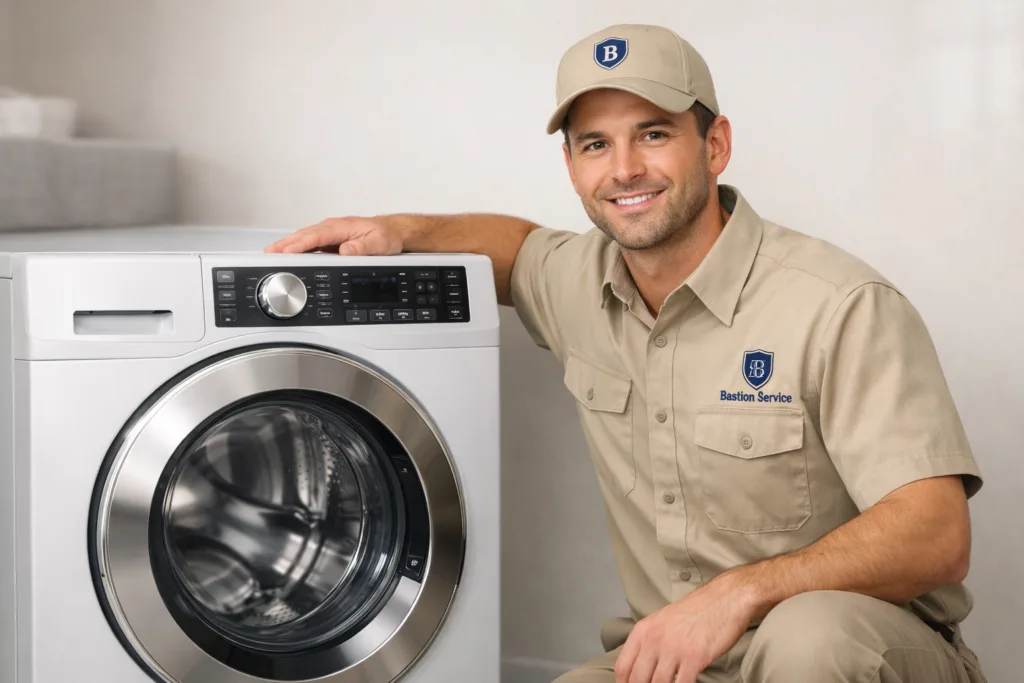
Washer problems often start with one visible symptom, but the cause may be somewhere else in the cycle. A Samsung unit that will not start, will not drain, or leaves clothing unusually wet can be reacting to a door-lock fault, drain restriction, sensing issue, or control problem rather than a single obvious part failure. For homeowners in Beverly Hills, it helps to narrow the issue by looking at exactly when the washer stops, what sounds it makes, and whether the problem happens on every load or only under certain conditions.
Common Samsung washer symptoms and what they may indicate
Many service calls begin with a complaint that sounds simple at first. In practice, the same symptom can point to several different failures. Looking at the full pattern usually makes the repair path much clearer.
Washer will not start
If the machine powers on but does not begin a cycle, the issue may involve the door latch, user interface, control board response, or a problem with incoming power. If it does nothing at all, the cause may be as basic as a tripped breaker or as specific as an internal electrical fault. On some Samsung washers, intermittent starting can also happen when the door is not fully engaging or when the control is not reading a safe locked condition.
Not draining or not spinning properly
Standing water in the tub, a long pause before spin, or clothing that comes out heavy and wet usually points to a drain-related problem first. A clogged filter area, restricted hose, weak drain pump, or installation issue can prevent the washer from reaching full spin. In other cases, the machine may be stopping spin because it senses an imbalance, an over-sudsing condition, or another fault earlier in the cycle.
Leaking water
Leak location matters. Water at the front of the machine may suggest a door boot problem, while water appearing underneath can come from a hose connection, pump housing, dispenser path, or internal tub-related issue. Some leaks only show up during fill, others during drain, and others only during high-speed spin. That timing helps separate a simple hose or clamp repair from a more involved internal problem.
Slow fill, no fill, or overfilling
If a Samsung washer fills too slowly, never fills enough, or keeps taking in water when it should stop, the problem may be tied to inlet screens, the water valve, pressure sensing, or a control issue. Water supply problems at the shutoff valve can also mimic a component failure. When the machine stops mid-cycle after a fill issue, that often means the washer is not receiving the water-level feedback it expects.
Poor wash results
Clothes that still look dirty after a normal cycle do not always mean the washer is failing mechanically. Load size, detergent type, low water flow, poor draining, temperature problems, and sensor errors can all affect cleaning results. If poor performance is paired with long cycle times, unusual pauses, or error codes, the issue is more likely tied to the washer’s operating system rather than simple laundry habits.
Noise, vibration, and movement during operation
Excessive shaking is one of the most disruptive washer problems in a home. When a Samsung washer bangs during spin, walks forward, or produces grinding or squealing noises, the cause may involve installation, suspension wear, basket movement, pump debris, or bearing-related damage. A washer that is only slightly noisy on wash and extremely loud on spin gives a different clue than one that grinds as soon as draining begins.
Some vibration issues are correctable without major internal repair, especially if the unit is not level or the load is consistently washing unevenly. Others indicate worn support components or damage that will continue to worsen with use. If the machine is striking the cabinet, producing metal-on-metal noise, or becoming louder week by week, it is best not to keep testing it with repeated loads.
- Thumping during spin can point to imbalance or suspension wear.
- Grinding during drain can indicate debris in the pump or a failing pump assembly.
- Squealing or roaring at high speed may suggest bearing or drive-related wear.
- Walking across the floor often means leveling, load distribution, or support-system issues.
Error codes and cycle interruptions
Samsung washers often provide clues through flashing indicators or displayed error codes, but the code is usually a starting point rather than the final diagnosis. A drain code may be caused by a blocked path, a weak pump, or a sensing problem. A door-related code may come from the latch itself, the wiring, or the board’s inability to confirm a locked state. Repeated cycle cancellations usually mean the washer is protecting itself from a condition it cannot safely complete.
If the same code appears after restarting the unit, there is usually an underlying fault that needs more than a reset. If the code appears only with certain load sizes or certain cycle settings, that pattern can help identify whether the issue is mechanical, water-related, or electronic.
When to stop using the washer
Some problems can wait a short time without creating much additional damage. Others should be addressed right away. Continued use is risky when the washer is actively leaking, tripping power, making sharp mechanical noise, smelling hot, or violently shaking during spin. Those symptoms can damage flooring, nearby cabinetry, hoses, or major internal parts.
It is also smart to stop running new loads when the machine repeatedly fails to unlock, leaves water sitting in the tub, or stops mid-cycle with the same fault pattern. Re-running the cycle may seem like a workaround, but it often adds wear to the pump, motor, suspension, or controls without solving the actual cause.
Repair decisions that make sense for a household washer
Many Samsung washer repairs are worthwhile when the problem is limited to a serviceable component and the rest of the appliance is in solid condition. Drain pumps, inlet valves, door-lock assemblies, hoses, and some sensor-related faults are often more manageable than homeowners expect. These issues can cause major disruption in day-to-day laundry even when the overall machine is still a good candidate for repair.
Replacement becomes more likely when the washer has severe bearing damage, structural wear, repeated unrelated failures, or major tub problems. If the machine has developed multiple symptoms over time instead of one defined failure, that can also change the value of repair. The key question is not just whether the washer can be fixed, but whether the repair solves the household problem in a lasting way.
What helps speed up diagnosis
Before service, it is useful to note a few details:
- Whether the problem happens on every cycle or only sometimes
- At what stage the washer stops: fill, wash, drain, or spin
- Whether any error code appears
- If water remains in the tub after the cycle ends
- Whether the machine is louder than normal or moving during spin
- If the issue began suddenly or gradually worsened over time
That information often helps separate a drain issue from a balance problem, a fill problem from a control fault, or a simple leak from a more serious internal failure.
Samsung washer repair for homes in Beverly Hills
In Beverly Hills homes, laundry appliances are expected to work consistently and quietly, especially when laundry rooms sit close to bedrooms, kitchens, or living spaces. When a Samsung washer begins failing mid-cycle, leaking, or producing harsh vibration, the most useful next step is a practical repair plan based on the actual symptom pattern. That gives homeowners a better way to decide whether to proceed with repair, pause use, or start planning for replacement if the machine is no longer a sensible long-term option.