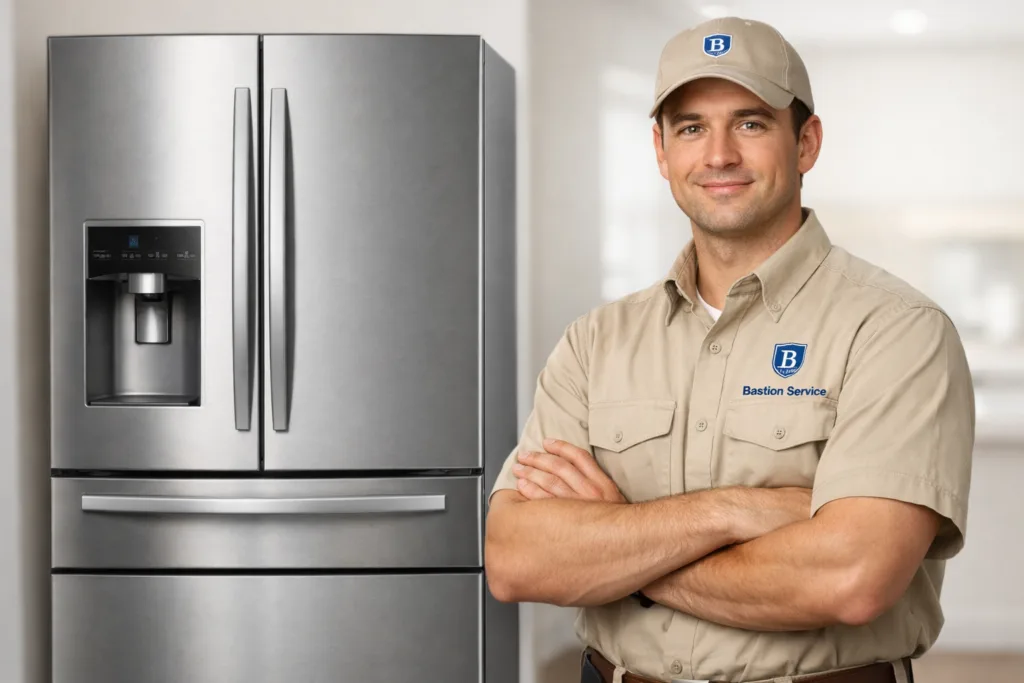
Refrigerator problems rarely stay minor for long. A small airflow issue can turn into warm shelves, frost can spread until vents are blocked, and a slow leak can end up damaging the area beneath the unit. With Electrolux models, the symptom you notice first does not always identify the failed part, which is why testing the cooling pattern matters before any repair decision is made.
Common Electrolux refrigerator problems homeowners notice
Fresh food section is warm but the freezer still works
This is one of the most common complaint patterns. In many cases, the freezer is still producing cold air, but that air is not reaching the refrigerator section correctly. Possible causes include an evaporator fan problem, frost buildup behind interior panels, a stuck damper, a sensor issue, or restricted airflow caused by overpacking near vents. If the top shelf feels different from the lower drawers, that uneven pattern often helps narrow down the cause.
Temperature swings from day to day
If food seems fine one day and too warm the next, the issue may involve a control fault, intermittent fan operation, a defrost system problem, or a door that is not sealing consistently. Temperature swings are important to address early because they can lead to food spoilage even before the refrigerator stops cooling completely.
Frost buildup in the freezer or around vents
Frost that keeps returning usually points to more than a one-time moisture issue. A damaged gasket, a defrost system failure, or poor air circulation can all create recurring frost. When frost builds around the evaporator cover or air passages, cooling in the fresh-food section often drops soon after.
Water under drawers or on the floor
Water inside the cabinet may come from a clogged defrost drain, while water outside the refrigerator can involve the drain system, a supply line issue, condensation from poor sealing, or an ice maker-related problem. If the leak appears at the same time as cooling trouble, both symptoms may be connected.
New noises during normal operation
Electrolux refrigerators can make routine operating sounds, but a change in noise level usually means something has shifted. Clicking, buzzing, rattling, or scraping can point to fan trouble, ice contacting a blade, compressor start issues, or vibration from loose components. A sound that repeats at regular intervals is usually more useful diagnostically than a single occasional noise.
Symptom-based clues that help identify the repair path
Some refrigerator problems follow recognizable patterns. While symptoms alone do not confirm the failed part, they often point service in the right direction.
- Freezer cold, refrigerator warm: airflow restriction, damper issue, evaporator fan failure, or defrost-related frost buildup.
- Both sections warming: condenser fan trouble, compressor starting problem, control fault, or sealed-system concern.
- Items freezing in the fresh-food section: sensor problem, airflow imbalance, or control issue.
- Heavy condensation around doors: gasket wear, alignment issue, or frequent warm air intrusion.
- Little or no ice production: temperature problem, water supply issue, frozen fill tube, inlet valve fault, or ice maker failure.
These patterns are especially helpful when the refrigerator seems to work part of the time. Intermittent problems can be harder to judge without checking temperatures, fans, frost pattern, and basic electrical operation together.
Why airflow issues matter so much in Electrolux refrigerators
Many Electrolux refrigerator complaints trace back to how cold air moves through the cabinet. The system depends on fans, vents, dampers, and sensors working together to balance temperatures between sections. If one part of that chain is disrupted, the refrigerator may cool unevenly instead of failing all at once.
That is why homeowners in Brentwood often notice indirect symptoms first, such as vegetables freezing in one drawer, dairy warming on upper shelves, or a freezer that seems normal while the refrigerator side struggles. Those details are not minor; they often reveal whether the issue is circulation-related or part of a broader cooling failure.
When a leak or frost problem may be tied to cooling trouble
Leaks and frost are often treated as separate annoyances, but they can be signs of the same underlying issue. A blocked defrost drain can leave water under drawers, but recurring frost may also indicate that the refrigerator is not clearing moisture correctly during normal cycles. If doors are not sealing well, warm air enters the cabinet, creates condensation, and can eventually cause frost buildup that interferes with airflow.
When both moisture and temperature problems appear together, it is usually worth treating them as one repair problem rather than two unrelated ones.
Signs the refrigerator should be checked soon
Scheduling service sooner is usually the better choice when you notice any of the following:
- Milk, meat, or leftovers are spoiling faster than normal
- The refrigerator runs much longer than it used to
- Frost returns shortly after being cleared
- The cabinet is leaking repeatedly
- The compressor clicks on and off without steady cooling
- Fan noise becomes loud, uneven, or constant
- The ice maker stops working at the same time temperatures begin drifting
These symptoms often worsen with continued use. A unit that is running too long may put extra strain on the compressor, while blocked airflow can push the refrigerator into more severe cooling loss.
When continued use can make repair more expensive
Some issues are relatively contained at first. A failing fan motor, for example, may begin as a noise complaint before it creates a cooling problem. A bad gasket may start as minor condensation before leading to frost and long run times. If a refrigerator is clicking, warming, and struggling to start, repeated operation can place more stress on start components and the sealed system.
If the appliance is fully warm, giving off a burning smell, or tripping electrical protection, it is best not to keep testing it through repeated restarts. At that point, the safer move is to stop use and have the refrigerator evaluated.
Repair versus replacement for an Electrolux refrigerator
For most Brentwood households, the decision depends on four things: the failed system, the age of the refrigerator, its overall condition, and whether the repair is likely to solve the root problem. Many common issues such as fan motors, drain clogs, valves, gaskets, sensors, and certain control-related faults are often repairable if the cabinet and cooling system are otherwise in good shape.
Replacement becomes a more serious consideration when diagnosis points to major sealed-system trouble, repeated cooling failure, or several aging components failing close together. The right choice is not always the cheaper estimate in the moment; it is the option that gives a realistic path back to stable, safe refrigeration.
What homeowners can check before scheduling service
There are a few useful observations you can make without disassembling anything:
- Check whether interior vents are blocked by large food containers
- Look for visible frost around the back freezer panel or air outlets
- Make sure doors close fully and gaskets are not torn or folded
- Note whether the problem affects both compartments or only one
- Listen for fan noise changes when doors open and close
- Check whether leaking happens continuously or only after certain cycles
These details can help describe the problem more accurately, but they should not replace diagnosis when the refrigerator is losing temperature, building heavy frost, or leaking repeatedly.
What a service visit should accomplish
A useful appointment should do more than react to the symptom on the surface. The goal is to identify whether the trouble comes from airflow, defrost, controls, water supply, fans, or a more serious cooling-system problem. From there, homeowners can understand the repair scope, the urgency, and whether the appliance is a good candidate for repair.
For an Electrolux refrigerator in Brentwood, that kind of evaluation helps avoid unnecessary part swapping and gives a clearer answer on the next step, whether the issue is a targeted repair or a sign that the refrigerator is nearing the end of a practical service life.