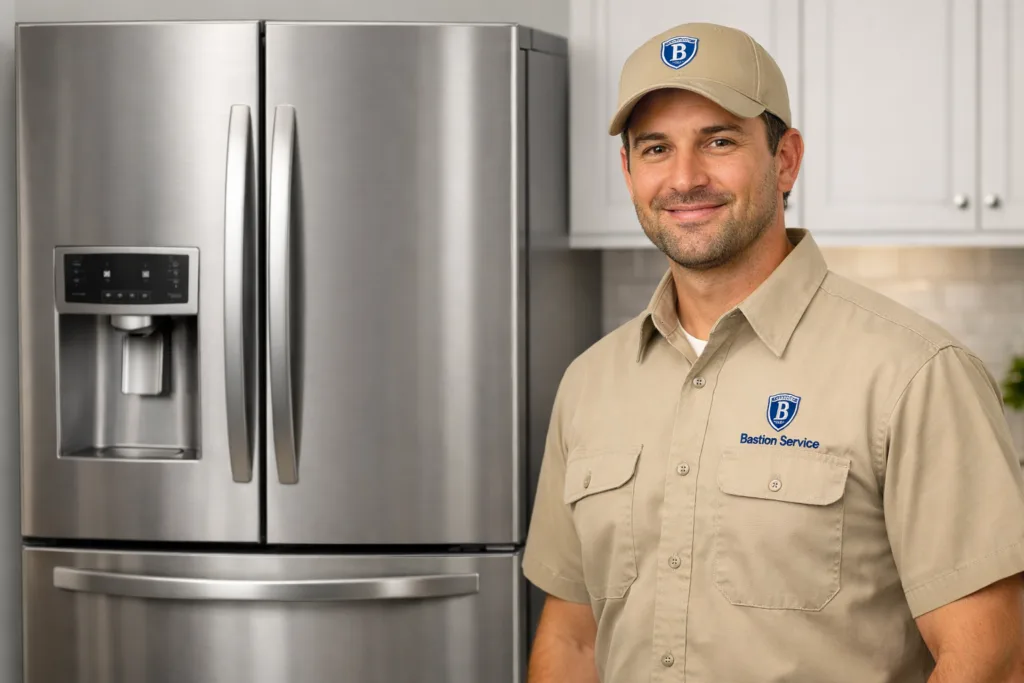
Food storage problems tend to escalate quickly when a refrigerator is not holding temperature. What seems like a minor issue at first can turn into spoiled groceries, moisture on the floor, or frost that keeps coming back. With Kenmore refrigerator problems, the most useful starting point is matching the symptom to the system most likely involved, then confirming the cause before any part is replaced.
Common Kenmore refrigerator symptoms in Brentwood homes
Many homeowners first notice that the refrigerator section feels warmer than usual, the freezer is no longer firm, or the unit seems to run longer than normal. Others call because food in the fresh food compartment is freezing, water is collecting under the appliance, or a new buzzing or clicking sound has started. These symptoms can come from airflow trouble, defrost failure, fan wear, temperature sensing issues, drainage blockage, gasket leaks, or more serious cooling system trouble.
The challenge is that several different failures can look almost identical from the outside. A warm refrigerator does not always mean the same repair, and a noisy machine is not always headed for the same outcome. That is why symptom-based evaluation matters.
Refrigerator is warm but freezer still seems cold
This pattern often points to an airflow problem rather than a complete loss of cooling. On some Kenmore refrigerators, cold air is produced in the freezer and then circulated into the fresh food section. If that airflow is blocked or the evaporator fan is not moving air correctly, the freezer may seem closer to normal while the refrigerator section warms up.
- Evaporator fan motor problems
- Frost buildup around the evaporator cover
- Damper control issues
- Defrost system faults that restrict airflow
If drinks, dairy, or leftovers are warming while frozen items still seem partly stable, it is usually a sign to stop guessing and have the cooling path checked.
Freezer is soft or the whole unit is not cooling well
When both compartments are struggling, the issue may be broader. Dirty condenser coils, condenser fan failure, control trouble, start relay problems, or a sealed system concern can all reduce cooling performance. The refrigerator may still run and make normal-looking lights and display activity, but the temperature will not recover the way it should.
This is one of the most important symptoms to address promptly because continued operation can mean food loss while the machine works harder without reaching safe temperatures.
Food is freezing in the fresh food section
A refrigerator that cools too aggressively can be just as frustrating as one that runs warm. If produce is icing over, beverages are slushy, or items near certain shelves keep freezing, the problem may involve a faulty sensor, control issue, stuck damper, or uneven internal airflow. This kind of failure often comes and goes before becoming obvious, which makes homeowners think the setting was changed accidentally when the real issue is in the regulation of temperature.
Water leaking onto the floor or under drawers
Leaks are often caused by a blocked defrost drain, excess condensation, a water supply issue, or a door that is not sealing correctly. If water appears inside the refrigerator under crisper drawers, that often suggests drainage trouble. If water is forming outside the unit, the source may be less obvious and can involve both cooling and moisture management problems.
Even a small recurring leak is worth addressing quickly because repeated moisture can damage flooring, create odor issues, and encourage hidden buildup underneath the appliance.
Heavy frost or ice buildup
Frost accumulation usually means the refrigerator is no longer managing defrost cycles or air sealing the way it should. In a Kenmore refrigerator, heavy ice behind panels or around vents can choke off airflow and make the original problem seem worse every day. A door gasket can contribute, but frost is not always just a door issue. Defrost heaters, sensors, timers, and control components may also be involved.
Clicking, buzzing, rattling, or louder operation
Some refrigerator sounds are normal, especially during ice maker cycles or compressor startup. A change in sound is what matters most. New clicking, louder buzzing, repeated startup attempts, rattling from the rear, or fan noise from inside the cabinet can all point to parts that are wearing out or struggling to operate correctly.
If the sound change appears together with warming, frost, or long run times, it should be taken more seriously because multiple symptoms together often narrow the problem to a smaller set of likely causes.
What these symptoms often mean
Kenmore refrigerator repair is rarely about replacing a part based on one complaint alone. The same symptom can come from several different failures, and the wrong repair can leave the original issue unresolved. A useful diagnosis usually involves checking temperature behavior, fan operation, frost patterns, drainage, door sealing, and the way the compressor and control system are responding.
For homeowners in Brentwood, this matters because the decision is not only whether a part can be changed. The real question is whether the appliance has an isolated repairable issue or whether the symptoms point to deeper system wear.
Signs the problem may be getting worse
Some refrigerators give warning signs before a full cooling failure. If you notice any of the following, the issue may be progressing:
- The refrigerator runs almost constantly
- Temperatures swing from normal to unsafe
- Frost keeps returning after being cleared
- Leaks reappear after cleanup
- The compressor clicks repeatedly before starting, or never fully starts
- Ice production slows while food storage temperatures also worsen
When these patterns are present, waiting often makes the repair decision harder rather than easier. A small fan or drain problem can become a larger cooling or moisture problem if the appliance stays in heavy use.
When to schedule refrigerator service
It is usually time to schedule service when food is no longer staying reliably cold, when the freezer begins softening frozen items, or when the appliance is freezing food unpredictably in the fresh food compartment. Service is also worth arranging when leaks, frost, or unusual sounds become consistent rather than occasional.
More urgent attention is a good idea if the refrigerator stops cooling altogether, trips power, smells hot, or shows repeated signs that the compressor is struggling. In those cases, continued operation may not be protecting the food inside and may place more stress on the appliance.
Repair or replace a Kenmore refrigerator?
The answer depends on the actual failure and the overall condition of the appliance. Many repairs make sense when the problem is isolated to a fan, drain, control part, sensor, gasket, or defrost component and the refrigerator is otherwise structurally sound. A targeted repair can restore normal performance without pushing the cost beyond the value of the appliance.
Replacement becomes more likely when the refrigerator has a history of repeated breakdowns, major cooling system trouble, or repair costs that approach the benefit of keeping it. Age alone does not decide the answer, but age combined with compressor or sealed system symptoms often changes the conversation.
A practical repair plan based on the exact symptom pattern helps make that choice easier because it separates minor faults from major ones before money is spent in the wrong direction.
How homeowners can help before service
Before a technician visits, a few observations can help clarify the problem:
- Note whether both compartments are warm or only one
- Listen for fan noise inside and near the back of the unit
- Check whether frost is visible on interior panels or around vents
- Look for water under drawers, beneath the unit, or near the water supply line
- Pay attention to whether the unit is running nonstop or cycling differently than usual
It is also helpful to avoid overfilling the refrigerator while the issue is active, since blocked vents can worsen airflow problems. If temperatures are already unsafe, preserving food may need to come before waiting for the appliance to recover on its own.
A focused approach to Kenmore refrigerator repair in Brentwood
Residential refrigerator service should answer a few straightforward questions: what system is failing, how urgent is the problem, and is repair worthwhile for this particular machine. For Brentwood homeowners, that means looking beyond the obvious symptom and identifying whether the issue is tied to airflow, defrost, drainage, controls, fan operation, sealing, or a larger cooling failure. Once that is known, the next step is usually much clearer.