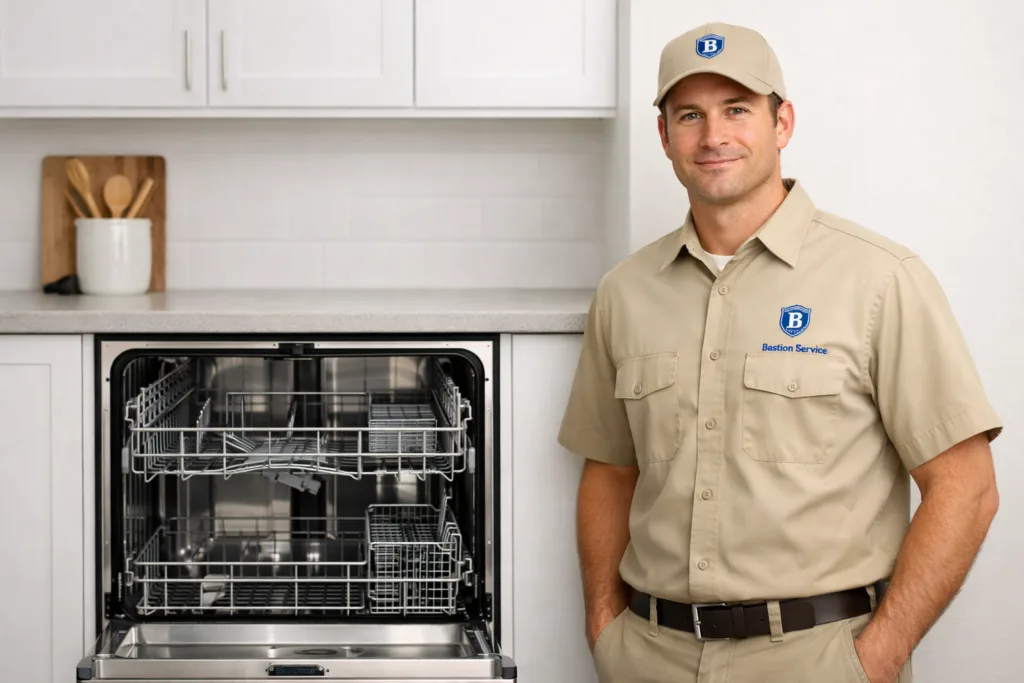
Dishwasher problems are easier to solve when the symptoms are separated into fill, wash, drain, dry, and control issues. On an Electrolux unit, a single complaint such as cloudy glasses or water left in the tub can trace back to several different components, so the most useful approach is to look at what the machine is doing at each stage of the cycle instead of assuming one part has failed.
Start with the symptom you can actually observe
Homeowners usually notice a dishwasher problem in one of a few ways: the unit does not start, the cycle seems unusually long, dishes stay dirty, the tub does not drain, or water appears on the floor. Those visible signs help narrow the repair path. In many West Hollywood homes, the real cause may involve the latch, drain pump, circulation system, inlet valve, heating circuit, float system, sensors, or main control.
It also helps to notice whether the issue is constant or intermittent. A dishwasher that fails every cycle often points to a direct mechanical or electrical fault. A dishwasher that only acts up sometimes may involve a sticking component, a partial blockage, or an early-stage control problem.
Standing water after the cycle
If the bottom of the tub still holds water after the cycle ends, the drain system is the first area to evaluate. The problem may be caused by a restricted filter area, debris in the drain path, a weak drain pump, a kinked hose, or trouble with water-level sensing. When the machine cannot push water out properly, dirty water may remain in the sump and affect the next load.
Common signs that a drain-related repair is needed include:
- Water remaining at the bottom after normal cycles
- A humming sound with little or no draining action
- Food particles left behind after the machine stops
- Cycles that seem to end without fully emptying the tub
Repeatedly restarting a dishwasher that is not draining can put added strain on the pump and leave residue circulating inside the machine.
Dishes are still dirty, gritty, or cloudy
Poor wash results do not always mean the dishwasher needs stronger detergent. On an Electrolux dishwasher, weak cleaning performance can come from low fill, restricted spray arms, poor water circulation, a dispenser problem, filter buildup, or a heating issue that prevents proper wash conditions. If the decline happened suddenly, that often suggests a part failure rather than a simple maintenance issue.
The pattern on the dishes can be helpful. Cloudy glassware may point to rinse or heating problems, while heavier residue on lower dishes may indicate weak spray action or circulation trouble. If one rack is consistently dirtier than the other, water distribution becomes a likely part of the diagnosis.
Leakage around the dishwasher
Leaks should be treated seriously, even when they appear minor. Water may escape from the door gasket, lower door sweep, hose connections, pump area, tub seam, or an overfill condition. Some leaks only happen during certain parts of the cycle, which is why the source is not always obvious at first glance.
Signs that the problem may be more than a simple loading issue include:
- Recurring moisture near the front corners
- Water showing up after every wash cycle
- Dampness under adjacent cabinetry
- Drips that continue even when the door seal looks intact
Continued use can lead to flooring damage, swelling around cabinets, and hidden moisture under the unit.
Unit will not start or stops mid-cycle
When the dishwasher does not respond at all, starts and then pauses, or shuts down before finishing, the issue may involve the door latch, user interface, control board, wiring, or a sensor that is preventing normal cycle progression. Sometimes the machine appears to have power but will not actually begin washing. In other cases, it fills but then stalls before circulation or draining begins.
Intermittent control behavior is worth checking early because it can become harder to diagnose after a full failure. If buttons respond inconsistently, lights flash abnormally, or the cycle regularly cancels itself, the problem may be moving beyond a simple reset.
Low rinse temperature and poor drying performance
If dishes come out wet long after the cycle finishes, or if the interior feels cooler than expected, low rinse temperature may be affecting both drying and sanitation performance. This can be related to the heating element, thermostat-related sensing, wiring, or control issues that prevent the unit from reaching the right temperature at the right time.
Drying complaints often show up as:
- Water beading on dishes after the full cycle
- Plastic items staying noticeably wetter than usual
- Steam being reduced compared with past cycles
- Cleaning results dropping along with drying performance
Because heating problems can overlap with wash-quality complaints, both symptoms should be considered together.
Pump noise, grinding, or weak wash action
Pump-related issues often change how the dishwasher sounds. A healthy machine has a consistent fill, wash, and drain pattern. If you hear grinding, loud humming, unusual buzzing, or a wash cycle that sounds weaker than normal, the circulation pump or drain pump may be struggling. Debris can sometimes interfere with pump operation, but wear inside the pump assembly can also reduce performance even before the dishwasher fully stops working.
Weak wash action may show up as dishes that look as though they were only lightly rinsed. If the machine fills with water but the spray pattern seems ineffective, the circulation side of the system becomes an important part of the repair check.
When to stop using the dishwasher
Some issues can wait a short time for service, but others should take the dishwasher out of use right away. Stop running the unit if it is leaking onto the floor, giving off a hot or electrical smell, making harsh grinding sounds, tripping power, or repeatedly failing to drain. Those symptoms can lead to water damage, added component failure, or safety concerns if ignored.
If the machine has standing water and an odor is beginning to develop, it is also a good idea to avoid repeated test cycles until the fault is identified.
Repair or replace?
Many Electrolux dishwasher problems are worth repairing when the issue is limited to one main system and the rest of the appliance is in good condition. Drain pump faults, fill issues, latch problems, certain leak repairs, and some wash-system failures can often make sense to fix if the cabinet, racks, and tub are otherwise holding up well.
Replacement becomes a stronger consideration when several problems are appearing at once, when there is significant leak-related damage, or when major electronic faults are paired with general wear. For most homeowners in West Hollywood, the best decision comes down to three things:
- Which component has actually failed
- The overall condition of the dishwasher
- Whether the repair is likely to restore reliable daily use
What a useful service visit should clarify
A good repair appointment should answer the questions that matter most in a household kitchen: what failed, whether the dishwasher is safe to use, and whether the fix is likely to be worthwhile. Bastion Service helps West Hollywood homeowners assess Electrolux dishwasher problems based on the symptom pattern, the machine’s condition, and the expected repair path, so the next step is easier to judge without guesswork.