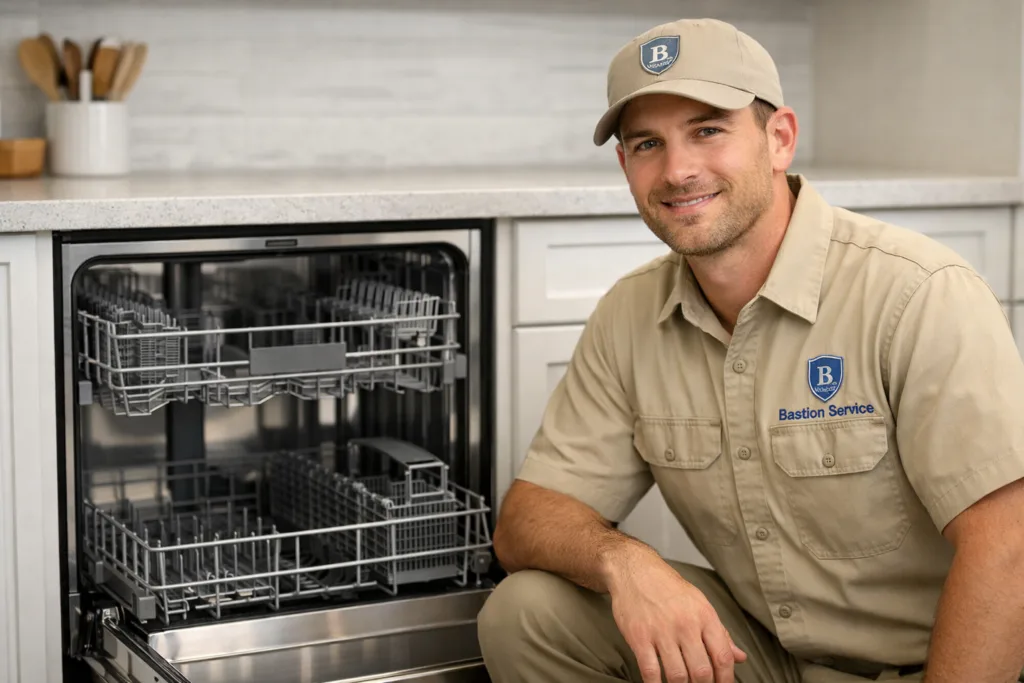
Dishwasher problems rarely stay small for long. If your Samsung unit is leaving gritty residue on glasses, holding water in the sump, or shutting down before the cycle finishes, the symptom pattern usually tells a lot about where the failure is starting. In West Hollywood homes, the most useful approach is to look at what the dishwasher does at each stage of the cycle: filling, washing, heating, draining, and drying.
Common Samsung dishwasher symptoms and what they often mean
Many complaints sound similar, but they can point to very different repair paths. A dishwasher that hums and does not drain is not the same problem as one that drains but never washes with enough pressure. Breaking the issue down by symptom helps narrow the likely cause faster.
Standing water after the cycle
Water left in the bottom of the tub usually points to a drainage problem. Common causes include a blocked filter area, debris in the pump section, a kinked or restricted drain hose, a failing drain pump, or a control issue that prevents the drain portion of the cycle from completing properly.
If the problem happens every time, avoid continuing to run full loads. Dirty water can recirculate, create odors, and put extra strain on pump components.
Dishes come out dirty, cloudy, or greasy
When a Samsung dishwasher finishes the cycle but the dishes still do not look clean, the issue is often tied to wash action rather than cycle timing alone. Possible causes include:
- Clogged or partially blocked spray arms
- Weak circulation from a worn wash motor or pump
- Low water fill
- Filter buildup restricting water movement
- Heating problems that reduce wash performance
- Loading patterns that block spray coverage
Cloudiness can also be confused with poor washing when the real issue is mineral residue or detergent buildup. A service visit should separate true wash failure from water quality and loading issues.
Leaking onto the floor
A leak can start at the door gasket, lower seal areas, hose connections, sump components, or pump seals. In some cases, oversudsing, poor leveling, or a blockage that changes water flow inside the tub can also push water where it does not belong.
Even a slow leak is worth addressing quickly. Moisture around a dishwasher can affect flooring, trim, and the cabinet space around the appliance long before the leak becomes obvious.
Will not start
If the control panel responds but the dishwasher never begins washing, the issue may involve the door latch, switch assembly, user interface, wiring, or electronic control. If there is no response at all, power supply issues, breaker problems, and board faults may need to be checked.
A helpful clue is whether the machine lights up normally, whether it fills with water, and whether it stops before or after latching.
Stops mid-cycle
A dishwasher that begins normally and then shuts down can be reacting to a drain problem, overheating issue, sensor fault, latch interruption, or control failure. If it consistently stops at the same point, that repeat pattern can help isolate whether the problem happens during wash, heat, or drain functions.
Not drying or low rinse temperature
If dishes come out wet well beyond normal moisture, the dishwasher may not be heating correctly. A failed heating element, temperature sensor issue, control fault, or interrupted final rinse behavior can all affect drying results. Plastic items often retain some moisture, but a full load of dishes that stays cool and wet is a sign that heating performance should be checked.
Grinding, buzzing, or rattling noises
Unusual sounds can come from foreign objects in the pump area, spray arms hitting dishes, circulation motor wear, or drain pump problems. Noise that appears at one exact part of the cycle is especially useful because it may indicate whether the source is tied to wash action or draining.
When the problem is more than routine maintenance
Some dishwasher issues can be improved by cleaning filters and checking loading habits, but recurring symptoms usually point to a failing component or a restricted water path. Service is generally worth scheduling when you notice any of the following:
- The same problem happens on multiple cycles
- Water remains in the tub after normal draining time
- Dishes stay consistently dirty despite proper detergent use
- The unit leaks during wash or after completion
- The machine trips power, flashes errors, or shuts off unexpectedly
- Performance drops at the same time new noises appear
Signs you should stop using the dishwasher until it is checked
Some conditions can lead to larger damage if the appliance keeps running. It is best to pause use if you notice active leaking, a burning or electrical smell, repeated failure to drain, or a machine that keeps stopping and restarting without finishing the cycle.
That is especially true if water is collecting under the dishwasher or spreading onto the surrounding floor. Catching the cause early may prevent additional repair needs outside the appliance itself.
How Samsung dishwasher diagnosis usually works
A useful service visit should not rely on the symptom name alone. “Not cleaning” and “not draining” are starting points, not final answers. The technician should evaluate where in the cycle the failure occurs and which parts are most closely connected to that function.
That often includes checking:
- Drain path and pump operation
- Filter and spray arm condition
- Wash motor and circulation performance
- Door latch and switch response
- Heating behavior and temperature-related faults
- Visible seals, hoses, and connection points
- Control response to cycle commands
This kind of inspection helps determine whether the issue is isolated and repairable or part of a broader pattern of wear.
Repair or replacement for a Samsung dishwasher
For many West Hollywood homeowners, repair makes sense when the failure is tied to one main part or system and the rest of the dishwasher is still in solid condition. Pumps, latches, drain components, seals, and some control-related issues are often the kinds of problems people weigh against the cost of replacing the whole appliance.
Replacement may be more sensible when the dishwasher has multiple active problems, an ongoing leak history, repeated electronic failures, or signs of broader wear that make future breakdowns more likely. The age and overall condition of the unit matter, but so does whether the current fault is isolated or part of a longer pattern.
What homeowners in West Hollywood should pay attention to before service
If you are planning Samsung dishwasher repair in West Hollywood, a few details can make the problem easier to pinpoint. Try to note whether the machine fills with water, whether it makes wash sounds, whether the drain cycle begins, and whether the issue happens every time or only on certain settings.
It also helps to mention if the problem started suddenly, followed a power interruption, appeared after a leak, or has been getting worse gradually. Those details can narrow the likely cause and support a more practical repair plan based on the actual fault.
The goal of a good repair visit
The best outcome is not just getting the dishwasher to run once. It is identifying the failed function, confirming why it failed, and determining whether the repair is likely to restore normal household use. That keeps the decision focused on the appliance’s real condition instead of guesswork or unnecessary parts replacement.
When the cause is confirmed, the next step is much easier: repair the specific problem if the unit is worth saving, or avoid putting more money into a dishwasher that is already moving toward larger failure.