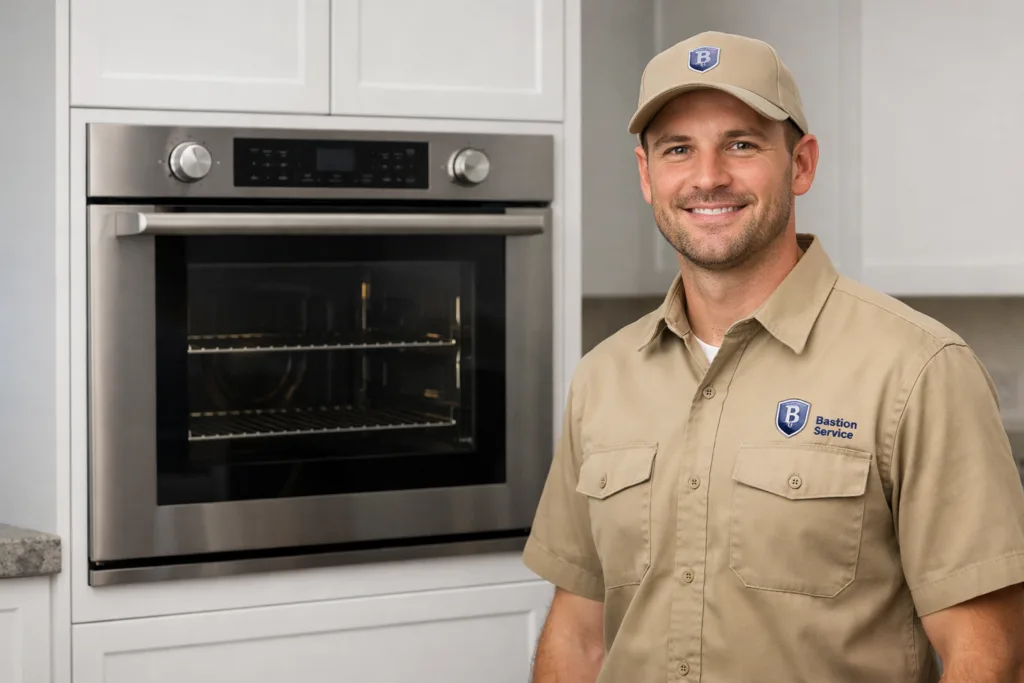
Performance problems in a built-in wall oven rarely start with a total failure. More often, cooking results change first: cookies brown unevenly, casseroles need extra time, preheat drags on, or the display starts acting unpredictably. With Dacor units, those symptoms can point to heating, sensing, control, or door-related faults, so the most useful approach is to match the repair plan to what the oven is actually doing.
Common Dacor Wall Oven Problems in Westwood Homes
Many homeowners notice a pattern before the oven stops working altogether. Paying attention to that pattern helps separate a simple component failure from a broader control or installation issue.
Oven will not heat
If the oven powers on but stays cold, does not start preheating, or produces only weak heat, the cause may involve the bake element, broil element, temperature sensor, relay function, or incoming power. In some cases, the display appears normal while the oven never develops enough heat to cook properly.
Slow preheat
Longer-than-normal preheat times often suggest that one part of the heating system is not doing its job. A weak element, inaccurate sensor reading, failing control response, or heat loss through the door can all stretch preheat time. Because several faults can create the same symptom, this is one of the most common situations where testing matters more than guessing.
Uneven baking or roasting
When food cooks faster on one side, browns too much on top, or finishes inconsistently from rack to rack, the oven may be cycling at the wrong temperature. Sensor drift, calibration issues, control irregularities, and poor door sealing can all lead to uneven results. Homeowners sometimes assume the problem is recipe-related until the pattern becomes too obvious to ignore.
Temperature swings during cooking
An oven that runs too hot, too cool, or fluctuates noticeably during a bake cycle can make everyday cooking frustrating. If recipes that used to be reliable now need constant adjustment, the issue may be tied to inaccurate temperature feedback or inconsistent heat delivery. Temperature instability should be addressed before it leads to overheated components or more pronounced control trouble.
Error codes and display issues
Flashing fault codes, random beeping, a blank display, or controls that stop responding can all indicate an electronic problem. On a Dacor wall oven, that may involve the main control, interface, wiring connections, or a component triggering a fault condition elsewhere in the system. Repeatedly resetting power may temporarily mask the symptom without solving the cause.
Door, hinge, and latch problems
A door that will not close evenly, feels loose, or fails to seal tightly can affect both cooking performance and safety. Heat escaping around the gasket can lead to long cook times and poor temperature control. Latch and switch problems can also interfere with normal operation or prevent the self-clean function from working correctly.
How Symptoms Help Narrow the Cause
Specific details often make a major difference in diagnosing a wall oven correctly. For example, an oven that broils but does not bake points in a different direction than an oven that heats slowly in every mode. A unit that loses power midway through a cycle suggests a different path than one that maintains power but never reaches the set temperature.
Useful clues include:
- whether the problem happens during preheat or later in the cycle
- whether bake and broil behave differently
- if the display stays on when heating stops
- whether fault codes appear consistently or only sometimes
- if the door closes firmly and seals evenly
- whether the issue began suddenly or developed over time
These symptom patterns help determine whether the failure is mainly electrical, mechanical, or control-related.
Why Accurate Testing Matters on a Built-In Oven
Wall ovens are more complex than many countertop cooking appliances, and Dacor models often include electronic features that make symptom overlap common. A slow preheat complaint might come from a weak heating circuit, a bad sensor reading, a relay problem, or simple heat loss at the door. Replacing a part based only on the most obvious symptom can lead to unnecessary cost and a return visit if the real issue is somewhere else.
For Westwood homeowners, this matters even more because built-in appliances are not always easy to remove, replace, or work around. A correct diagnosis helps determine whether the problem is isolated and repairable or part of a broader pattern of wear.
When Repair Usually Makes Sense
Repair is often the sensible option when the problem is limited to a specific failed part or a contained control issue. Many wall oven problems are still worth fixing when the appliance is otherwise in good condition and the installation remains sound.
Common repairable situations include:
- a failed temperature sensor
- a bad bake or broil element
- a worn door gasket
- hinge or latch failures
- a single confirmed control or interface fault
- wiring or connection issues affecting heat or response
Because replacing a built-in wall oven can involve cabinet fit, electrical considerations, and finish matching, a targeted repair can be the better value when the rest of the unit remains solid.
When Replacement Becomes More Likely
There are times when replacement deserves serious consideration. If the oven has repeated electronic failures, significant interior damage, multiple failing systems at once, or repair costs that approach the practical value of the appliance, continuing to invest in repairs may not be the best long-term choice.
Replacement may also make more sense if the unit has become unreliable in several different ways over a short period. The goal is not to assume replacement too early, but to compare the scope of the problem against the condition of the oven as a whole.
Signs You Should Schedule Service Soon
Some symptoms can wait a short time, but others should be checked promptly to avoid a larger failure or disrupted meal planning at home.
- the oven will not reach the selected temperature
- preheat takes much longer than usual
- food is suddenly undercooked or overcooked on a regular basis
- the display resets, goes blank, or stops responding
- fault codes return after resetting power
- the oven shuts off during cooking
- the door does not close properly
- the unit trips the breaker or shows signs of electrical interruption
Problems that seem minor at first often become more disruptive over time, especially if the oven is used frequently.
What to Note Before the Appointment
A few observations from normal use can make troubleshooting faster and more precise. Before service, it helps to note the exact symptom, the cooking mode being used, any recent error codes, and whether the issue is constant or intermittent. If the oven loses power, check whether it comes back on its own or only after a breaker reset. If cooking results are off, think about whether the problem affects all dishes or only longer bakes.
These details can make Dacor wall oven repair in Westwood more efficient and help clarify whether the fault is related to heating performance, control behavior, or heat retention.
Residential Service Focused on the Real Problem
A wall oven that cannot hold temperature or respond consistently affects everyday routines quickly. In Westwood homes, the best repair outcomes usually come from symptom-based diagnosis rather than trial-and-error parts replacement. When the underlying issue is identified properly, it becomes much easier to decide whether the right next step is repair, further testing, or replacement planning.