




Premium appliances tend to show trouble in small ways before they fail outright. A refrigerator may seem a little warmer on one shelf, an oven may need extra time to reach temperature, or a dishwasher may finish a cycle with cloudy glasses and a damp interior. Those early changes matter because they often reveal whether the issue is related to airflow, drainage, ignition, sensing, controls, or wear in a mechanical part.
For homeowners in Westwood, the most useful starting point is to pay attention to the pattern rather than one isolated event. If the same problem appears across several cycles, gets worse over time, or starts affecting food storage, cooking consistency, or kitchen cleanup, the appliance usually needs more than routine adjustment.
What homeowners usually notice first
Most Dacor appliance problems begin as a daily inconvenience. Food does not stay as cold as it should. A burner clicks but does not light smoothly. An oven bakes unevenly from front to back. A dishwasher leaves water in the bottom or creates a musty odor after the cycle ends. These are the kinds of symptoms that interrupt normal household use long before a unit stops working completely.
What makes diagnosis important is that the same outward symptom can come from very different causes. Warm refrigerator temperatures might point to a door seal issue, a fan problem, a defrost fault, or something more serious in the cooling system. Poor oven heating could be tied to an igniter, element, sensor, relay, or control issue. Looking at the full symptom pattern helps separate a minor repair from a larger decision.
Common symptom groups by appliance type
Refrigerators and freezers
Dacor refrigerator and freezer issues often show up through temperature fluctuation, frost buildup, water collecting under drawers, loud fan noise, or an ice maker that becomes inconsistent. Some households first notice spoiled food, softened frozen items, or condensation that was not there before.
When a refrigerator runs constantly, cools unevenly, or stops maintaining a stable temperature, the problem may involve airflow restrictions, defrost components, sensors, door sealing, drain issues, or sealed system trouble. A freezer that slowly loses temperature is especially important to address quickly because food safety becomes part of the problem, not just appliance performance.
Dishwashers
A Dacor dishwasher may begin by leaving residue on dishes, failing to drain fully, leaking near the door, or stopping partway through a cycle. In other homes, the first clue is a new humming, grinding, or buzzing sound that appears during wash or drain phases.
These symptoms can be related to filters, spray arm blockage, drain obstructions, pump issues, water inlet problems, latch faults, or electronic control failures. If the unit is leaving standing water or allowing moisture onto the floor, it is best not to treat it as a cosmetic issue. Repeated use in that condition can affect nearby flooring, trim, or cabinetry.
Cooktops and ranges
Cooking appliances usually make problems obvious during meal preparation. Gas burners may click repeatedly, ignite late, or fail to hold a steady flame. Electric elements may heat too slowly, remain too hot, or cycle unpredictably. On ranges, oven and surface issues sometimes appear together, which can suggest a broader control or power-related fault.
With Dacor cooktops and ranges, symptoms such as weak heating, constant sparking, or controls that respond inconsistently should not be ignored. Even when the appliance still works part of the time, unreliable operation can point to ignition components, switches, wiring, regulators, sensors, or control boards that are no longer performing as they should.
Ovens and wall ovens
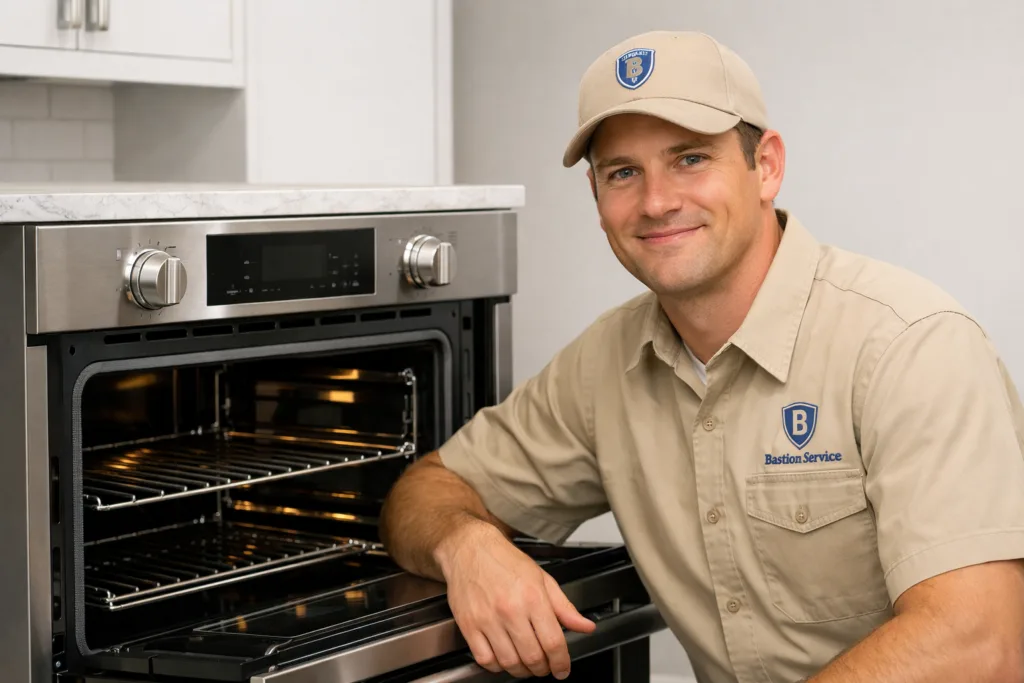
Oven complaints often center on uneven baking, slow preheating, temperature swings, error codes, or a unit that shuts off unexpectedly. Some homeowners notice that familiar recipes suddenly need different times or come out overcooked on one side and undercooked on the other.
In a Dacor oven or wall oven, that kind of inconsistency may involve the igniter, bake or broil element, temperature sensor, convection system, door seal, relays, or the main control. If the oven overheats, struggles to reach the set temperature, or stops during use, continued operation can become frustrating and may place added stress on other components.
Why symptom patterns matter
Good repair decisions usually come from noticing how the appliance behaves over time. Does the refrigerator cool normally in the morning but warm up by evening? Does the dishwasher fail to drain only on heavy cycles? Does the oven preheat correctly but lose heat after twenty minutes? Those details can narrow the problem far faster than a general description like “it is not working right.”
Intermittent faults are especially important to describe because they often point to electrical, control, or sensor issues rather than a simple hard failure. A unit that fails only sometimes may still be signaling a developing problem that is likely to become more frequent.
When waiting is likely to make things worse
Not every appliance issue becomes urgent on the first day, but some symptoms are poor candidates for delay. Water leaks, repeated breaker trips, burning smells, rising freezer temperatures, strong electrical odors, and ignition problems all deserve prompt attention. Those conditions can move beyond inconvenience and begin affecting safety, sanitation, or surrounding materials.
There is also a practical cost to waiting. A refrigerator that runs too long because of airflow or defrost trouble may put additional strain on major components. A dishwasher that is not draining can leave debris and moisture inside the system, making the next cycle worse. An oven with inaccurate temperature control can continue damaging cooking results while the underlying problem becomes harder to ignore.
Signs the issue may be more than routine maintenance
- The same error code returns after resetting power.
- Performance changes are getting worse from week to week.
- The appliance works on some cycles but fails on others.
- New noises appear along with heating, cooling, or draining problems.
- Moisture, frost, or heat shows up where it normally would not.
- The unit still runs, but results are clearly unreliable.
These signs often mean the appliance needs a true fault diagnosis rather than cleaning, resetting, or trial-and-error part replacement.
Repair versus replacement: how to think it through
For many Westwood households, the decision is not simply whether a Dacor appliance can be repaired. The better question is whether the repair is likely to restore stable everyday use without pointing to multiple additional problems. A single identified failure on an otherwise solid unit often supports repair. Repeated breakdowns, multiple unrelated faults, or major cooling system concerns can shift the conversation toward replacement.
Age matters, but condition matters more. A well-kept appliance with one clear problem may still be a good repair candidate. On the other hand, a unit with declining performance across several systems may not offer the same value even if one immediate symptom can be fixed.
How homeowners can prepare before service
A few observations can make the next step more productive. Note when the problem happens, whether it is constant or intermittent, and what changed just before the issue started. If a refrigerator is warming, check whether the freezer is doing the same. If an oven is inaccurate, pay attention to whether it struggles during preheat or after it reaches the set temperature. If a dishwasher leaks, notice whether the leak appears early, mid-cycle, or during drain-out.
It also helps to avoid repeated resets or continued test cycles once the problem becomes clear. Running an appliance over and over in a fault condition can sometimes hide the original symptom or contribute to additional wear.
What a useful repair process should provide
Household appliance service is most helpful when it explains what the symptom likely indicates, what needs to be confirmed, and whether continued use is reasonable in the meantime. That gives homeowners a realistic basis for deciding whether to move ahead with repair, pause operation, or start planning for replacement.
Across refrigerators, freezers, dishwashers, cooktops, ranges, ovens, and wall ovens, the goal is the same: identify the actual cause of the performance issue and match the next step to the appliance’s condition. For Dacor appliances in Westwood, that approach is usually far more useful than guessing based on a single symptom alone.


