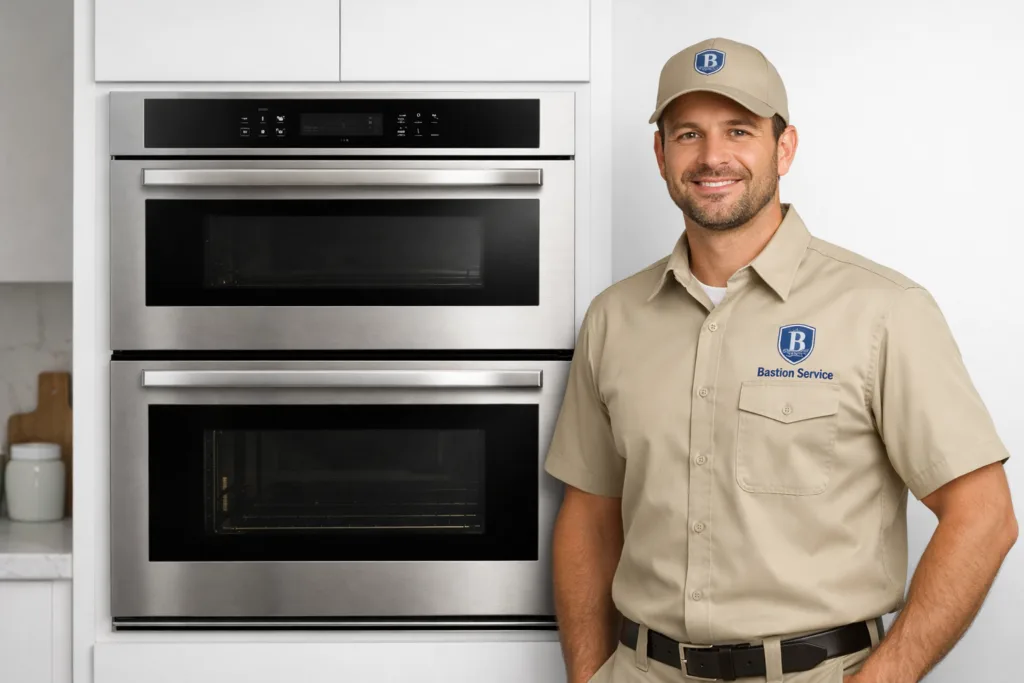
Wall ovens often fail in ways that look simple on the surface but involve different parts behind the scenes. A unit that will not preheat, bakes unevenly, or shuts off during cooking may be dealing with a weak heating circuit, a sensor problem, a door-latch issue, or an electronic control fault. Sorting that out first helps avoid wasted time and unnecessary part replacement.
Common JennAir Wall Oven Symptoms
Not heating at all
If the display works but the oven cavity stays cold, the problem may involve the bake element, broil element, thermal protection components, wiring, or the control sending power incorrectly. On some models, the oven can appear normal until a cooking cycle starts, which makes the failure seem intermittent even when it is electrical.
Slow preheat
A long preheat time is often one of the earliest warning signs. The oven may still reach temperature eventually, but a weakening element, inaccurate sensor, or relay issue can make warm-up much slower than normal. Homeowners often notice this first with weeknight meals that suddenly take much longer than expected.
Temperature swings or inaccurate baking
When food comes out overcooked on one rack and undercooked on another, the issue may be more than recipe variation. Sensor drift, inconsistent element cycling, airflow problems, or control errors can all affect temperature stability. If the same dishes that used to turn out well now require constant adjustments, the oven may no longer be regulating heat correctly.
Oven shuts off, will not start, or shows errors
A wall oven that powers on but will not run a cycle may have trouble with the interface, door-latch system, internal communication between components, or a failing control board. Error codes are useful clues, but they do not always identify the final failed part by themselves. Testing is usually needed to tell whether the problem is the control, the sensor circuit, or another connected component.
Door, latch, or self-clean problems
If the door will not close properly, will not unlock, or feels misaligned, normal cooking can become difficult and heat loss can affect results. Self-clean problems often involve latch motors, switches, heat stress, or control issues. These symptoms are worth checking sooner rather than later because repeated forced use can cause additional wear.
What These Problems Often Point To
JennAir wall ovens combine heating elements, sensors, safety devices, relays, and electronic controls inside a built-in installation. Because those systems work together, one fault can create several symptoms at once. For example, an oven that seems to have a bad element may actually have a control issue, while an oven that appears to run hot may be reacting to a sensor that is reading incorrectly.
That is why symptom patterns matter. Whether the problem shows up during preheat, only at high temperatures, only after the oven has been running for a while, or only during self-clean can help narrow down the likely cause.
Signs the Oven Should Be Checked Soon
- Preheat times have become noticeably longer.
- Food cooks unevenly even with familiar recipes.
- The oven overshoots or struggles to hold temperature.
- The display flickers, resets, or shows recurring fault codes.
- The cooking cycle stops before the food is done.
- The door no longer closes or locks as it should.
Many homeowners in Westwood adapt to these changes for a while by rotating pans, adding extra cook time, or restarting cycles. That can keep dinner moving, but it often masks a developing failure until the oven stops working completely.
When Continued Use Is Not a Good Idea
Stop using the wall oven if you notice repeated breaker trips, visible sparking, a persistent burning smell, controls that do not respond normally, or a unit that does not shut off when commanded. A door that will not latch correctly during operation or a cabinet area that becomes unusually hot also deserves prompt attention.
For gas-related concerns on applicable models, a strong or persistent gas smell should not be treated as a routine appliance issue. Leave the area if needed and contact the gas utility or emergency service first.
Repair or Replace?
Many JennAir wall oven issues are repairable when the failure is isolated to a heating element, temperature sensor, igniter on applicable models, latch assembly, touch interface, or another defined component. Replacement becomes more likely when there are multiple major faults, severe heat damage, recurring electronic problems, or parts constraints that make the repair path less sensible.
Built-in appliances also bring installation and fit considerations that make the decision different from replacing a freestanding unit. In Westwood homes, it often makes sense to compare the age of the oven, the specific failed component, and the overall condition of the appliance before deciding on the next step.
What to Have Ready Before Service
A few details can make diagnosis faster and more accurate:
- The model number, if accessible.
- Any error code shown on the display.
- Whether the problem happens during bake, broil, convection, or self-clean.
- Whether the oven fails consistently or only once it gets hot.
- Whether there were recent power interruptions or breaker trips.
Even small details help. Knowing whether the oven never reaches temperature, reaches it too slowly, or reaches it and then falls away can point in different directions.
What Homeowners Usually Want to Know
Most people are trying to answer a few practical questions: what is failing, is the oven safe to use, and is the repair worth doing? The most helpful service call is one that stays focused on the actual symptom, tests the likely causes, and explains the repair path in plain terms.
For residential JennAir wall ovens in Westwood, that usually means addressing the specific cooking problem at home rather than guessing based on one visible symptom. Whether the issue is no heat, uneven baking, slow preheat, temperature instability, or control trouble, the right repair starts with identifying why the oven is behaving that way.