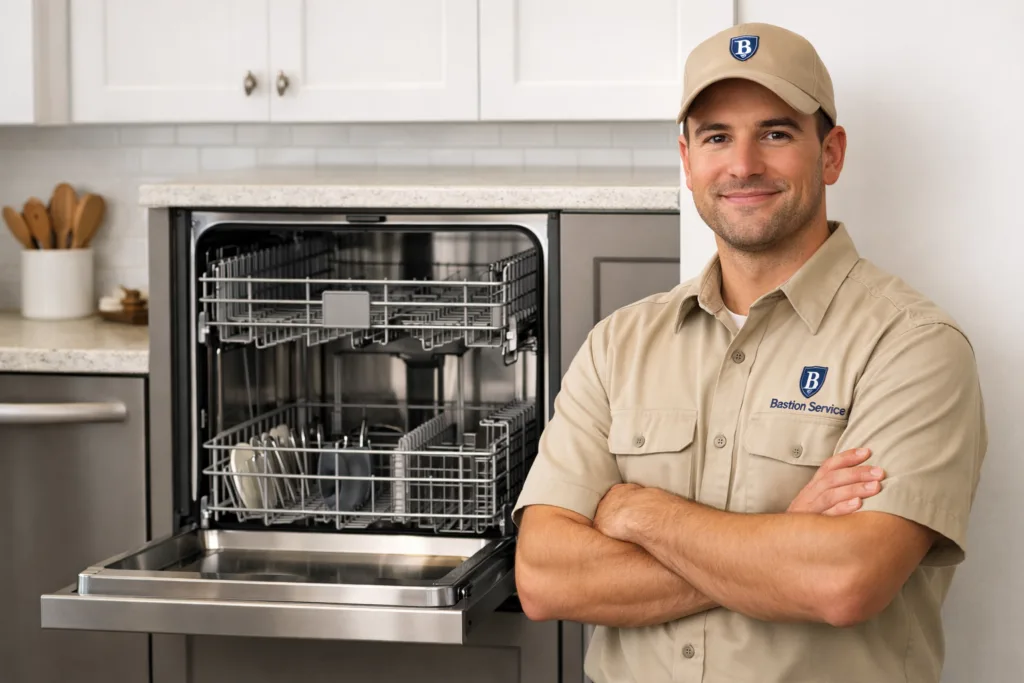
A Dacor dishwasher that stops mid-cycle, leaves dishes cloudy, leaks onto the floor, or will not drain can disrupt the whole kitchen routine. In many cases, the same symptom can come from very different causes, including a drain restriction, circulation problem, door seal failure, control fault, or water inlet issue.
What common Dacor dishwasher symptoms usually point to
Standing water after the cycle
If water is still sitting in the tub at the end of a cycle, the problem may involve a blocked filter area, restricted drain hose, obstructed drain pump, or a control issue that is preventing the drain phase from completing. A dishwasher that hums but does not move water often has debris in the pump area or a pump that is beginning to fail.
This symptom is worth addressing promptly. Continued use can lead to odors, residue buildup, and added strain on the drain system.
Dishes come out dirty, gritty, or cloudy
Poor wash results do not always mean the detergent is the issue. A Dacor dishwasher may leave dishes dirty because of weak spray pressure, clogged spray arms, low water fill, circulation pump problems, dispenser trouble, or sensors that are not allowing the cycle to run as intended.
If glasses look filmy, plates still feel greasy, or food particles remain after a full cycle, the repair path depends on whether the problem is maintenance-related or caused by a failing component.
Leaking from the front or underneath
Leaks can come from more than one place. Common sources include the door gasket, lower door seal, hose connections, pump seals, or overfilling. A leak at the front corners may suggest a door sealing problem, while water under the machine can point to an internal connection or pump-related issue.
Even a small leak should not be ignored. Water can damage flooring, nearby cabinetry, and the area beneath the dishwasher if the appliance continues to run in that condition.
Will not start or shuts off mid-cycle
When the dishwasher has power but will not begin washing, the issue may involve the door latch, touch controls, main control board, or a fill problem that stops the cycle from advancing. If it starts and then stops partway through, likely causes can include overheating, drainage faults, wash motor trouble, or an electronic interruption.
These symptoms often look simple from the outside, but they usually need testing rather than guesswork.
Buzzing, grinding, or unusual noise
A sudden change in sound is often a useful clue. Grinding can mean debris has entered the pump area. Rattling may be tied to spray arm interference or loose items. A loud hum during drain can point to a drain pump obstruction or failure.
Noise problems are easier to deal with early. If the dishwasher keeps running while a component is under stress, a minor blockage can turn into a larger repair.
Low rinse temperature or poor drying
If dishes are wet at the end of the cycle or the interior never seems to reach proper heat, the cause may involve the heating circuit, temperature sensing, control faults, or a cycle that is ending early. Poor drying can also appear alongside wash performance issues, especially if the machine is not heating water as expected.
When rinse temperature is too low, cleaning quality can also suffer, not just drying performance.
Why Dacor dishwasher issues should be diagnosed by symptom pattern
Dacor dishwashers combine electronic controls, wash motors, pumps, valves, and sensors that work together through each stage of the cycle. Two machines with the same visible complaint can fail for completely different reasons. For example, a dishwasher that does not clean well may have a circulation problem, while another may not be filling properly in the first place.
Looking at the exact sequence of what the dishwasher does and does not do helps narrow the issue faster. Does it fill with water? Does the wash motor run? Does it heat? Does it drain fully? Does the problem happen every cycle or only sometimes? Those details matter because they often point to the failed system more accurately than the symptom alone.
When to stop using the dishwasher
Some problems are inconvenient but manageable for a short time. Others should put the appliance out of service until it is checked. Stop using the dishwasher if you notice any of the following:
- Active leaking onto the floor
- Standing water that does not clear
- A burning smell or repeated breaker trips
- Loud grinding or persistent humming
- Cycles that stop and leave the machine unresponsive
Running the appliance in these conditions can increase repair scope and, in some cases, create water or electrical risk in the kitchen.
What can make the problem worse over time
Dishwasher failures often begin as a single symptom and then spread into additional problems when the unit keeps operating. A small leak can lead to cabinet or floor damage. A restricted drain can cause odor and residue buildup. Weak circulation can leave detergent behind and reduce overall cleaning performance. Repeatedly trying to restart a cycle when a motor or pump is struggling can put more stress on the system.
For Torrance homeowners, the practical move is usually to pause use once the symptom becomes repeatable instead of waiting for a complete breakdown.
Repair versus replacement for a Dacor dishwasher
Repair is often the better option when the dishwasher is otherwise in good condition, the issue is isolated, and the required work is proportionate to the value of the appliance. Premium dishwashers can remain worthwhile to repair when the failure is limited to a pump, valve, latch, seal, or control-related component.
Replacement becomes more likely when there are multiple failing systems, long-term leak damage, repeated breakdowns, or repair costs that stack up close to the value of a newer unit. Age matters, but it is not the only factor. Condition, parts involved, and the pattern of recent problems usually tell the fuller story.
How to prepare before service
A few observations can make troubleshooting much more efficient. Before service, it helps to note:
- Whether the dishwasher fills with water
- Whether you hear the wash motor running
- Whether it drains completely
- Whether the dishes feel warm at the end of the cycle
- Whether any lights blink or error codes appear
- Whether the problem is constant or intermittent
It is also useful to remember when the issue started and whether it followed a power interruption, plumbing change, or a gradual drop in performance.
What homeowners in Torrance can expect from a focused repair visit
The most effective service approach is to test the systems tied to the exact complaint rather than replacing parts based on assumption. That means confirming whether the problem is related to draining, circulation, heating, water fill, door latching, or control communication before deciding on the repair path.
For households in Torrance, that kind of symptom-based diagnosis helps determine whether the dishwasher is a strong candidate for repair and whether continued use could lead to added damage. When the issue is identified accurately, the next step is much clearer and the repair decision is easier to make.