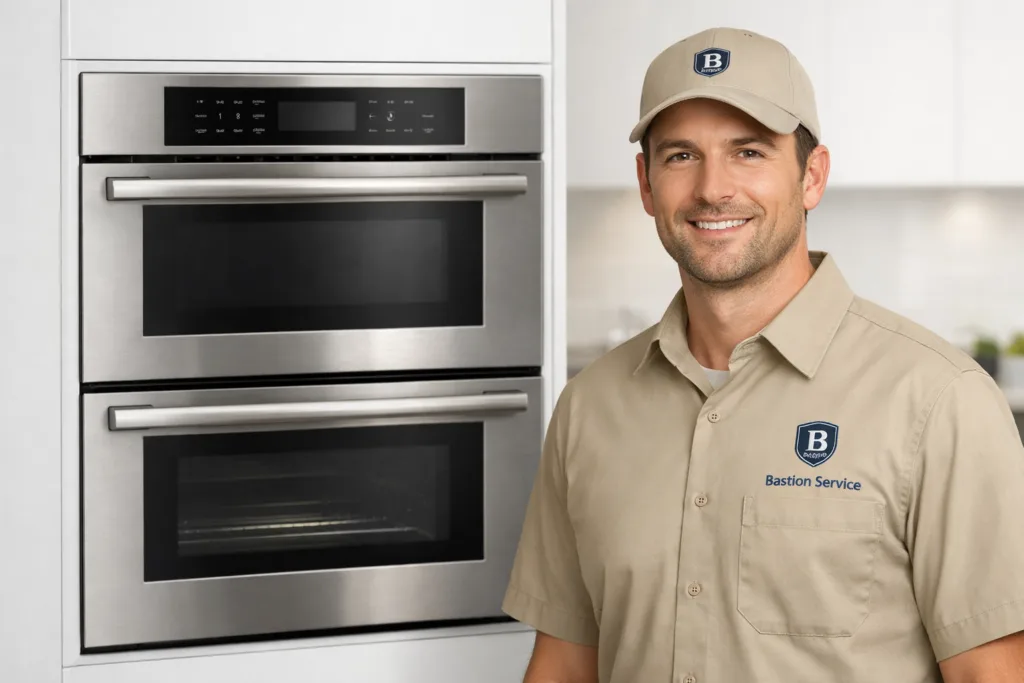
Wall ovens tend to fail in ways that look similar at first, but the actual cause can be very different. A unit that will not heat at all may have a power supply problem, while one that heats weakly or bakes unevenly may be dealing with a worn element, sensor drift, or a control issue. With Dacor models, taking the symptom pattern seriously usually saves time and helps avoid replacing parts that are not actually at fault.
How Dacor wall oven problems usually show up
Many homeowners first notice a change in cooking results before the oven quits completely. Cookies brown unevenly, casseroles take longer than normal, or the preheat cycle seems to run forever. In other cases, the change is obvious right away: the display flashes, the oven shuts off during use, or the cavity never gets hot enough to cook safely.
Because wall ovens combine heating components, sensors, door seals, wiring, and electronic controls, one symptom can overlap with another. That is why the most useful repair path starts with how the oven behaves from start to finish: powering on, preheating, cycling at temperature, and shutting down.
Common symptoms and what they may mean
Oven will not heat
If the lights and display work but the oven does not produce heat, the problem may involve the bake element, broil element, thermal protection components, sensor circuit, relay, or incoming power. Some ovens can appear to be on normally while still missing the voltage needed for proper heating. This is one reason a no-heat complaint should not be reduced to a single likely part without testing.
Uneven baking or roasting
Hot spots, pale areas, or food that finishes differently from one rack to another often point to weak element performance, incorrect temperature sensing, or poor heat retention. A worn door gasket can also let heat escape and make the oven work harder than it should. If the results have gradually become less consistent, the problem may be developing over time rather than appearing in one sudden failure.
Slow preheat
Long preheat times are easy to dismiss because the oven may eventually reach the set temperature. Still, slow warm-up is often an early warning sign. A heating circuit may be underperforming, one element may not be engaging correctly, or the control may not be driving the oven through the full preheat cycle as intended. Catching that issue early can help prevent a complete loss of heat later.
Temperature swings
All ovens cycle to maintain temperature, but large swings that affect cooking results are not normal. If dishes come out overcooked one day and undercooked the next, the sensor may be reading inaccurately or the control may be cycling poorly. Calibration can help in some situations, but calibration alone will not fix a failing sensor or unstable control behavior.
Display or control problems
A blank panel, delayed button response, flashing error indicators, or settings that will not hold can all point to an electronic fault. In Dacor wall ovens, this may involve the interface, the main board, wiring connections, or a power-related problem. Intermittent control issues are especially frustrating because the oven may seem normal for a while and then fail again during use.
Oven shuts off mid-cycle
If the oven starts normally and then powers down before cooking is complete, possible causes include overheating protection, control failure, loose electrical connections, or a sensor issue that is causing the oven to read conditions incorrectly. This symptom is worth addressing promptly, especially if it happens repeatedly or is paired with error displays.
Door will not seal or close correctly
A damaged hinge, bent alignment, or worn gasket can affect both performance and safety. Heat loss around the door can lead to extended cook times, poor browning, and added strain on heating parts. A sealing problem may sound minor, but if ignored it can contribute to bigger complaints about uneven temperature and slow operation.
What to watch for before service
Before scheduling repair, it helps to note exactly what the oven is doing. A few details can make diagnosis faster and more accurate, such as:
- Whether the display powers on normally
- If the oven reaches any heat at all
- Whether broil works when bake does not, or vice versa
- How long preheat takes compared with normal use
- If the problem happens every cycle or only sometimes
- Any recent error messages, beeping, or shutdowns
- Whether the door closes tightly
Even simple observations like “it takes twice as long to preheat” or “the top browns but the bottom stays pale” can point the repair in the right direction.
When to stop using the oven
Some wall oven issues are inconvenient but manageable for a short time, while others should be treated as immediate stop-use problems. It is smart to discontinue use if the oven smells like burning insulation, trips the breaker, shuts off unpredictably, overheats, or shows signs of arcing or electrical stress. These symptoms can indicate a fault that may worsen with continued operation.
If the issue is limited to mild temperature inaccuracy, a weak gasket, or an early-stage preheat problem, repair is often more straightforward when handled before other parts are affected. Waiting too long can turn a small heating problem into a larger control or wiring repair.
Repair or replace?
For most households in Sawtelle, the decision comes down to condition, cost, and confidence in the repair outcome. If the problem is isolated to a sensor, hinge, gasket, or single heating component, repair is often a sensible option. If the oven has repeated electronic failures, a history of multiple service issues, or a repair estimate that is high compared with the appliance’s age and overall condition, replacement may make more sense.
A useful service visit should answer a few practical questions:
- Is the failure limited to one part or part of a larger wear pattern?
- Is the repair likely to restore stable performance?
- Are there signs that additional components may fail soon?
- Does the current condition justify continued investment?
Why symptom-based diagnosis matters with Dacor wall ovens
Dacor wall ovens often include model-specific controls and temperature management systems that benefit from focused troubleshooting. Replacing parts by guesswork can become expensive quickly, especially when a heating complaint is actually caused by a sensor reading problem or a control fault. Symptom-based testing helps separate simple component failures from deeper electrical or electronic issues.
That matters in a busy home where the oven is used regularly for weeknight meals, batch cooking, and holidays. A repair plan should not just aim to get the unit running for one cycle. It should identify why the complaint started and whether the fix is likely to hold up under normal household use.
Service expectations for homeowners in Sawtelle
When a Dacor wall oven starts acting unpredictably in Sawtelle, homeowners usually want more than a quick guess. They want to know what failed, whether the repair is worthwhile, and whether the oven can be trusted again for everyday cooking. The most helpful approach is one that matches the repair path to the actual symptom, the age of the unit, and the condition of the surrounding components.
Whether the issue is no heat, uneven baking, slow preheat, temperature drift, or control trouble, the goal is the same: restore safe, consistent operation without unnecessary part swapping. That gives homeowners a more realistic basis for deciding on next steps and getting the kitchen back to normal.