
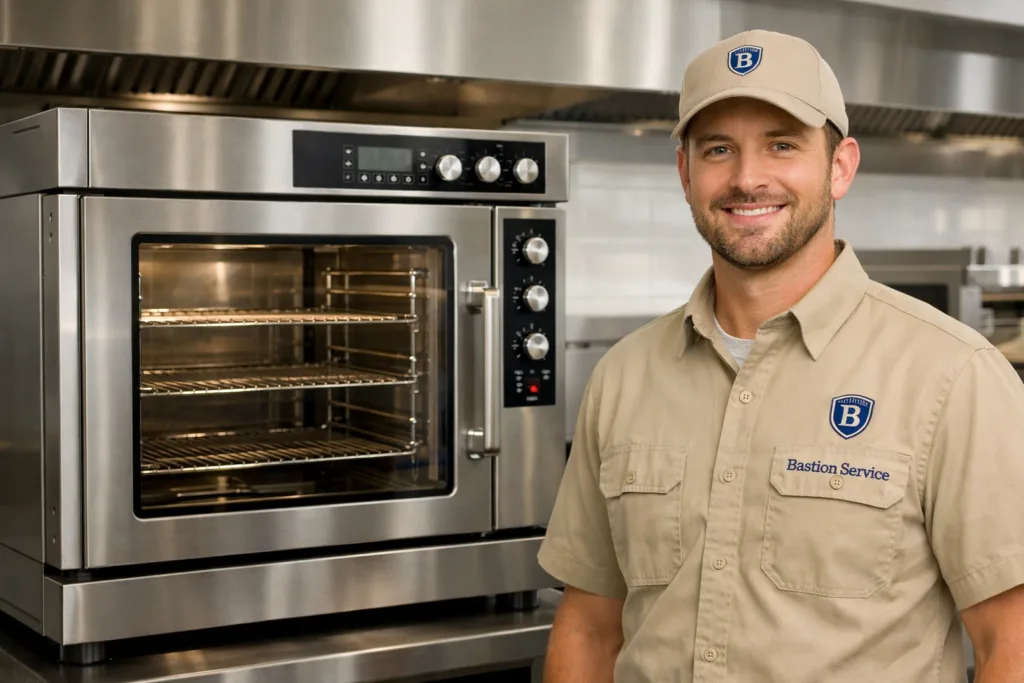




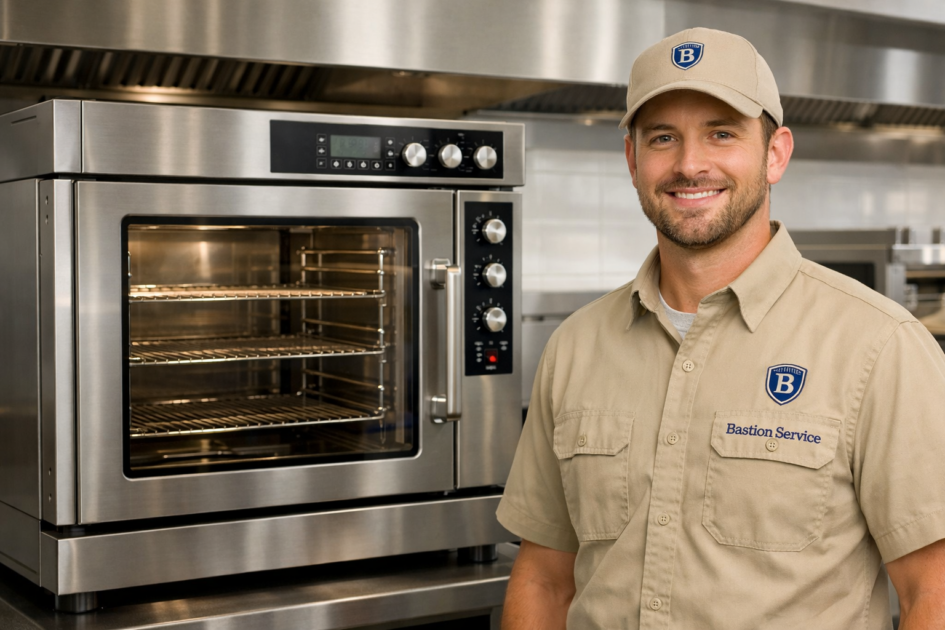
When an oven begins missing temperature targets, cooking unevenly, or shutting down mid-cycle, the immediate business issue is lost production time and inconsistent output. Similar symptoms can come from very different faults, including sensor drift, ignition failure, weak heating output, airflow problems, door seal wear, or electrical interruptions, so the most useful first step is identifying the actual source of the breakdown.
Related commercial equipment paths in West Hollywood include Blodgett Oven Repair in West Hollywood and Southbend Oven Repair in West Hollywood.
Common commercial oven symptoms and what they may indicate
Temperature inconsistency is one of the most disruptive oven complaints in a commercial kitchen. If the cavity runs hot, cold, or swings during operation, the cause may involve the temperature sensor, thermostat calibration, control board response, heating elements, gas ignition components, or restricted airflow. In daily service, even a modest temperature error can affect cook times, food quality, and timing across an entire shift.
Uneven cooking often points to heat-distribution problems rather than a simple setting issue. A failing convection fan, weak element, worn gasket, damaged insulation, or warped interior component can create hot and cold zones inside the cavity. If trays need constant rotation or one rack consistently finishes ahead of another, the oven is no longer performing predictably enough for production use.
Slow preheat, failure to reach set temperature, or repeated recovery problems under load usually suggest a system that is losing capacity. Depending on the unit, that may mean failing elements, relays, igniters, gas valves, safety controls, or incoming power issues. When a kitchen has both oven heating problems and separate vat heat or burner recovery trouble, Commercial Fryer Repair in West Hollywood may be the better service path for the fryer side of the line.
Control and display issues can be just as disruptive as a no-heat condition. Unresponsive keypads, error codes, drifting setpoints, random resets, and cycles that stop without warning may indicate a failing interface, board problem, damaged wiring, or heat-related electrical stress. These faults often appear intermittent at first, which makes them easy to ignore until the unit becomes unreliable during service.
When continued use can make the problem worse
Some operators keep an oven in rotation as long as it still heats, but partial operation can increase repair scope. Running with a weak fan motor, unstable ignition, damaged gasket, or overheating electrical component may accelerate wear on nearby parts. If staff are compensating with longer cook times, higher temperature settings, manual restarts, or constant monitoring, the equipment has already moved beyond normal operating condition.
If there is a persistent gas smell, visible sparking, tripped breakers, smoke from controls, or repeated safety shutoffs, stop using the appliance until it has been evaluated. Safety concerns should be addressed first, especially in an active commercial kitchen where continued use can affect both staff and surrounding equipment.
How service decisions are usually made
Schedule service when performance starts affecting output
For businesses in West Hollywood, the best time to schedule oven service is often before a complete shutdown. If batches are inconsistent, preheat times are increasing, controls are unreliable, or the unit drops out during operation, the repair path is usually simpler before additional components are damaged. Early intervention also helps separate an isolated part failure from a larger end-of-life equipment problem.
Repair versus replacement considerations
Repair is often the practical option when the fault is limited to a sensor, igniter, element, fan, control component, relay, or other serviceable part and the rest of the oven remains in solid condition. Replacement becomes more relevant when the unit has multiple failing systems, major cavity deterioration, recurring downtime, unavailable parts, or repair costs that no longer support dependable operation. The decision usually comes down to expected uptime, production importance, and whether the oven can return to stable service without repeated disruption.
What a useful diagnosis should clarify
A worthwhile assessment should identify the active symptom, the likely failed components, the effect on safe operation, and whether the recommended repair makes business sense. For a commercial kitchen, that means verifying temperature accuracy, heating reliability, control response, airflow performance, and ignition behavior where applicable rather than replacing parts based only on a general complaint.
It is also important to determine whether the complaint is truly oven-specific or part of a broader cooking-line issue. Kitchens sometimes report slow ticket times as an oven problem when the larger bottleneck is inconsistent heat elsewhere on the line, overlapping electrical load issues, or multiple pieces of equipment losing performance at the same time.
For West Hollywood operations that rely on consistent baking, roasting, holding, or finishing, a focused repair approach helps protect product quality and keep production moving. The goal is not just to get the oven running again, but to restore stable performance that staff can trust during daily service.


