
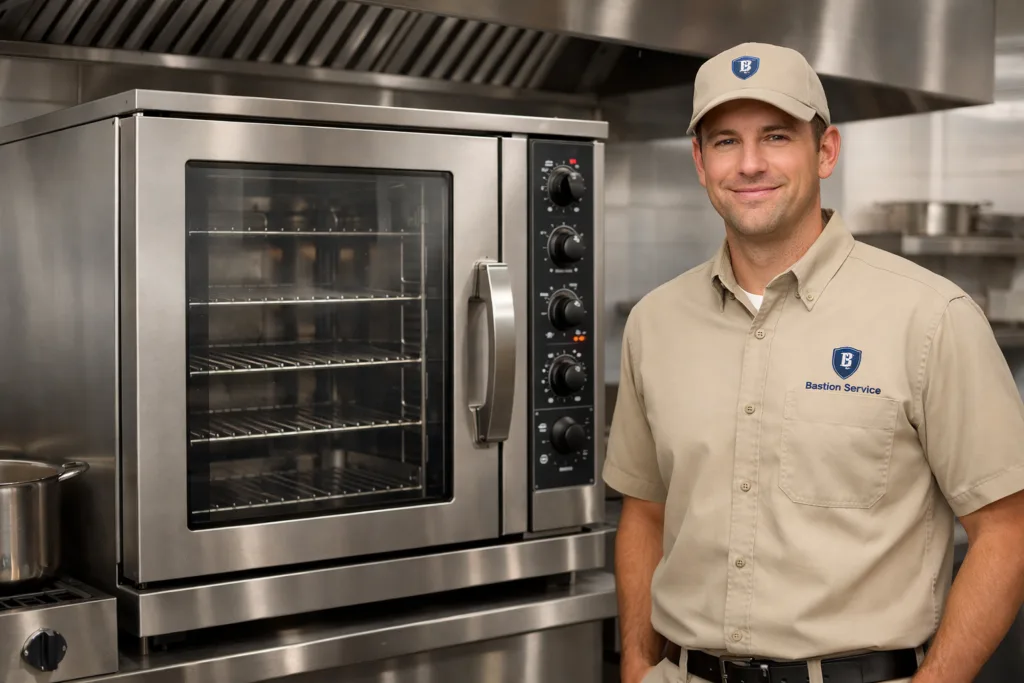




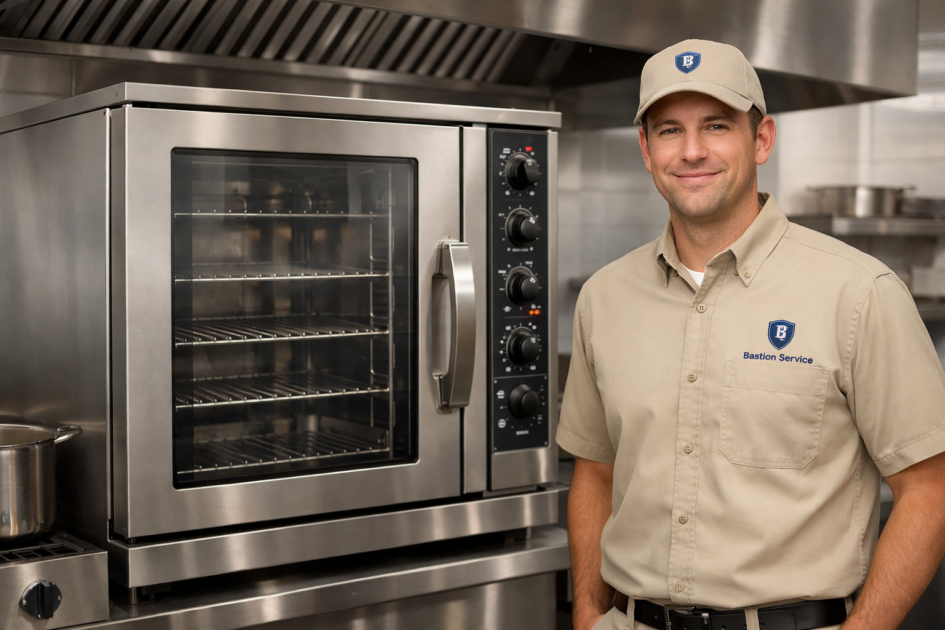
Production issues usually start showing up before an oven fully fails. A unit that bakes unevenly, recovers slowly between loads, or drifts away from the set temperature can affect food quality, timing, and labor across the entire kitchen. In Sawtelle, that makes early evaluation important not just for the oven itself, but for the workflow that depends on it.
Related commercial equipment paths in Sawtelle include Blodgett Oven Repair in Sawtelle and Southbend Oven Repair in Sawtelle.
Common commercial oven symptoms and what they may indicate
Temperature swings and uneven cooking
When one pan finishes early while another comes out underdone, the problem may involve a temperature sensor, thermostat calibration, weak heating element, failing igniter, control issue, or reduced airflow inside the cavity. In convection equipment, fan-related problems can also create hot and cold zones that lead to inconsistent results from rack to rack.
Door seal wear can make the same symptom worse. If heat is escaping around the gasket or the door is not closing squarely, the oven may cycle longer than normal and still struggle to hold a stable temperature. Over time, that can create both quality complaints and unnecessary stress on heating components.
Slow preheat or failure to reach set temperature
An oven that takes too long to preheat often points to declining element output, ignition trouble, power supply issues, relays that are not switching properly, or controls that are no longer reading temperature accurately. In a commercial setting, slow preheat is not just an inconvenience; it can delay prep, compress service windows, and force staff to adjust production around unreliable equipment.
If the symptom involves burner heat and oil temperature performance elsewhere on the line at the same time, Commercial Fryer Repair in Sawtelle may be the better service path for that station while the oven issue is evaluated separately.
Intermittent shutdowns, error codes, and control faults
Unexpected shutdowns can be harder to diagnose because the oven may restart and appear normal for a period of time. Common causes include loose wiring, failing control boards, overheating safety limits, cooling fan problems, or unstable incoming power. Error codes can help narrow the issue, but they do not always identify the failed part by themselves.
Intermittent faults deserve attention early because they rarely stay intermittent for long. What begins as an occasional reset can become a complete loss of heat during a busy service period, which is usually when the business impact is highest.
Door, hinge, and gasket wear
Not every oven complaint starts with the heat source. Worn hinges, broken handles, warped doors, and damaged gaskets can all reduce performance by letting heat escape and changing how the unit cycles. Mechanical wear is especially common on heavily used equipment where the oven door is opened repeatedly throughout the day.
These issues may seem minor compared with a no-heat call, but they can contribute to longer cook times, higher energy use, and uneven results. In some cases, correcting heat retention and structural wear is a key part of restoring normal cooking performance.
Why diagnosis matters before approving repair
Similar oven symptoms can come from very different failures. A slow-heating complaint might be caused by an element, an igniter, a control relay, poor voltage, or even a door that is leaking heat. Replacing the most obvious part without confirming the failure path can add cost without solving the operational problem.
A proper assessment should look at how the oven heats, how accurately it reads temperature, whether airflow is consistent, and whether supporting components are still in serviceable condition. That matters most for businesses trying to decide whether they are dealing with a straightforward repair or a larger reliability issue that could continue affecting uptime.
When service should be scheduled
Commercial oven service should move up the priority list when cooking times become inconsistent, the unit struggles to recover between batches, controls stop responding normally, or the oven begins producing repeat fault codes. Those signs usually indicate a developing problem rather than normal wear alone.
Immediate attention is also warranted if staff notice burning smells, visible wiring damage, breaker trips, ignition problems, fan noise changes, or overheating around controls and panels. Continuing to run the unit under those conditions can turn an isolated repair into broader component damage.
Repair versus replacement considerations
Repair is often the practical choice when the failure is confined to a sensor, igniter, element, relay, fan motor, gasket, or similar serviceable component, and the cabinet and internal structure are still sound. For many businesses, restoring one dependable oven is more cost-effective than replacing equipment that still fits the kitchen and production model.
Replacement becomes more likely when the oven has recurring control problems, multiple failing systems, poor parts availability, severe structural wear, or a service history that suggests ongoing downtime will continue. The decision should be based on reliability, recovery time, and how the unit supports daily production rather than on one symptom alone.
What businesses in Sawtelle should watch for
In high-volume operations, oven problems often show up first as workflow disruptions rather than a full shutdown. Longer ticket times, inconsistent product appearance, staff compensating with manual adjustments, and repeated re-firing are all signs that the equipment may no longer be operating within normal range.
For kitchens in Sawtelle, the most useful next step is usually an inspection that connects the symptom to the actual cause and helps determine whether targeted repair work can return the oven to stable service. That approach reduces guesswork and helps protect both food consistency and equipment uptime.


