





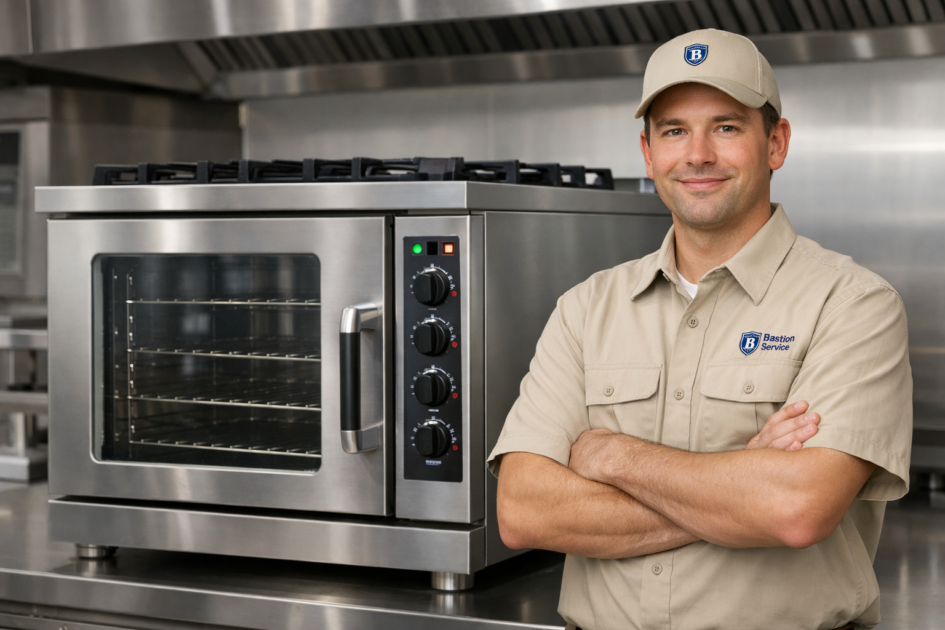
Southbend oven problems can interrupt production long before a unit fully stops working. In busy kitchens, symptoms like slow preheat, uneven baking, ignition trouble, or random shutdowns usually mean a service call is warranted before food quality, timing, and staff workflow are affected further. For businesses in Sawtelle, the most useful approach is to identify the failed system first, then schedule repair based on how the oven is actually behaving under load.
Related commercial service paths in Sawtelle include Southbend Commercial Repair in Sawtelle, Commercial Oven Repair in Sawtelle, and Southbend Range Repair in Sawtelle.
Why symptom-based diagnosis matters
A Southbend oven can show one obvious problem while the underlying fault sits in a different part of the system. An oven that seems underpowered may actually have an ignition problem, a drifting temperature sensor, a weak heating component, a failing control, or heat loss at the door. If the wrong part gets replaced first, the oven may continue missing temperature and downtime can stretch longer than expected.
That is why diagnosis matters for Sawtelle businesses that rely on consistent oven performance. A missed service window can lead to delayed prep, uneven product, extra labor, and avoidable waste. Repair decisions are more effective when they are based on the full symptom pattern rather than a single visible failure.
Common Southbend oven symptoms and what they may indicate
Not heating at all
If the oven will not heat, possible causes include ignition failure, a bad heating element, a control issue, a tripped safety circuit, sensor failure, or an incoming power or gas supply problem. The key question is whether the unit is getting the correct input and whether the heat call is being completed properly.
For a business, this type of no-heat problem usually needs prompt service because it can stop a station from running entirely. Even when the cause turns out to be a single failed component, the repair should include testing of related systems so the same shutdown does not repeat during the next shift.
Slow preheat
When a Southbend oven reaches temperature too slowly, production timing becomes harder to manage. Slow preheat can point to a weak igniter, reduced burner or element performance, control drift, airflow issues, or a door that is allowing too much heat to escape. Staff may start adjusting around the problem, but that usually hides the issue rather than solving it.
If preheat time keeps getting longer, it is often a sign that a component is declining rather than failing all at once. Catching that trend early can prevent a full outage during service hours.
Uneven baking or hot and cold spots
Inconsistent results from one rack to another often suggest a temperature regulation problem. Common causes include a sensor reading inaccurately, calibration drift, fan or airflow problems, uneven burner or element performance, or control faults that affect cycling.
This matters because uneven heat is not just a quality issue. It can slow ticket times, increase re-fires, and make output harder to predict. If product consistency changes from batch to batch, the oven should be checked before the problem affects more than one menu item or prep cycle.
Temperature swings during operation
An oven that overshoots, drops below setpoint, or recovers poorly between loads may have trouble controlling heat accurately. That can involve thermostatic issues, sensor faults, control board problems, or components that cannot maintain stable performance once the oven is fully warmed up.
Temperature swings are especially important to address when operators have started compensating manually with longer cook times or higher settings. Those workarounds can increase wear and make diagnosis harder later.
Ignition faults or delayed burner lighting
If the oven clicks repeatedly, struggles to light, or starts inconsistently, the issue may involve the igniter, flame sensing, gas flow, control sequencing, or safety-related components. Delayed ignition should not be ignored, especially when it becomes more frequent over time.
Because ignition systems must work in the correct order, the repair should focus on the complete sequence rather than one part in isolation. A proper service visit checks whether the fault is in the ignition component itself or in the controls and supporting systems around it.
Shutting off during a cook cycle
An oven that runs for a while and then drops out can be more difficult to troubleshoot because it may restart later and appear normal for a short time. This type of symptom can come from overheating protection, loose electrical connections, failing controls, unstable ignition, or parts that break down only after reaching operating temperature.
Intermittent shutdowns usually become more disruptive over time. If the oven is cutting out during normal use, scheduling repair early can help avoid a complete failure during peak production.
Door seal or closure problems
A worn gasket, loose hinge, or door alignment problem can cause constant heat loss. Operators may notice longer cook times, poor temperature recovery, or settings that have to be pushed higher than usual. While this may seem minor compared with a heating fault, it can create steady performance problems and unnecessary strain on the oven.
When to schedule service instead of waiting
It makes sense to schedule Southbend oven service when the same symptom appears more than once, when food quality becomes inconsistent, or when staff have started building workarounds into their routine. A unit does not need to be completely down to justify repair. Partial loss of performance often has a real cost in labor, product waste, and slower kitchen flow.
For businesses in Sawtelle, service is also a good idea when the oven shows warning signs such as:
- longer preheat times than normal
- difficulty reaching the set temperature
- repeat ignition attempts
- unexpected shutdowns
- uneven browning or baking
- unusual cycling behavior
- visible wear at the gasket or door assembly
When continued use can make the problem worse
Running an oven that already has unstable heat, ignition trouble, or shutdown issues can lead to secondary failures. Components may cycle longer than intended, controls can be stressed by repeated fault conditions, and wiring or safety-related parts may be affected if the problem keeps repeating. In many cases, the cost of waiting is not just the final repair bill but the added downtime that follows a larger failure.
If operators notice a persistent gas odor, stop using the oven immediately. Safety should come first, and the situation should be handled before appliance repair is arranged.
Repair or replace?
Many Southbend oven problems are repairable when the unit is otherwise in solid condition. Issues involving ignition, controls, sensors, heating components, door seals, and calibration often have a clear repair path. A service visit helps determine whether the problem is limited and correctable or part of a broader pattern of decline.
Replacement becomes a more realistic discussion when the oven has repeated failures, structural wear, limited parts support, or an uptime risk that no longer fits the operation. The practical question is not only whether the oven can be repaired, but whether that repair supports reliable day-to-day use.
What to expect from a useful service visit
A productive oven repair visit should do more than confirm that the unit is malfunctioning. It should identify the failed system, explain how that fault connects to the symptoms staff are seeing, and outline the next step in a way that helps management make a timely decision. That may mean a targeted part replacement, an adjustment and retest, or a recommendation based on the oven’s overall condition.
Bastion Service provides Southbend oven repair for Sawtelle businesses with attention to operating symptoms, equipment behavior, and repair planning that supports kitchen uptime. If your oven is not heating correctly, drifting off temperature, or shutting down during use, the next step is to schedule service before the issue causes a larger interruption.


