
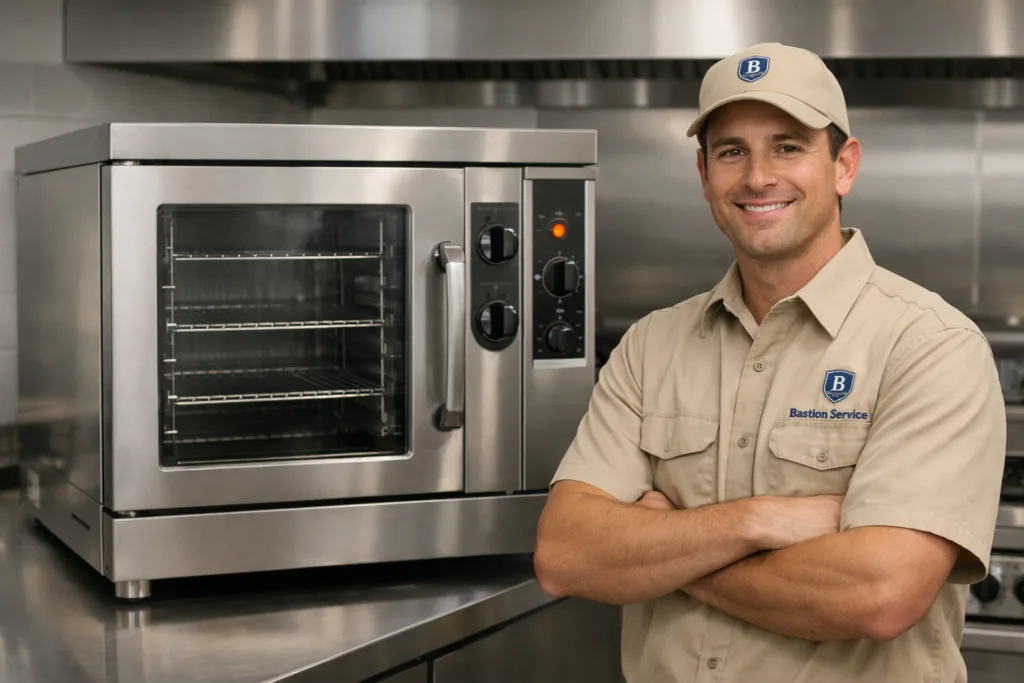




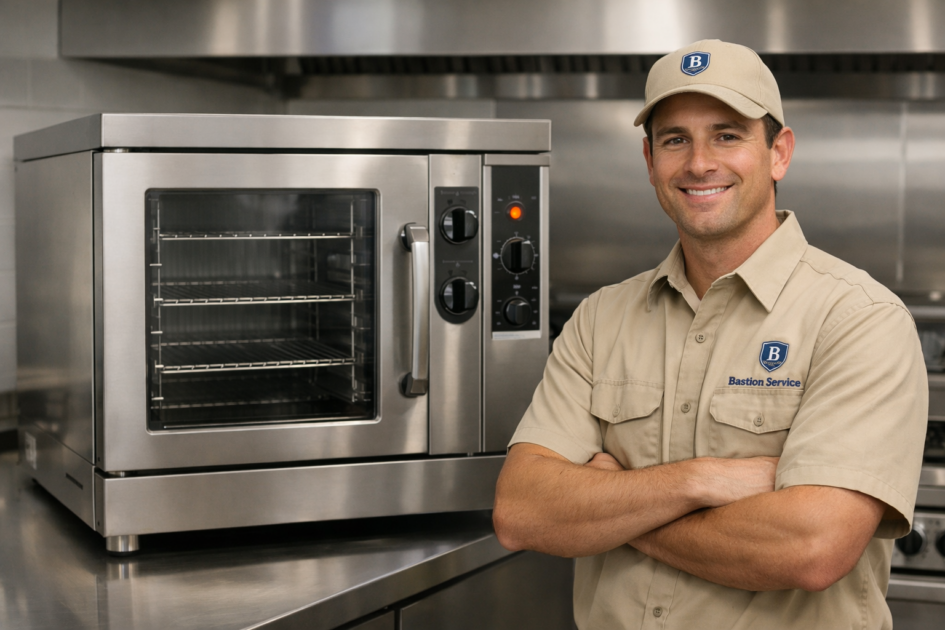
When a Vulcan oven starts missing temperature, delaying ignition, or dropping out during a shift, service needs to move quickly from symptoms to testing. For businesses in Sawtelle, the real issue is not just whether the oven still turns on, but whether it can hold steady heat, recover between loads, and operate safely enough for daily production. Bastion Service handles Vulcan oven repair with attention to the exact failure pattern so the repair decision matches the problem instead of guesswork.
Related commercial service paths in Sawtelle include Vulcan Commercial Repair in Sawtelle, Commercial Oven Repair in Sawtelle, and Vulcan Range Repair in Sawtelle.
Oven faults can affect more than one part of the kitchen at once. Slow preheat changes prep timing, uneven baking creates waste, and intermittent shutdowns force staff to rework orders or switch equipment mid-service. Because similar complaints can come from different causes, useful repair planning starts with how the oven behaves under real operating conditions, including startup, temperature rise, cycling, and recovery.
Common Vulcan Oven Symptoms That Need Repair Attention
Not heating or taking too long to preheat
If the oven powers up but does not produce full heat, the problem may involve the igniter, heating element, gas valve, temperature sensor, control, relay, or power supply depending on the model. In everyday use, this usually shows up as delayed startup, product finishing late, or staff increasing cook times just to keep orders moving. A symptom like slow preheat should be checked early because marginal heat often becomes a full no-heat failure.
Uneven baking or inconsistent cavity temperature
Hot spots, cold zones, or inconsistent browning often point to airflow problems, weak heat output, sensor drift, fan issues, or heat loss around the door. This is especially disruptive when one rack finishes ahead of another or identical batches come out with different color and texture. When the oven cannot distribute heat evenly, the result is lower product consistency and more manual correction by staff.
Temperature swings during operation
An oven that overshoots, drops below the set point, or struggles to recover after the door opens may have a thermostat, probe, calibration, control, or relay issue. In service, operators may notice that the oven looks normal at idle but cannot maintain temperature once production begins. That difference matters because some faults only become obvious when the unit is under load.
Ignition problems or burner operation that cuts in and out
Gas Vulcan ovens can develop delayed ignition, failed startup, or intermittent burner cycling when the ignition sequence is not completing properly. Possible causes include a weak igniter, flame sensing problem, gas valve fault, wiring issue, or control failure. These symptoms should not be ignored, especially when the oven repeatedly tries to light or shuts off unexpectedly during use.
Display, timer, or control response issues
If the control panel stops responding, settings change on their own, the display goes blank, or the oven resets, the issue may be electronic rather than strictly heat-related. Intermittent control faults are easy to misread because they can disappear between cycles and return during the busiest part of the day. Careful testing helps separate a control problem from a sensor or power issue.
Door seal, hinge, or latch problems
A door that does not close properly can cause major heat loss even when the rest of the oven is functioning. Longer cook times, poor recovery, and excess heat escaping into the kitchen can all follow. Worn gaskets, misalignment, or latch issues may seem secondary, but they often contribute directly to temperature complaints and increased strain on heating components.
Why a Vulcan Oven May Not Heat Evenly or Reach Set Temperature
This symptom has several possible causes, which is why part replacement without diagnosis often leads to repeat downtime. The oven may have a failing igniter or burner problem that reduces heat output, a sensor that reads incorrectly, a control issue that interrupts proper cycling, a convection fan problem that affects heat circulation, or a door leak that prevents the cavity from holding temperature.
In some cases, the complaint is more noticeable during peak production than during a quick test at idle. An oven can appear to heat normally at startup but fail to recover after multiple door openings or loaded racks. That is why the repair approach should be based on observed performance, not only on the fact that the oven is “running.”
What Diagnosis Should Confirm Before Repair Approval
A thorough service visit should narrow the problem down to the failed system, not just the visible symptom. For a Vulcan oven, that usually means checking whether the issue is tied to heat generation, flame or ignition behavior, temperature sensing, control response, airflow, power supply, or door sealing. Once that is confirmed, the next step is understanding whether the repair is isolated or whether wear in related parts is contributing to the failure.
That matters for budgeting and scheduling. Businesses in Sawtelle often need to know whether the oven can stay in use temporarily, whether the fault is likely to worsen quickly, and whether a single repair is likely to restore stable operation. Good diagnosis should answer those questions in a way that supports operations, not just parts ordering.
Signs the Oven Should Be Scheduled for Service Soon
- Preheat times are noticeably longer than normal
- The oven struggles to recover temperature between batches
- Items bake unevenly from side to side or rack to rack
- The burner or heat source cuts out during cooking
- Staff are adjusting settings repeatedly to compensate
- Error codes, resets, or display issues are becoming more frequent
- The door no longer seals tightly
- The oven needs repeated restart attempts to begin heating
These problems rarely stay isolated for long. Even when the oven is still usable, drifting performance usually means one or more components are failing under heat and workload.
When Continued Use Can Increase Downtime
Trying to push through service with unstable oven performance often creates a larger interruption later. Weak ignition can become a no-start condition, sensor errors can lead to product loss, and repeated cycling faults can put added stress on controls and relays. What begins as an occasional temperature complaint can turn into a shutdown at the worst time if the root cause is left unresolved.
If there is a strong or persistent gas smell, stop using the oven immediately. Safety should come first before any appliance repair is arranged.
Repair or Replace?
Many Vulcan oven problems are repairable when the unit is otherwise in solid condition and still fits the kitchen’s workload. Repair is often the better choice when the failure is specific, the oven has been reliable apart from the current issue, and restoring heat accuracy will return the unit to normal production.
Replacement becomes a more serious discussion when the oven has repeated control failures, multiple heat-related issues at the same time, or overall wear that keeps causing disruption even after prior service. The key question is whether the next repair is likely to restore stable daily use or simply delay another outage.
Preparing for a Service Visit
Before scheduling, it helps to note the exact symptom pattern: whether the oven will not start, starts but heats slowly, loses temperature after loading, cooks unevenly, or shuts down after reaching a certain point. If the issue is intermittent, details such as time of day, whether the cavity is fully loaded, and any recent error messages can help narrow the diagnosis faster.
The most useful next step is prompt service once the oven shows a repeatable heating, ignition, control, or recovery problem. For businesses in Sawtelle, timely repair helps limit downtime, reduce product inconsistency, and restore confidence that the oven can support the pace of daily kitchen operations.


