
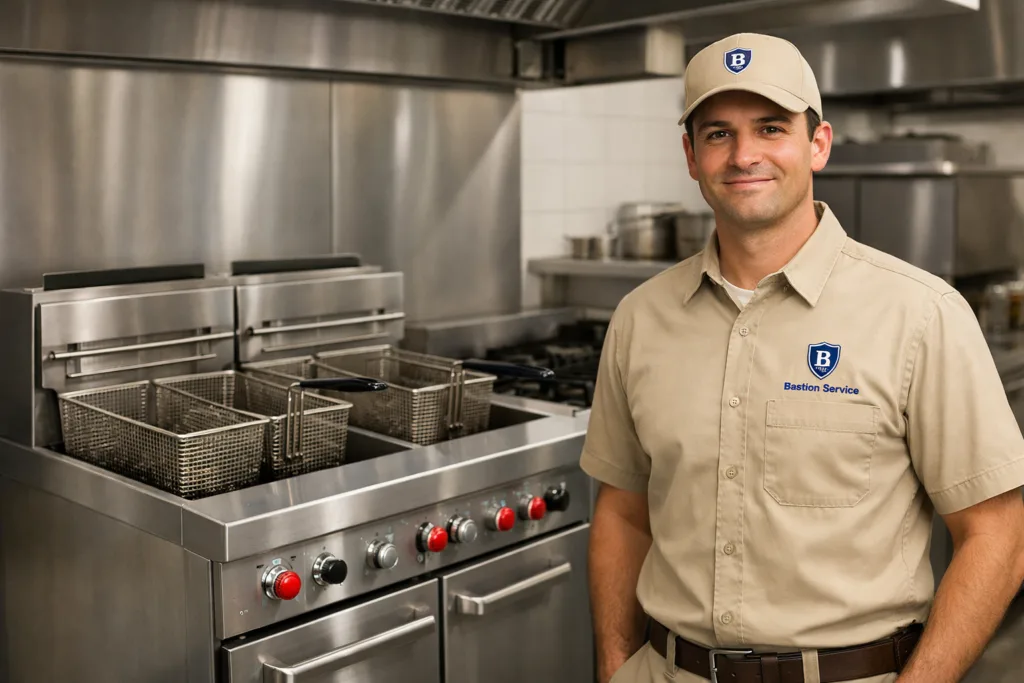




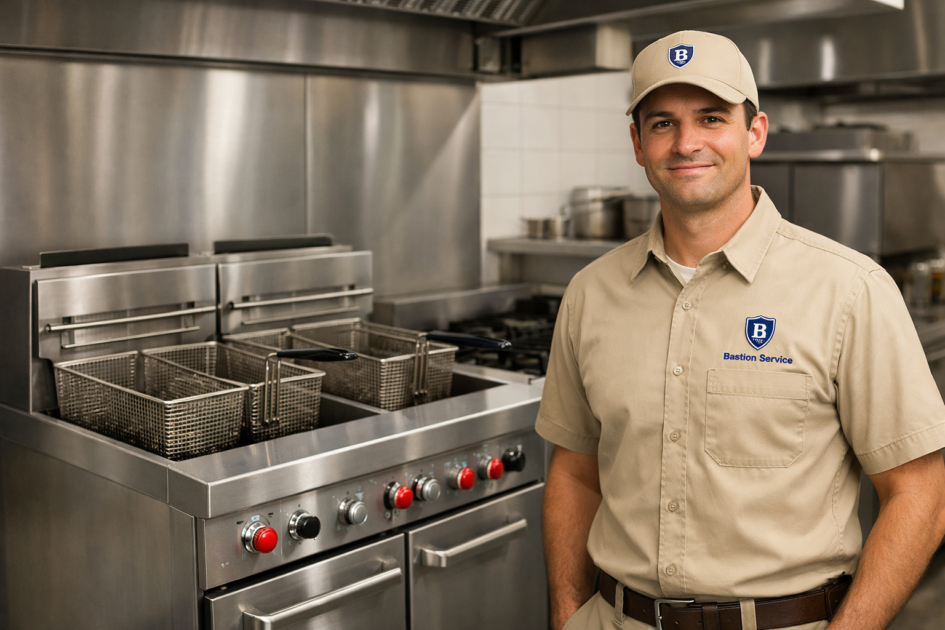
When a fryer goes down during service, the problem reaches beyond one piece of equipment. Production slows, ticket times stretch, and food quality can become inconsistent as staff try to compensate around unstable oil temperature or unreliable heat. In a commercial kitchen, the most useful first step is understanding whether the issue is electrical, gas-related, control-based, or tied to wear that has been building over time.
Related commercial equipment paths in Sawtelle include Frymaster Fryer Repair in Sawtelle and Pitco Fryer Repair in Sawtelle.
Common fryer problems and what they can indicate
Commercial fryers tend to show a familiar set of warning signs before they fail completely. Slow heat-up, no heat, poor temperature recovery between batches, or wide swings in oil temperature can point to failed heating components, ignition problems, sensor drift, thermostat issues, control board faults, or airflow and ventilation conditions affecting burner performance. Similar symptoms can come from different causes, which is why guessing often leads to wasted time and unnecessary parts replacement.
Other warning signs include oil leaks, pilot or ignition trouble, repeated shutdowns, unusual odors, error codes, and breakers that trip when the fryer calls for heat. Even when the unit still operates, those symptoms can affect output quality. Food that browns too quickly, cooks unevenly, or absorbs excess oil often signals that the fryer is no longer holding stable temperature during active use.
Symptoms that often get worse during busy periods
A fryer may appear functional during light use but struggle once the kitchen is running full volume. If recovery time becomes noticeably slower during lunch or dinner service, the issue may involve burners, elements, contactors, high-limit controls, or components that fail under load rather than at startup. That difference matters because a fryer that heats eventually is not necessarily a fryer that is operating correctly.
If staff are extending cook times, reducing batch size, or shifting production away from one fryer, the problem is already affecting workflow. Continued operation under those conditions can increase wear on controls, heating systems, and safety components, while also making food consistency harder to maintain.
Why a proper diagnosis matters
In a business setting, service decisions need to be based on findings rather than assumptions. A fryer that will not heat at all may have a very different repair path than a fryer that overheats, cycles erratically, or shuts down after reaching temperature. Good diagnosis helps identify whether the problem is isolated to a single failed part, a calibration issue, a control failure, or a larger reliability concern involving the unit’s age and operating history.
Diagnosis also helps separate fryer-specific issues from broader cooking-line problems. If the kitchen is seeing related trouble with burner heat, temperature accuracy, or preheat performance on adjacent cooking equipment, Commercial Oven Repair in Sawtelle may be the better service path for that part of the problem while the fryer is evaluated on its own symptoms.
When to schedule fryer service
Service should be scheduled promptly when the fryer is not maintaining set temperature, recovering too slowly, leaking oil, failing to ignite, shutting down unexpectedly, or showing signs of overheating. Intermittent problems are especially important to address because they tend to become complete failures during peak demand, when the kitchen has the least flexibility to work around them.
It is also wise to stop and reassess when staff notice changes in product appearance before an obvious mechanical failure occurs. Pale output, overbrowning, greasy texture, or inconsistent cook results can all be early signs that temperature control is drifting outside normal operating range. Catching those issues early can help prevent service disruption and reduce the chance of more serious component damage.
Repair versus replacement considerations
Many commercial fryer problems are repairable when the tank, cabinet, controls platform, and major operating systems remain in serviceable condition. Repair is often the practical choice when the fault is contained to ignition parts, sensors, heating components, wiring, switches, or individual controls that can be replaced without broader structural concerns.
Replacement becomes more likely when a fryer has recurring failures, significant wear, hard-to-source parts, tank or cabinet deterioration, or repair costs that no longer make sense relative to expected remaining life. The right decision depends on current condition, downtime history, and how critical that fryer is to daily production in Sawtelle.
What businesses in Sawtelle should prioritize
The goal is not simply to restore heat for one shift. It is to identify the actual cause of failure, correct it in a way that supports stable operation, and reduce the risk of repeat downtime. For businesses in Sawtelle, that means focusing on equipment performance, food consistency, and whether the unit can continue supporting service demands without becoming a recurring disruption.
When fryer issues are addressed with that bigger picture in mind, kitchens are in a better position to protect output, maintain product standards, and make sound equipment decisions instead of reacting to the next avoidable breakdown.


