
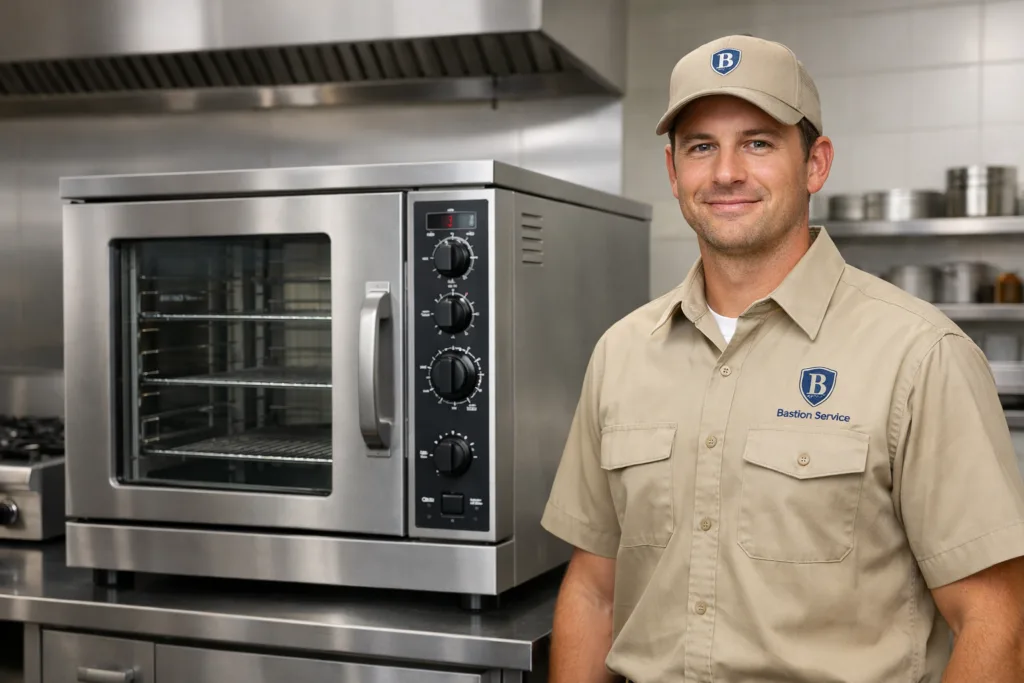





In a commercial kitchen, oven trouble rarely stays isolated for long. Uneven baking, slow recovery between batches, erratic temperatures, or a unit that cuts out under load can affect food quality, ticket times, staffing rhythm, and daily output. The most useful next step is to identify whether the failure is related to heat generation, airflow, controls, electrical supply, or wear in door and sealing components, because the same visible symptom can come from very different causes.
Related commercial equipment paths in Palos Verdes Estates include Blodgett Oven Repair in Palos Verdes Estates and Southbend Oven Repair in Palos Verdes Estates.
Common commercial oven problems and what they may indicate
Temperature-related complaints are among the most common reasons businesses schedule service. If the oven is slow to preheat, never reaches the set point, overshoots temperature, or bakes unevenly from one rack to another, the issue may involve heating elements, igniters, temperature sensors, relays, thermostatic controls, circulation fans, or door gasket leakage. In a commercial setting, even moderate temperature drift can lead to inconsistent product, longer cook times, and avoidable waste.
Control and power faults are also common in high-use equipment. An oven that will not start, loses its display, resets during a cycle, trips breakers, or stops responding after it warms up may have a failing switch, contactor, control board, wiring problem, or heat-stressed electrical connection. Intermittent faults are especially disruptive because they can seem resolved during idle periods and then return once the unit is back under production demand.
Gas oven symptoms often present through ignition delay, weak burner performance, poor heat distribution, or unusual startup behavior. These issues can point to igniter wear, burner contamination, flame sensing trouble, gas valve faults, or restricted airflow. If staff notice a persistent gas odor, the oven should not remain in use until the safety issue is addressed. And if the same cooking line is also struggling with open-oil temperature recovery and burner performance, Commercial Fryer Repair in Palos Verdes Estates may be the better service path for that equipment.
Signs the oven should be serviced promptly
Some problems allow for short-term scheduling flexibility, but others should be addressed quickly. Service should be prioritized when the oven is overheating, failing to maintain safe cooking temperatures, shutting down mid-cycle, producing recurring error codes, tripping electrical protection, or showing signs of sparking, burning odor, or unstable ignition. Continued operation under those conditions can increase component damage and create a more expensive outage later.
It is also worth scheduling service when the equipment still runs, but the staff has started compensating for it. If operators are rotating pans more than usual, extending cook times, reducing batch size, restarting the oven between loads, or avoiding certain rack positions, those workarounds usually indicate a fault that is already affecting reliability. Catching the issue early can help prevent additional wear on controls, heating components, and supporting electrical parts.
Symptoms that should not be ignored
- Preheat takes noticeably longer than normal
- Temperature swings are affecting consistency from batch to batch
- The oven runs hot on one side or has obvious hot spots
- The control panel drops out or becomes unresponsive during use
- The unit shuts off unexpectedly while loaded
- Door seals are worn, loose, or no longer closing tightly
- Fans, burners, or internal components are making new noises
What uneven heat usually means
Uneven cooking does not always mean the heating source itself has failed. In many commercial ovens, poor results can also come from compromised airflow, a weak circulation fan, sensor drift, damaged rack alignment, or heat loss around the door. A unit may technically produce heat while still failing to distribute it properly, which is why product inconsistency should be treated as an equipment issue rather than only an operator adjustment problem.
If one section of the cavity browns faster, if top and bottom results do not match expected performance, or if identical recipes need constant timing changes, the problem is often measurable during testing. That kind of evaluation helps separate calibration issues from failing parts and makes it easier to decide whether the repair is likely to restore dependable output.
Control, ignition, and shutdown issues
When an oven starts normally but later stops heating, shuts down without warning, or fails to relight correctly, the cause may involve safety circuits, flame sensing, relays, control boards, thermal protection components, or electrical connections degrading under heat. These failures can appear random from the operator side, yet still follow a clear pattern once the unit is tested through a full operating cycle.
Shutdowns during production are especially costly because they affect both the current batch and the timing of everything scheduled after it. For kitchens in Palos Verdes Estates that rely on steady oven throughput, identifying whether the interruption is tied to ignition, temperature regulation, or electrical instability is essential before the issue creates a wider service disruption.
Repair versus replacement considerations
Many commercial oven problems are still good candidates for repair, especially when the issue is isolated to parts such as igniters, elements, sensors, switches, fans, relays, gaskets, or accessible control components. Repair tends to make sense when the oven is otherwise structurally sound, the cavity and cabinet are in good condition, and the unit has not developed a pattern of recurring major failures.
Replacement becomes more relevant when the equipment has severe liner or cabinet deterioration, unsupported controls, repeated electrical breakdowns, major heat damage, or repair costs that are hard to justify relative to age and expected remaining life. The right decision usually depends less on one dramatic symptom and more on the overall condition of the unit, its role in production, and how much risk the business can tolerate from future downtime.
What a service assessment should clarify
A useful commercial oven assessment should do more than confirm that the unit is malfunctioning. It should narrow the fault to the most likely system, identify whether continued operation is advisable, note any secondary wear that may affect reliability, and outline the practical next steps. That information matters because a temperature complaint may be straightforward in one oven and a sign of broader control or electrical failure in another.
For businesses in Palos Verdes Estates, the goal is not just to restore heat, but to restore predictable performance. A well-diagnosed repair helps management decide whether to proceed immediately, limit use until parts are available, or begin planning around a larger equipment decision without guessing at the real condition of the oven.


