
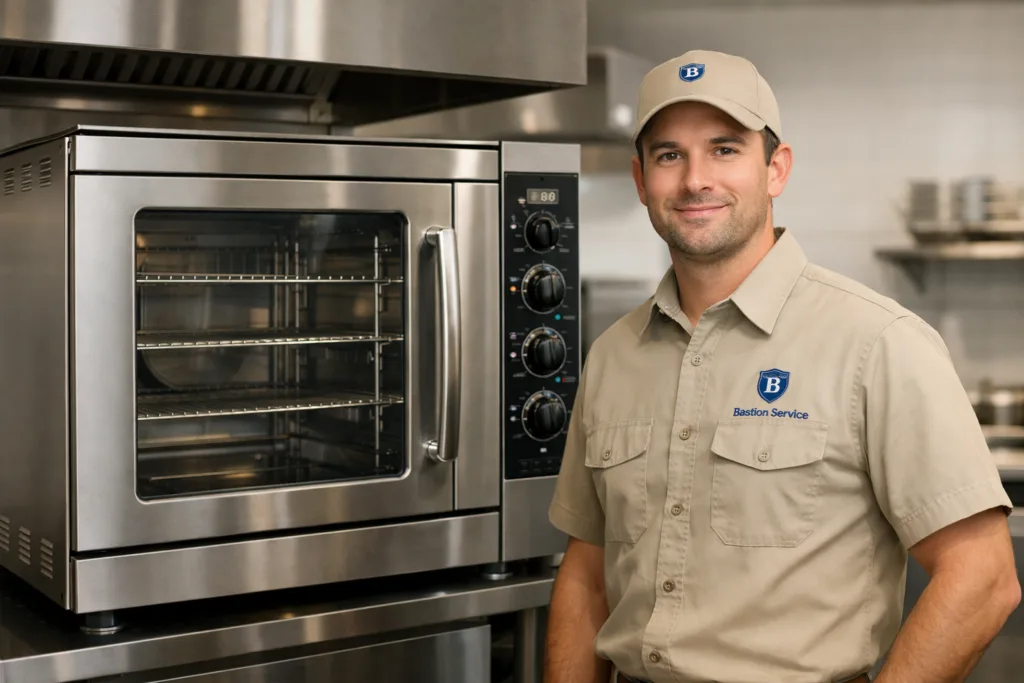




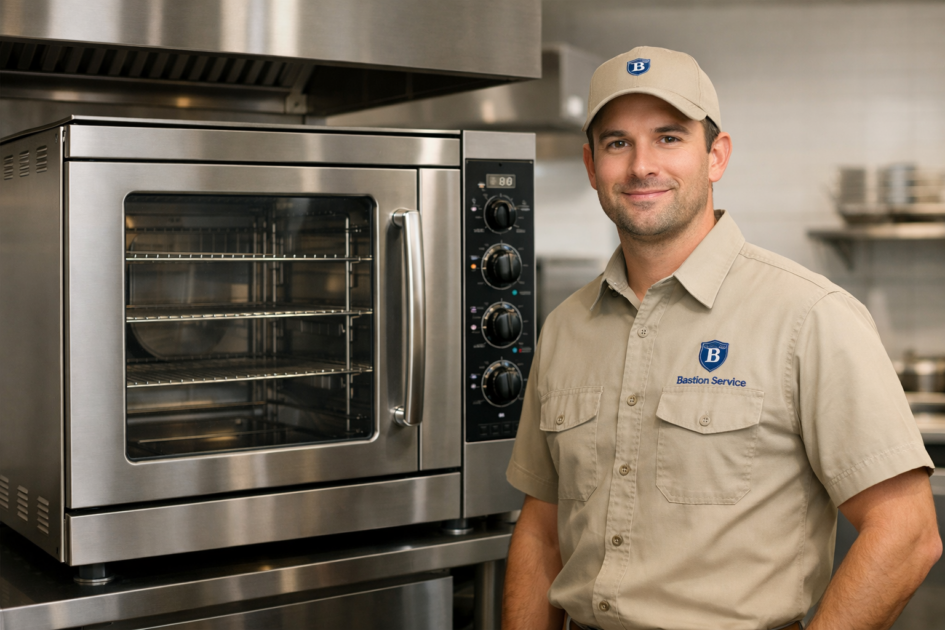
Commercial oven issues can disrupt production long before the unit fails completely. A slower preheat, longer cook times, or inconsistent results from one rack to another often point to developing problems with heating elements, igniters, sensors, airflow, door sealing, or electronic controls. Identifying the actual source matters because similar symptoms can lead to very different repair paths, costs, and downtime.
Related commercial equipment paths in Fairfax include Blodgett Oven Repair in Fairfax and Southbend Oven Repair in Fairfax.
Common commercial oven problems and what they may indicate
Uneven baking is one of the most frequent complaints in busy kitchens. When products brown differently across the same batch or require pan rotation to finish evenly, the cause may involve weak heat output, failing convection components, sensor inaccuracies, or heat loss at the door. In electric units, worn elements may not deliver consistent heat. In gas equipment, ignition and flame-sensing problems can create unstable temperature behavior.
Slow preheat and poor temperature recovery between loads can be just as damaging to operations. These issues often show up during rush periods, when the oven falls behind and staff begin adjusting cook times to compensate. That kind of performance drop may point to declining heating components, control faults, voltage issues, airflow restrictions, or calibration drift. If cooking-line problems extend beyond the oven and involve open-vat cooking equipment struggling to maintain heat as well, Commercial Fryer Repair in Fairfax may be the better service path.
Some ovens will power on but fail to start a cooking cycle properly, while others shut down mid-operation, display error codes, or trip protective devices. Those symptoms usually require structured troubleshooting rather than parts guessing. Power supply problems, damaged wiring, failed relays, high-limit trips, defective control boards, and sensor faults can all create similar complaints. For gas units, ignition sequence and valve response also need to be checked carefully.
Signs the issue is getting worse
An oven that still works but no longer performs predictably is already affecting output. Longer recovery times, temperature swings, scorched edges, undercooked centers, or repeated operator adjustments are signs that the equipment is no longer holding stable cooking conditions. Businesses often notice these changes first through increased waste, slower ticket times, or product inconsistency rather than a complete shutdown.
Door-related wear is another problem that is easy to overlook. Bent hinges, damaged gaskets, poor latch alignment, or frame sealing issues allow heat to escape and force the oven to cycle harder than normal. That can make a door problem appear to be a thermostat or heating failure. Checking containment along with heat production helps avoid replacing good parts while the real issue continues.
When service should be scheduled
Service is worth scheduling as soon as staff begin compensating for the oven instead of relying on it. If pans need to be moved constantly, recipes require unofficial time adjustments, or batches finish unevenly without a clear reason, the unit is no longer supporting normal workflow. Addressing the issue early can reduce food waste and help prevent a more expensive failure later.
Prompt evaluation is especially important when the oven stops heating, shuts off unexpectedly, repeatedly trips a breaker, or shows signs of overheating. Gas-related concerns should be handled with extra caution, particularly if ignition is inconsistent or there is any persistent fuel odor. In those situations, the appliance should not remain in use until the cause is identified.
Repair versus replacement for commercial ovens
Many commercial oven problems are repairable when the cabinet and core structure are still in good condition. Components such as igniters, sensors, elements, switches, relays, controls, wiring, fans, and door hardware can often be replaced without needing to retire the unit. That is especially true when the problem is isolated and the equipment has otherwise been operating reliably.
Replacement becomes more likely when failures are recurring, heat consistency cannot be restored economically, parts support is limited, or the oven no longer meets the production demands of the business. Age alone does not decide the outcome. The more useful comparison is between the expected repair scope, the service history of the unit, and the operational impact of another interruption if major systems are already wearing out together.
What a thorough commercial oven diagnosis should cover
A useful service visit should go beyond confirming that the oven turns on. Temperature behavior needs to be checked under operating conditions, along with cycling, sensor response, control accuracy, airflow, heating performance, and door sealing. For kitchens in Fairfax, that kind of evaluation is often the difference between a short-term fix and a repair that actually restores dependable production.
When the problem is diagnosed correctly, the business can make a better decision about next steps. That may mean replacing a targeted component, correcting an electrical or gas-related issue, resolving a door-seal problem, or determining that broader equipment planning is the smarter investment. The goal is to return the oven to stable, safe cooking performance without wasting time on the wrong repair path.


