
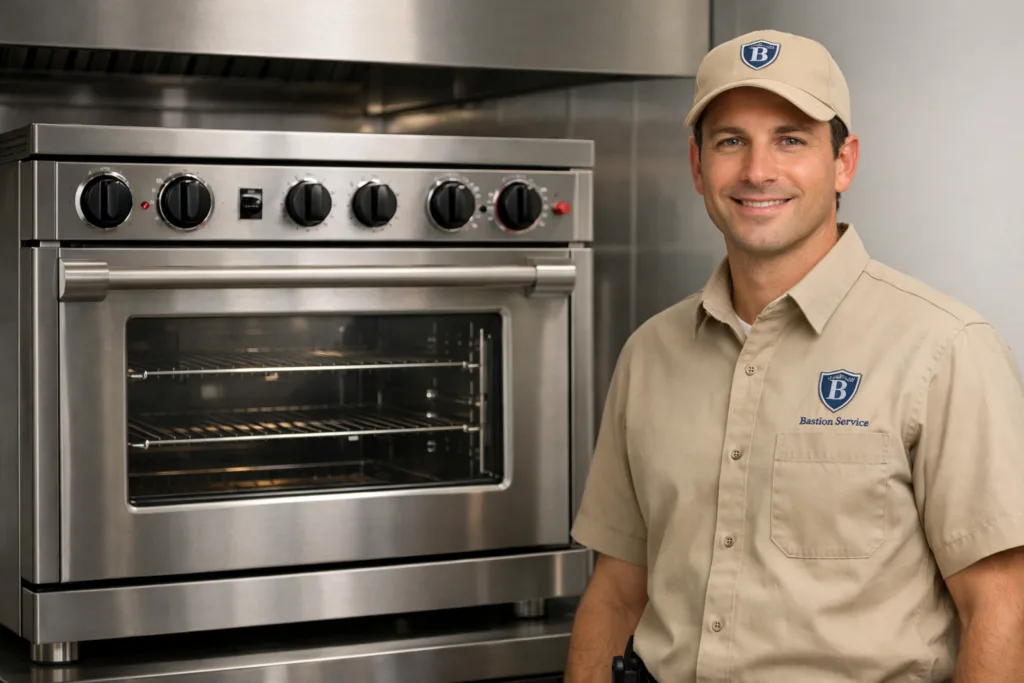




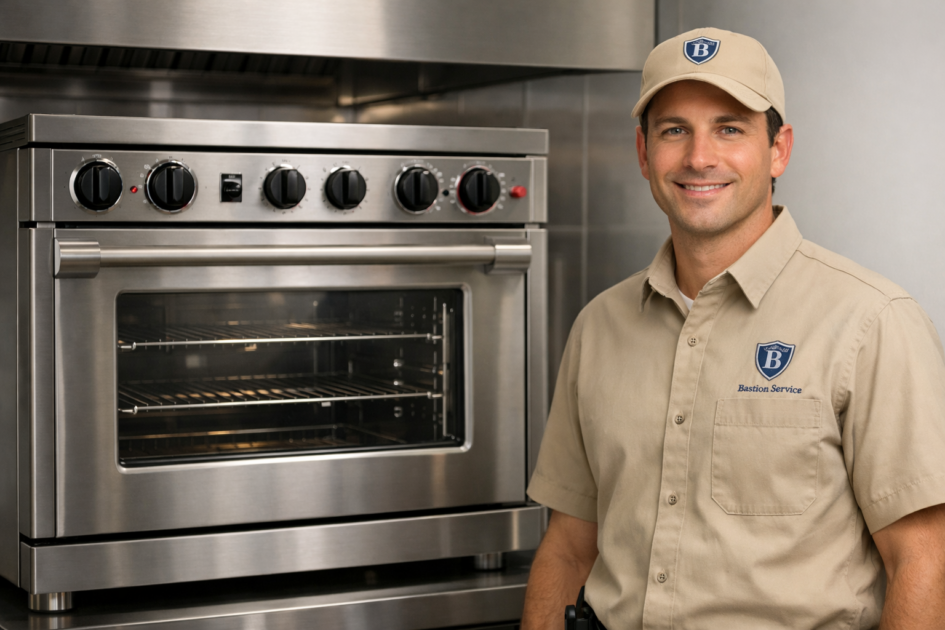
Oven problems rarely stay isolated for long in a working kitchen. When a Wolf unit starts missing temperature, heating unevenly, shutting down during production, or showing ignition trouble, service should focus on the exact failure pattern and how it affects output. Bastion Service provides Wolf oven repair for Fairfax businesses with an emphasis on diagnosis, repair planning, scheduling, and the practical next steps needed to limit disruption.
Related commercial service paths in Fairfax include Wolf Commercial Repair in Fairfax, Commercial Oven Repair in Fairfax, and Wolf Range Repair in Fairfax.
What a symptom-based Wolf oven diagnosis should cover
Two ovens can show the same complaint for very different reasons. A unit that runs cool may have a weak igniter, a failing sensor, a control issue, a relay problem, restricted airflow, or a door that is no longer sealing correctly. A unit that overheats may point to sensor drift, thermostat failure, stuck relays, or a control board issue that is no longer cycling heat the way it should.
That is why symptom-based service matters. Instead of replacing parts by assumption, the inspection should connect the complaint to the components most likely involved, confirm whether the fault is isolated or layered, and determine whether continued operation risks more downtime, wasted product, or added damage.
Common Wolf oven problems in Fairfax kitchens
Not heating evenly or reaching set temperature
If the oven is slow to preheat, never seems to hit the selected temperature, or produces inconsistent results from one batch to the next, the cause may involve the temperature sensor, heating circuit, ignition system, control board, or power supply. In gas models, weak ignition or flame-sensing issues can reduce heat performance without creating a full no-heat condition. In electric models, a partially failed heating component can leave the oven operational but unreliable.
In daily operations, this usually shows up as longer cook times, uneven browning, pan rotation becoming necessary, or staff adjusting recipes to compensate for equipment drift. When that pattern starts repeating, repair is usually a better move than continued workarounds.
Uneven baking, hot spots, or poor recovery between loads
Uneven heat often points to airflow problems, convection fan issues, calibration drift, worn door gaskets, or hinges that no longer keep the cavity sealed under heat. In a high-use kitchen, poor temperature recovery after the door opens can also signal a heating or control issue that is becoming more obvious during busy periods.
This kind of fault can quietly increase waste. Product quality may vary even when prep and timing stay the same, which makes the oven harder for staff to trust during service.
Ignition faults and unreliable startup
If the oven clicks repeatedly, lights inconsistently, starts only on some attempts, or shuts down after ignition, the problem may involve the igniter, flame sensor, gas valve, safety circuit, or control system. Intermittent ignition problems tend to worsen over time, especially when the unit is used heavily and restarted often throughout the day.
Because repeated failed starts can create additional wear and interrupt production at the worst time, this is usually not a symptom to postpone.
Temperature swings or overheating
An oven that overshoots temperature can burn product, shorten hold times, and put extra stress on nearby components. Causes often include a bad sensor reading, thermostat failure, relay issues, or a control fault that prevents normal cycling. If the oven is alternating between too cool and too hot, the issue may be more than simple calibration and should be tested rather than guessed at.
Door, hinge, gasket, and closure wear
Heat loss around the door is easy to overlook because the oven may still run. But worn gaskets, weak hinges, poor alignment, or latch problems can all affect preheat speed, temperature stability, and energy use. In a busy kitchen, this can turn a manageable repair into a broader complaint because staff notice the cooking inconsistency before they notice the mechanical wear.
Control failures, display issues, and unexpected shutdowns
If settings do not respond correctly, the display behaves erratically, the unit resets, or the oven stops mid-cycle, the problem may involve the interface, control board, relays, wiring, or incoming power conditions. Shutdown complaints are especially important to diagnose quickly because they can disrupt production without much warning and may become more frequent under heat load.
Why these symptoms should be addressed early
Many oven problems begin as “still usable” issues. A kitchen may compensate by extending cook times, reducing batch size, rotating pans, or avoiding certain temperature settings. That can keep service moving for a while, but it also hides the real condition of the oven and can make the eventual failure more disruptive.
Early service is often the better decision when you notice:
- Longer-than-normal preheat times
- Repeated temperature complaints from staff
- Inconsistent product color or doneness
- Error codes or unexplained resets
- Frequent ignition retries
- Unexpected shutdowns during use
- Visible wear at the door, hinge, or gasket
Addressing the issue before the oven goes fully offline usually gives a business more control over scheduling and less pressure around immediate production loss.
When continued use can increase repair scope
Some faults become more expensive when the oven keeps running under strain. An overheating condition can damage additional controls and nearby components. A failing fan or airflow restriction can worsen uneven baking and stress the heating system. Repeated ignition failures can wear related parts and create a larger no-start problem later. A door that no longer seals can make temperature complaints harder to pinpoint because heat loss affects the entire cooking cycle.
For businesses in Fairfax, the real cost is not just the part that fails next. It is the combination of downtime, wasted product, slower ticket flow, and staff trying to work around equipment that no longer performs predictably.
Repair or replace: how to make the call
Not every Wolf oven problem points to replacement. Many issues are still good repair candidates when the main structure of the unit is sound and the fault is limited to ignition, controls, sensors, heating components, or door-related parts. Repair decisions become more complicated when the oven has multiple major failures, a long pattern of recurring breakdowns, severe wear, or operating limitations that no longer fit the kitchen’s workflow.
The useful question is not just whether the oven can run again. It is whether it can return to stable, repeatable operation that supports daily service without forcing staff to compensate around it.
How to prepare for a service visit
If a Wolf oven is acting up, a few details from the kitchen team can make diagnosis faster and more accurate. It helps to note:
- Whether the problem affects every cycle or only some cycles
- If the oven is failing to heat, overheating, or drifting off set temperature
- Whether the issue appears during preheat, during cooking, or after the door is opened
- Any error display, shutdown pattern, or ignition behavior
- Whether performance changes under heavier load or at certain temperature settings
- Any recent power interruption, cleaning event, or noticeable door damage
These details help separate a single-component failure from a broader operating problem and make the repair path easier to define.
Service priorities for Fairfax businesses
Most Fairfax businesses need the same thing from oven repair: confirm the fault, understand whether the unit should stay offline, and get a realistic repair plan based on the actual symptom pattern. Whether the complaint is uneven heat, a no-start condition, temperature instability, or repeated shutdowns, the goal is to restore reliable operation without wasting time on trial-and-error part changes.
If your Wolf oven is affecting production, food consistency, or scheduling, the next step is to arrange service before a manageable symptom turns into a full outage. A timely diagnosis can clarify repair scope, reduce avoidable downtime, and help your kitchen decide whether the unit should be repaired now or evaluated more broadly.


