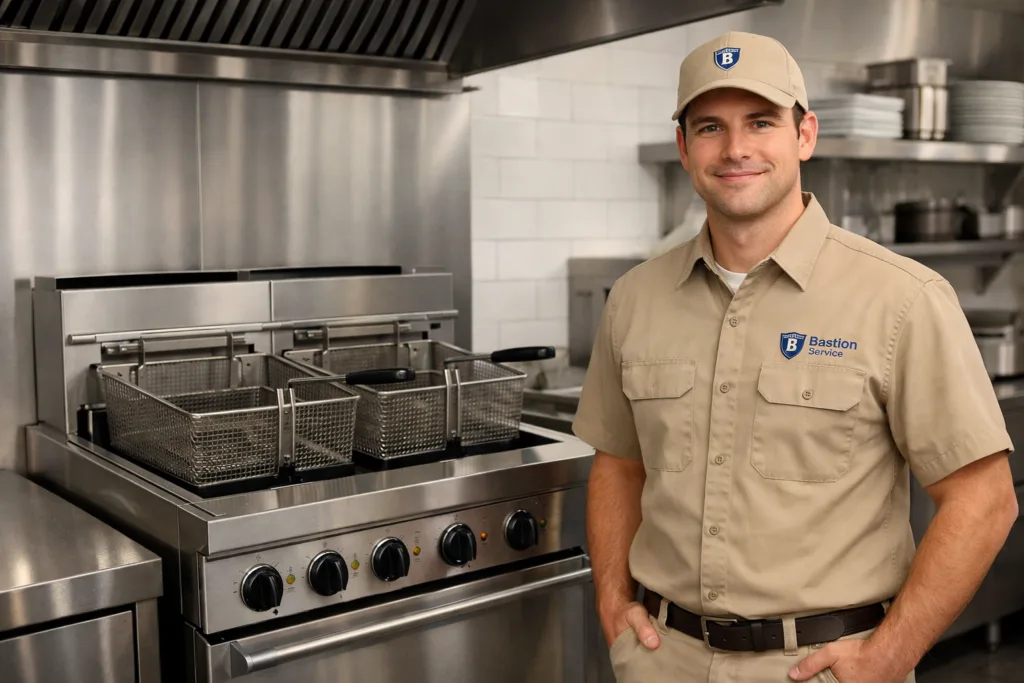




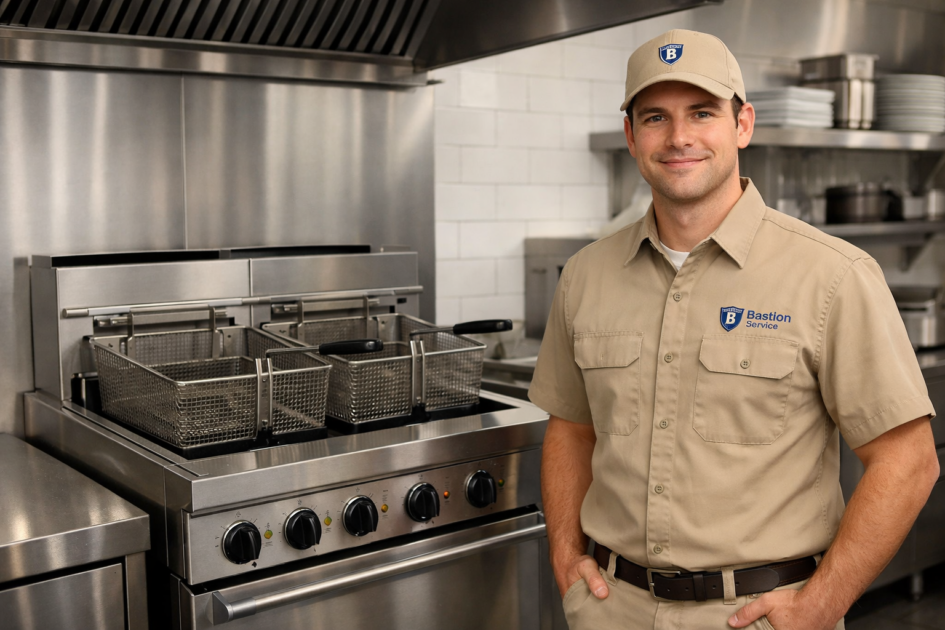
In a busy commercial kitchen, fryer problems show up fast in ticket times, product consistency, and staff workflow. Oil that will not stay on temperature, delayed heat recovery, ignition trouble, or shutdowns during service can all point to different underlying faults, so the most useful next step is usually a diagnosis based on how the unit behaves from startup through a full operating cycle.
Related commercial equipment paths in Fairfax include Frymaster Fryer Repair in Fairfax and Pitco Fryer Repair in Fairfax.
Common fryer symptoms and what they often mean
Temperature instability is one of the clearest signs that a fryer needs attention. If food is coming out pale, greasy, over-browned, or inconsistent from one basket to the next, the issue may involve the temperature probe, thermostat, high-limit system, control board, contactors, gas delivery, burner performance, or electric heating components. Similar results can come from very different failures, which is why symptom pattern matters.
Slow recovery after a batch is another common complaint in Fairfax kitchens. When the fryer drops temperature too far and takes too long to rebound, output slows and staff may start spacing orders differently just to keep up. That can be caused by weak heat production, buildup affecting performance, failing components under load, or supply-related issues that only appear during heavy use.
A fryer that will not power on, will not ignite, or heats only intermittently may have a problem in the control circuit, ignition system, wiring, safety switch chain, or incoming power or gas supply. Repeated resets might get the unit moving temporarily, but they do not address the reason the fryer stopped in the first place.
Oil leaks, unusual smoke, persistent odors, or control errors should also be evaluated promptly. Some conditions are tied to wear from daily production, while others suggest a safety-related issue or a failure that can spread into additional components if the unit stays in service.
Why continued operation can increase downtime
Running a fryer with unstable heat or intermittent shutdowns often creates more than a cooking problem. Oil can break down faster, finished food becomes less predictable, and the equipment may be pushed harder by staff trying to compensate during peak periods. A unit that overheats can damage components and shorten oil life, while one that runs too cool can lead to waste and slower output.
Shutoffs during service are especially disruptive because they often point to a control, ignition, or safety interruption that may become more frequent. What starts as an occasional nuisance can turn into a complete no-heat condition during a critical shift. In commercial settings, that kind of pattern is usually a sign to stop relying on workarounds and address the fault directly.
What a commercial fryer service assessment should include
A useful assessment should look beyond the final failure and track the full symptom sequence. That includes startup behavior, ignition or energizing sequence, time to temperature, recovery after baskets are dropped, thermostat response, cycling behavior, control input, and any signs that the unit is tripping a limit or losing supply under demand.
Inspection should also account for the condition of heating components, probes, switches, wiring, relays, gas train parts where applicable, and visible wear around the tank and controls. In some kitchens, the complaint is not that the fryer is fully down but that performance has drifted gradually, which can be harder to spot without testing under operating conditions.
If the symptom involves burner heat and oven temperature at the same time, Commercial Oven Repair in Fairfax may be the better service path for that equipment while the fryer issue is evaluated separately.
Repair or replacement: how businesses usually weigh the decision
Repair is often the practical option when the fryer is structurally sound and the problem is limited to controls, ignition parts, temperature sensing, switches, relays, heating components, or other serviceable parts. In those cases, restoring stable operation can protect production without the disruption of equipment replacement.
Replacement becomes more relevant when there is severe tank deterioration, repeated failures over a short period, extensive parts needs, or ongoing performance issues that continue to affect kitchen flow after prior repairs. The right decision depends on equipment condition, downtime tolerance, parts availability, and whether the unit can return to predictable daily use.
Operational signs that service should not wait
Restaurants, cafeterias, and other foodservice operations in Fairfax often wait until a fryer fully stops heating before calling for service, but earlier warning signs usually show up first. Longer cook times, inconsistent color, noticeable temperature swings, delayed recovery, error displays, and unexpected resets are all signs that the unit may be heading toward a larger interruption.
When fryer performance is affecting menu execution, labor rhythm, or food quality, the goal is not only to get the equipment running again for the moment. It is to identify the actual cause, address the parts or systems involved, and return the kitchen to stable, repeatable output.